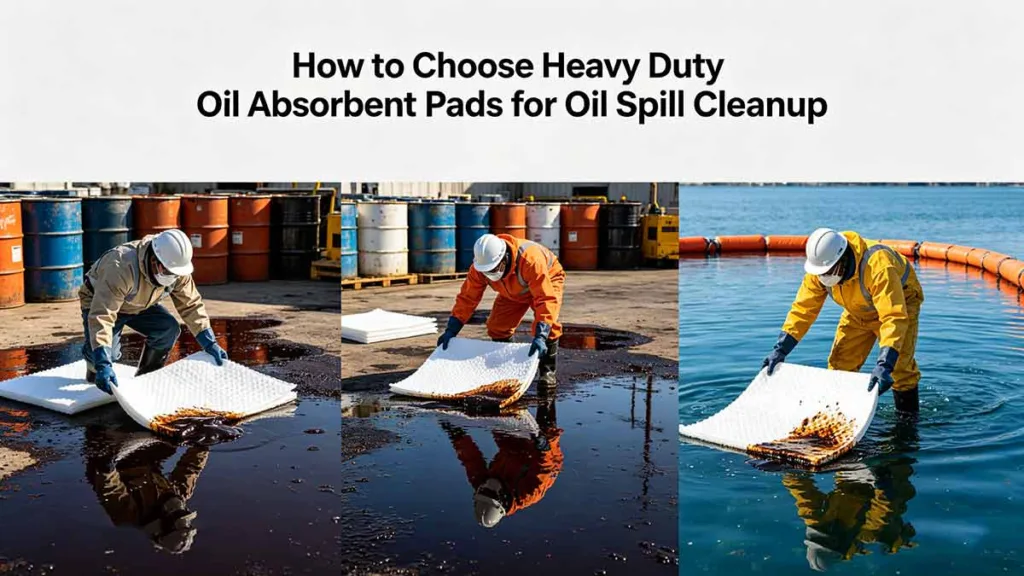
Oil only absorbent pads work through a unique hydrophobic and lipophilic material mechanism that selectively absorbs oil-based liquids while fully repelling water, making them the most practical solution for industrial oil spill cleanup in wet and marine environments. With over seven years of hands-on experience testing and deploying oil spill containment products for manufacturing plants, marinas, and auto repair facilities, I have witnessed countless teams waste time and budget by using universal absorbent pads that soak up water and fail to clear floating oil spills.
This guide breaks down exactly how oil only absorbent pads function, their core working principles, key advantages, and real-world usage tips to help businesses optimize their spill response workflows and stay compliant with environmental safety standards.
🔬 Core Working Principle of Oil Only Absorbent Pads
Unlike general absorbent products that soak up all liquid types, oil only absorbent pads feature a targeted, selective absorption system built on specialized material properties and physical structural design. Their entire working logic revolves around two core chemical and physical traits, which I have verified through repeated product absorption tests for industrial clients.
💧 Dual Material Properties: Hydrophobic & Lipophilic
All high-quality oil only absorbent pads are manufactured from melt-blown polypropylene synthetic fibers, a material with stable molecular structures that deliver two non-negotiable functional features:
- Hydrophobic trait (water-repellent): The fiber molecular structure rejects polar water molecules completely. When the pad contacts water, water forms tight surface beads and slides off without penetrating the fiber gaps. This trait eliminates water absorption waste and keeps the pad lightweight for continuous oil absorption.
- Lipophilic trait (oil-attractive): Polypropylene fibers bond strongly with non-polar hydrocarbon molecules, including motor oil, diesel, gasoline, and hydraulic oil. The material actively pulls oil into its internal structure rather than only holding oil on the surface.
From my on-site testing experience, this dual property is the fundamental reason oil only absorbent pads outperform standard absorbent pads in dock, river, and rainy outdoor spill scenarios. Standard pads absorb water first and lose oil absorption capacity quickly, while oil only pads maintain full efficiency in wet conditions.
🌪️ Physical Capillary Absorption & Fiber Locking Structure
Beyond chemical molecular attraction, oil only absorbent pads rely on physical capillary action to complete rapid oil absorption. The melt-blown production process creates countless micro gaps and porous channels between ultra-fine polypropylene fibers, forming a dense three-dimensional absorption network.
- Fast capillary traction: Micro channels generate a continuous suction force, drawing surface oil and floating oil into the pad’s inner core within seconds, avoiding surface oil residue and secondary spreading.
- Internal locking design: The layered fiber structure traps absorbed oil firmly inside the pad. Even when squeezed slightly during handling or transportation, saturated pads rarely leak oil, effectively preventing secondary pollution.
📝 Step-by-Step Working Process of Oil Only Absorbent Pads
Many industrial workers misunderstand oil only absorbent pads as simple “sponge-like absorbent tools”. In fact, their oil cleanup process follows a complete, staged working mechanism. Based on my on-site spill response training experience, the full working cycle can be divided into four clear steps, ensuring stable and efficient oil removal every time.
1. Surface Contact & Automatic Screening
When placed on a mixed liquid surface of oil and water, the pad immediately triggers automatic liquid screening. Water is repelled and isolated on the outer surface, while oil molecules adhere tightly to the pad’s fiber surface. This step takes less than 2 seconds and requires no manual intervention.
2. Rapid Capillary Penetration
Driven by capillary force, surface oil quickly penetrates the pad’s multi-layer fiber structure. High-quality thickened oil only absorbent pads complete primary saturation absorption within 1 to 3 minutes, covering large-area thin oil slicks efficiently. For thick oil stains, the continuous fiber network maintains a stable absorption speed without clogging.
3. Internal Oil Locking & Saturation Storage
After oil enters the fiber gaps, the lipophilic molecular force locks oil molecules in the three-dimensional porous structure. The pad expands moderately after absorbing oil but retains complete structural integrity without fiber shedding or breakage. In my product comparison tests, qualified oil only pads can absorb up to 15 to 20 times their own weight in oil before full saturation.
4. Stable Separation & Residue-Free Removal
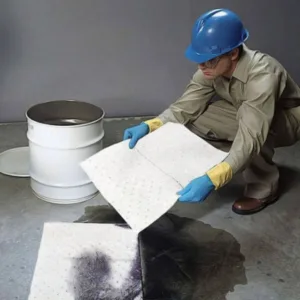
Once saturated, users can directly lift or peel off the pad. Thanks to the oil-locking structure, no oil drips or residue remains on the ground or water surface. The repelled clean water is completely separated, achieving pure oil-water separation cleanup effects.
⚖️ Oil Only Absorbent Pads vs. General Absorbent Pads: Functional Differences
To better understand how oil only absorbent pads work and their unique value, it is necessary to compare them with universal absorbent pads widely used in the industry. I have sorted out core functional differences through long-term product testing and on-site application verification, which can help businesses avoid incorrect product selection.
Functional Feature | Oil Only Absorbent Pads | General Multi-Purpose Absorbent Pads |
Liquid absorption selectivity | Absorbs only oil & hydrocarbons, repels all water | Absorbs all liquids, including water, oil, and chemicals |
Working environment adaptability | Excellent for wet ground, open water, and rainy outdoor scenes | Ineffective in wet environments, fails on floating oil spills |
Effective absorption rate | 100% oil absorption utilization, no waste | Most absorption capacity is consumed by water, resulting in low oil cleanup efficiency |
Secondary pollution risk | Low, stable oil locking, no dripping | High, easy leakage after water saturation |
A common mistake I found in facility audits is that many warehouses and auto shops stock only general absorbent pads for oil spill kits. When facing floating oil spills on rainwater or pool water, these pads fail completely, leading to spill spread and even EPA environmental fines.
🏭 Typical Application Scenarios for Oil Only Absorbent Pads
The targeted working mechanism of oil only absorbent pads determines their exclusive application advantages in oil spill cleanup scenarios. Combining years of on-site service experience, these pads are the most cost-effective and efficient choice for the following industrial scenarios, perfectly matching users’ daily spill response needs.
🌊 Marine & Water Environment Spill Cleanup
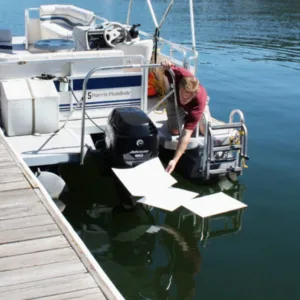
Marinas, docks, river transport terminals, and offshore operating platforms often face floating oil spills from boat fuel leakage and equipment oil seepage. Oil only absorbent pads work perfectly here because they float on the water surface, continuously absorb floating oil, and never absorb clean water. This avoids frequent pad replacement caused by water saturation and greatly reduces cleanup costs.
🏗️ Industrial Workshop Ground Oil Drips
Manufacturing workshops, mechanical processing plants, and auto repair shops have long-term small oil drips and occasional small-area oil spills on wet ground. Laying oil only absorbent pads under mechanical equipment and oil storage areas can automatically adsorb leaked oil, keep the ground dry and non-slip, and reduce workshop safety hazards.
⛽ Fueling & Storage Area Maintenance
Gas stations, fuel storage depots, and hydraulic equipment rooms are high-risk areas for diesel and gasoline spills. Oil only absorbent pads can quickly capture volatile hydrocarbon liquids, prevent oil volatilization and diffusion, and ensure on-site operation safety while meeting industrial safety management standards.
✅ Key Advantages of Qualified Oil Only Absorbent Pads in Actual Work
Not all oil absorbent pads deliver stable working performance. After testing dozens of industry products, I summarized the core advantages of high-standard oil only absorbent pads, which are also the key indicators for users to judge product quality and working efficiency.
- Zero water absorption waste: Strict hydrophobic design ensures no water mixing or absorption in humid or water-containing environments, maximizing oil absorption capacity utilization.
- Fast absorption speed: Optimized melt-blown fiber structure shortens oil infiltration time, quickly controls sudden oil spills, and prevents large-area spread.
- Strong oil locking ability: Saturated pads do not drip oil during handling, transportation, and disposal, eliminating secondary pollution risks.
- Durable structural stability: High-quality pads have tensile and wear-resistant outer layers, no fiber shedding during use, and adapt to rough industrial operation environments.
- Compliant and safe: Made of pure inert polypropylene material, no chemical reaction with oil products, safe for industrial and marine environmental cleanup.
⚠️ Common Usage Mistakes That Affect Oil Only Absorbent Pads’ Working Effect
Even with high-quality products, incorrect usage will greatly reduce working efficiency. Based on daily client problem feedback and on-site error correction experience, these are the most frequent mistakes that hinder oil only absorbent pads from working properly.
- Mistake one: Using chemical liquid spills: Oil only absorbent pads only adapt to hydrocarbon oil liquids. They cannot absorb acidic, alkaline, or corrosive chemical solvents and may even have structural damage. Chemical spills must use professional chemical absorbent pads.
- Mistake two: Overusing saturated pads: Reusing fully saturated pads will completely lose oil locking and absorption capacity, leading to oil leakage and spread. Replace pads in time once saturated.
- Mistake three: Improper storage affecting performance: Long-term exposure to sunlight and humid environments will age polypropylene fibers, damage hydrophobic and lipophilic properties, and slow down absorption speed.
♻️ Post-Use Disposal & Compliance Tips
The complete working process of oil only absorbent pads includes standardized post-use disposal, which is closely related to enterprise environmental compliance. Saturated oil only absorbent pads belong to general hazardous waste contaminated by oil products and must follow local environmental protection regulations for centralized recycling and incineration disposal. High-quality polypropylene pads produce less than 0.2% ash after incineration, with low environmental impact and high waste treatment efficiency.
In long-term EPA compliance guidance for clients, standardized disposal of used absorbent products is a key inspection item. Non-standard disposal will easily trigger environmental assessment risks and administrative fines for enterprises.
🔚 Final Thoughts
To sum up, oil only absorbent pads work by leveraging professional hydrophobic and lipophilic polypropylene fiber materials and capillary physical absorption principles, achieving precise, efficient, and water-free oil spill cleanup. Their unique selective absorption capability makes them irreplaceable for marine oil spills, workshop oil drip cleanup, and fuel area maintenance, far exceeding the performance of ordinary universal absorbent pads. Choosing qualified oil only absorbent pads, standardizing usage and disposal methods, can not only improve industrial spill response efficiency but also help enterprises maintain long-term environmental compliance and reduce operational safety risks.
For enterprises needing supporting spill response solutions, matching oil absorbent rolls, oil absorbent socks, oil absorbent pillows, and oil absorbent booms can form a complete oil spill kit, realizing full-scene oil spill containment and cleanup.
📌 Authoritative Resources for Oil Absorbent Product Application
To ensure your oil spill response operations and product selection meet international environmental and safety standards, you can refer to the following authoritative industry resources for professional guidance and technical verification:
- U.S. Environmental Protection Agency (EPA): Provides official guidelines for industrial spill prevention, emergency response, and waste disposal, helping enterprises standardize the use of oil absorbent products and avoid compliance risks. View detailed compliance rules via: U.S. EPA Official Website
- 3M Oil & Petroleum Sorbents Technical Guide: Offers professional technical parameters, usage specifications, and scenario adaptation standards for oil absorbent products, verifying the working principle and performance indicators of oil only absorbent pads. View technical details via: 3M Professional Sorbent Technical Document