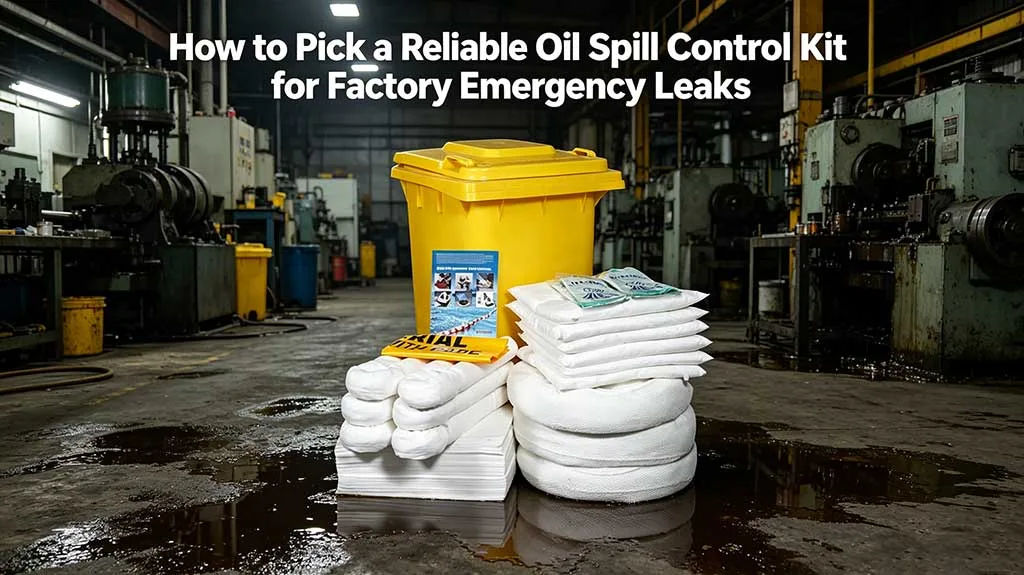
A reliable oil spill control kit is the first line of defense for factory emergency leaks, helping facilities contain, absorb, and clean up petroleum spills quickly while complying with industrial safety and environmental regulations. With over 8 years of experience supporting industrial clients in optimizing spill response setups, I’ve witnessed countless factory safety failures caused by mismatched, low-quality, or incomplete oil spill kits.
Many factory managers prioritize low upfront costs over practical performance, only to face spreading oil leaks, production downtime, and costly EPA penalties. This comprehensive guide breaks down every critical factor to select a durable, compliant, and factory-suitable oil spill control kit for all emergency leak scenarios.
🛠️ Why a Qualified Oil Spill Control Kit Matters for Factory Emergency Leaks
Factory oil leaks, ranging from minor equipment drips to large-scale storage tank spills, are one of the most common industrial safety hazards. Unlike small commercial spills, factory oil leaks often occur in high-volume, high-temperature, and high-traffic industrial environments, demanding higher standards for spill response tools. A professional oil spill control kit does more than clean up messes—it protects worker safety, maintains production continuity, and avoids environmental violations.
Based on my on-site audit experience with more than 60 manufacturing and processing factories, unqualified spill kits lead to three major industrial risks:
- Delayed spill containment: Low-grade absorbent materials saturate quickly or fail to trap spreading oil, turning small drips into large-area floor or drainage spills
- Worker safety hazards: Missing protective gear leads to slip accidents or direct skin contact with hazardous petroleum substances
- Regulatory non-compliance: Incomplete kit configurations result in failed OSHA and EPA inspections, triggering fines and mandatory facility rectification
Investing in a reliable oil spill control kit eliminates these hidden risks and builds a standardized emergency response system for factory oil leaks.
📋 Core Components of a Standard Factory Oil Spill Control Kit
Many factory managers mistakenly believe an oil spill kit only contains simple absorbent pads. In fact, a fully functional industrial oil spill control kit integrates containment, absorption, protection, and waste disposal tools. After testing dozens of industrial spill kits and optimizing client inventory setups, I’ve summarized the must-have components for factory emergency leak response:
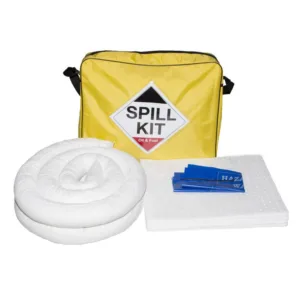
🧽 Essential Oil Absorbent Supplies (Core Functional Parts)
These absorbent products are tailored for petroleum-based liquids, featuring water-repellent and oil-absorbing properties to ensure efficient cleanup without wasting absorption capacity on water. Each component serves a unique factory leak scenario:
Absorbent Product | Factory Application Scenarios | Core Advantages for Industrial Use |
|---|---|---|
Small equipment drips, local floor spills, and machine surface oil stains | Lightweight, tear-resistant, fast absorption for daily minor leaks, easy to lay and replace | |
Large-area factory floor spills, continuous leakage along production lines | Customizable cutting size, covers wide surfaces, ideal for long and narrow spill areas | |
Oil absorbent socks | Drain blocking, equipment base wrapping, and gap leak containment | Flexible and bendable, fits tight industrial gaps, prevents oil from spreading to drainage systems |
Medium-volume concentrated leaks, oil accumulation in low-lying factory areas | High absorption capacity, stable placement, suitable for long-term saturation cleanup | |
Factory pool spills, outdoor drainage channel oil leaks, and large-scale spreading spills | Connectable for long barrier formation, floating design for water-associated factory spill scenarios |
🥽 Safety Protective Equipment (Must-Have for Worker Safety)
Factory emergency leak response requires personnel protection to avoid occupational hazards. A reliable oil spill control kit must include complete PPE matching industrial safety standards:
- Solvent and oil-resistant gloves: Prevent skin corrosion and oil adhesion during manual cleanup
- Safety goggles: Block splashing oil droplets from irritating or damaging eyes
- Disposable protective coveralls: Avoids oil contamination on work clothes and secondary pollution
- Half-face respirator: Prevents inhalation of volatile petroleum fumes in confined factory spaces
♻️ Auxiliary Disposal & Response Tools
Complete spill response does not end with absorption. Standard kits include supporting tools for standardized disposal to meet environmental compliance:
- Hazardous waste bags: Specialized bags for storing saturated absorbent materials to avoid secondary leakage
- Storage container/wheeled bin: Waterproof, dustproof storage for daily kit placement and emergency portability
- Spill response guide: Standard operating procedures for factory oil leak emergency disposal
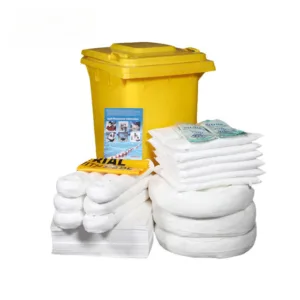
✅ 6 Key Criteria to Pick a Reliable Oil Spill Control Kit for Factories
Most factory procurement errors stem from selecting kits based only on price or appearance. Industrial oil spill scenarios have strict environmental, capacity, and durability requirements. Below are six practical, field-verified selection criteria to help you filter high-quality oil spill control kits and eliminate unqualified products.
1. 📌 Match Kit Absorption Capacity with Factory Spill Risk
The most critical rule for choosing an industrial oil spill kit is matching its total absorption capacity with your factory’s maximum possible leak volume. Many small and medium factories blindly purchase low-capacity kits, which fail to handle sudden medium-to-large spills.
My long-term client service experience summarizes three matching principles for different factory types:
- Light-risk factories (auto workshops, small processing plants): Choose kits with 25–45L total absorption capacity, suitable for daily small drips and minor equipment leaks
- Medium-risk factories (mechanical manufacturing, fuel storage workshops): Select 100–200L high-capacity kits with complete boom and pillow configurations
- High-risk factories (petroleum processing, chemical blending plants): Equip multiple large-capacity wheeled spill kits to cope with continuous large-volume oil leaks
2. 🧪 Verify Industrial-Grade Material Quality & Durability
Factory environments feature high temperatures, rough ground, and frequent mechanical friction, requiring higher durability for absorbent materials compared to civilian products. Reliable oil spill control kits adopt pure polypropylene and polyester synthetic fiber materials, with stable oil-absorbing and water-repellent performance.
Key material verification points I recommend for on-site inspection:
- No fiber shedding or tearing when stretched and rubbed on rough concrete floors
- Stable performance under 0–60°C ambient temperature, no material degradation or failure
- Oil-only absorption design repels clean water to avoid waste of absorption space
- Antistatic treatment for core components, reducing spark risks in flammable oil spill scenarios
3. 📜 Confirm EPA & OSHA Regulatory Compliance
Compliance is the core standard for factory industrial safety equipment. Any reliable oil spill control kit must meet U.S. EPA spill prevention guidelines and OSHA hazard communication standards. Non-compliant kits will directly lead to inspection failures and environmental fines.
Compliance details you need to confirm before purchasing:
- Kit components meet industrial hazardous waste disposal specifications
- Absorbent materials pass standard adsorption performance tests (ASTM F 726)
- Complete PPE accessories meet workplace safety protection requirements

4. 🚀 Prioritize Fast Deployment & Flexible Portability
In factory oil leak emergencies, response speed determines the severity of losses. A qualified industrial oil spill control kit features a humanized design for one-person quick deployment, avoiding delayed disposal due to complex operation.
Practical portability and deployment advantages for factory use:
- Compact integrated packaging or wheeled design, easy to move to spill sites in crowded factory workshops
- Classified internal placement of components, no messy searching during emergencies
- Lightweight overall weight, suitable for daily placement and emergency rapid response
5. 🌦️ Adapt to Complex Factory Environmental Conditions
Factories have diverse environments, including indoor constant-temperature workshops, outdoor open storage areas, and low-temperature humid production spaces. Reliable oil spill control kits need to adapt to multiple complex conditions without performance attenuation.
- Outdoor factory areas: Weather-resistant and UV-proof packaging to prevent material aging from long-term sun exposure
- Low-humidity workshops: Antistatic absorbent components to eliminate static electricity risks during oil cleanup
- Confined spaces: Small-sized portable kits with flexible socks and pads for narrow equipment gaps
6. 🔍 Check After-Sales & Replenishment Convenience
Factory spill kits are consumable safety equipment that require regular replacement and replenishment. Many low-quality kits lack supporting refill accessories, forcing factories to replace the entire kit at high cost. A reliable supplier provides complete refill solutions for oil absorbent pads, rolls, socks, and pillows, greatly reducing long-term operation costs.
⚡ Common Mistakes When Choosing Factory Oil Spill Control Kits
Based on my factory safety audit experience, most facility spill response failures stem from simple selection errors. Avoid these common pitfalls to ensure your oil spill kit works reliably in emergencies:
- Blindly pursuing low prices: Cheap kits use recycled fiber materials with low absorption capacity and easy shedding, causing secondary pollution during use
- Confusing oil-only and chemical kits: Using chemical absorbent kits for conventional oil spills leads to unnecessary cost waste, while oil kits cannot be used for corrosive chemical leaks
- Ignoring capacity matching: Equipping large factories with small-capacity kits cannot handle sudden large spills, resulting in delayed containment
- Neglecting regular inspection: Long-term uninspected kits may have damp, aging absorbents that fail to function in emergencies
💡 Practical Maintenance & Inspection Tips for Long-Term Kit Reliability
Picking a reliable oil spill control kit is only the first step; daily maintenance ensures long-term emergency availability. I recommend that factories establish a standardized monthly inspection mechanism:
- Fixed placement management: Store kits in dry, visible, and easy-to-access areas, away from direct sunlight and corrosive chemicals
- Regular component inspection: Check whether absorbent materials are damp or deformed and whether PPE accessories are complete and undamaged
- Timely replenishment: Replace used or expired absorbent supplies and protective equipment in a timely manner
- Staff training: Conduct quarterly emergency drills to ensure workers can quickly deploy the kit for leak disposal
📚 Authoritative Resources for Factory Spill Control Compliance
To ensure your factory’s oil spill control solutions fully comply with international industrial safety and environmental standards, you can refer to the following authoritative industry resources for updated guidelines and best practices:
- U.S. Environmental Protection Agency (EPA): Provides official guidelines for industrial spill prevention, emergency response, and hazardous waste disposal, helping factories standardize oil leak disposal processes and avoid compliance risks. You can check the latest industrial spill control regulations through the EPA’s official website.
- 3M Oil & Petroleum Sorbents Technical Guide: Offers professional technical parameters, usage specifications, and scenario matching suggestions for oil absorbent products, supporting factories in selecting high-performance absorbent supplies. View detailed product performance and application standards via the 3M official technical document.
- NDT.org Industrial Absorbent Directory: Aggregates reliable industrial absorbent product suppliers and industry best practice cases, helping factory purchasers screen qualified spill control kits and supporting long-term safe facility operation through the NDT.org industry platform.
🔚 Final Thoughts
Selecting a reliable oil spill control kit for factory emergency leaks is a key part of industrial safety management and environmental compliance, not a trivial procurement task. A qualified factory oil spill kit should feature matched absorption capacity, industrial-grade, durable materials, complete functional components, and full regulatory compliance. By focusing on core performance rather than low upfront costs, factories can effectively respond to all types of oil leaks, protect worker safety, avoid production downtime and environmental fines, and build a complete emergency spill response system.
Whether you need customized oil absorbent pads, rolls, socks, pillows, booms, or complete oil spill kits for different factory risk levels, professional and matched spill control solutions can greatly improve your facility’s emergency response efficiency. If you are confused about model selection, capacity matching, or scenario adaptation for industrial spill kits, consult our professional team to get tailored reliable oil spill control solutions for your factory.