🌊 Why Industry Specific Spill Kits Outperform Generic Spill Solutions
Industry-specific spill kits are the foundational safety equipment for all commercial and industrial workplaces to control liquid leakage risks and maintain regulatory compliance. Every industry faces unique spill hazards, operational environments, and compliance standards that generic spill kits cannot fully accommodate. Many businesses rely on low-cost universal spill tools only to face hidden safety risks and unexpected regulatory violations.
Generic spill kits adopt a one-size-fits-all design for minor and low-risk spills in general environments. They lack targeted material performance and professional accessories for industrial hazardous liquid disposal. This fundamental mismatch creates multiple operational loopholes that threaten staff safety, environmental health, and business operational legitimacy.
⚠️ Common Drawbacks of Generic Spill Kits for Industrial Use
- Poor hazard adaptability: Ordinary absorbent materials fail to resist corrosive chemicals, high-concentration petroleum liquids, and toxic industrial fluids. They cannot achieve precise oil-water separation or chemical neutralization, leading to incomplete spill cleanup and residual hazardous substances.
- Compliance loopholes: Generic kits do not meet specialized OSHA EPA and DOT standards for different industrial fields. Regular safety audits will identify unqualified spill response equipment, resulting in fines, rectification orders, or temporary business shutdowns.
- Delayed emergency response: Without industry-matched PPE, neutralizers, and containment tools, on-site staff cannot quickly block and clean up spills. Minor liquid leaks easily escalate into large-scale safety accidents and environmental pollution incidents.
- High long-term operating costs: Ordinary absorbents saturate quickly and have short service lifespans. Frequent replacement and repeated procurement increase daily safety management costs without providing effective risk prevention.
📚 Core Definition and Standard Composition of Industrial Spill Containment Kits
Professional industrial spill containment kits are integrated emergency response systems customized for industrial hazard scenarios. Different from civilian spill cleaning tools, these custom spill response kits cover the full process of spill interception, absorption, neutralization, cleanup, and standardized waste disposal. They are the only compliant solution for industrial hazardous liquid leakage management.
Qualified industry-specific spill kits are classified strictly according to liquid hazard types and industry application scenarios. The three mainstream categories include oil-only, universal, and chemical-resistant kits, covering almost all spill risks in manufacturing, chemical processing, energy, logistics, and laboratory industries.
✅ Standard Core Components of OSHA and EPA Compliant Spill Kits
All certified industrial spill containment kits follow unified industrial safety standards for core configurations. The difference lies in customized material performance and supporting accessories for different industry hazards. The complete standard components and practical functions are shown in the table below:
Component Category | Specific Included Items | Core Practical Functions |
|---|---|---|
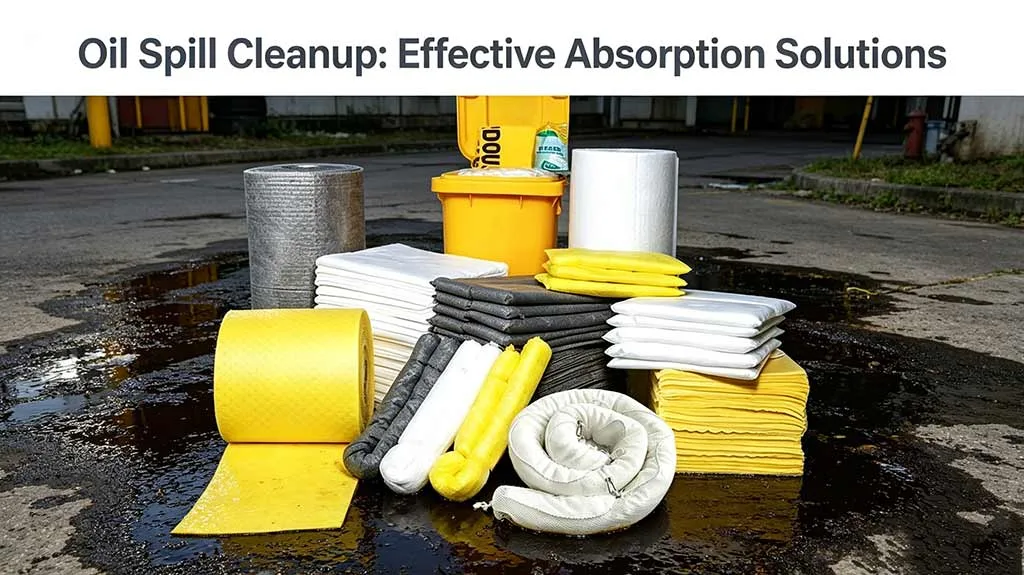
Specialized Absorbents | Polypropylene absorbent pads socks pillows and floating booms | Targeted absorption of oil chemical or water-based liquids zero secondary pollution and high-efficiency liquid adsorption |
Professional PPE | Chemical-resistant gloves safety goggles protective aprons and full-face shields | Isolate toxic corrosive and irritating liquids to protect on-site responders from physical injuries |
Spill Containment Tools | Drain covers leak-proof berms floating booms and warning signage | Block spill diffusion limit hazardous liquid spread and isolate high-risk work zones |
Cleanup & Disposal Tools | Scoops scrapers and hazmat leak-proof disposal bags | Quickly remove saturated absorbents and realize standardized hazardous waste disposal |
Compliance Guidance Documents | SDS safety data sheets and step-by-step spill response guidelines | Standardize on-site operation processes and fully meet regulatory audit requirements |
⚖️ Mandatory Regulatory Compliance Standards for Custom Spill Response Kits
Equipping industry-specific spill kits is not an optional safety measure but a mandatory legal requirement for all U.S. industrial facilities. Federal environmental and occupational safety authorities have clear and rigid provisions for spill prevention and emergency response equipment configuration. Non-compliance will directly trigger administrative penalties and operational risks.
Most industrial safety violations related to liquid spills stem from mismatched spill equipment or incomplete kit configurations. Enterprises must align their spill containment solutions with federal and local dual regulatory standards to achieve full compliance coverage and avoid unnecessary losses.
📋 Key Federal Regulatory Requirements for Spill Containment
- OSHA 29 CFR 1910.120: Governs all hazardous waste operations and emergency response procedures. It requires industrial sites to equip hazard-matched custom spill response kits and organize regular employee operation training and emergency drills.
- EPA SPCC Rule (40 CFR 112): Applies to facilities storing large-volume oil and petroleum products. It mandates complete spill containment systems and oil-adapted spill kits to prevent soil and surface water pollution.
- DOT Transportation Regulations: Stipulates that all vehicles transporting fuel and hazardous industrial liquids must carry portable spill kits to handle sudden leakage risks during transit.
- OSHA 29 CFR 1910.132: Requires employers to provide industry-exclusive PPE and spill response tools for all high-risk operational scenarios to protect worker safety.
In addition to federal unified standards, most U.S. states have formulated independent environmental safety management rules. Local compliance requirements often refine equipment parameters and deployment standards for regional industrial characteristics. Enterprises need to update their spill kit configurations regularly to adapt to policy changes.
🏭 Industry Specific Spill Kit Solutions for 6 Main Industrial Scenarios
Different industries have distinct spill hazard types, leakage volumes, working environments, and compliance thresholds. Selecting targeted industrial spill containment kits according to actual on-site conditions is the core of effective risk control and long-term compliance. Below are professional customized solutions for mainstream industrial sectors.
1. Manufacturing & Warehousing Spill Kit Solutions
Manufacturing plants and storage warehouses mainly face spills of mechanical oil, lubricants, cooling fluids, and industrial solvents. Spill-prone areas include production lines, equipment maintenance zones, oil storage areas, and loading and unloading platforms with mixed oil-water liquid risks.
Recommended Kit Type: Universal industrial spill containment kits
Core Custom Configurations
- Dual-purpose polypropylene absorbents suitable for both oil and water-based liquid cleanup
- Basic anti-corrosion nitrile gloves anti-scratch goggles and dust-proof protective aprons
- Portable cleaning tools and disposable leak-proof hazmat disposal bags for rapid on-site disposal
On-Site Deployment Tips: Arrange multiple portable kits in scattered high-risk areas. Conduct monthly component inspections to replace aging saturated or missing accessories and ensure long-term equipment availability.
2. Chemical Processing Plant Spill Kit Solutions
Chemical processing sites involve corrosive acids, alkaline solutions, and mixed toxic chemical liquids. Such spills easily cause equipment corrosion, staff burns, and ecological pollution, requiring high-level corrosion-resistant spill response equipment.
Recommended Kit Type: Chemical-resistant hazmat spill kits
Core Custom Configurations
- Specialized chemical-resistant polypropylene absorbents resistant to strong acid and alkali corrosion
- Professional chemical neutralizers to reduce liquid toxicity and corrosiveness instantly
- Full-set closed protective gear including anti-corrosion face shields and acid-base resistant clothing
- Isolation warning signs to prevent irrelevant personnel from entering risk areas
On-Site Deployment Tips: Store kits centrally at chemical warehouse exits and workshop entrances. Regularly verify the compatibility of absorbent materials with stored chemicals to avoid disposal failure.
3. Oil & Gas Industry Spill Kit Solutions
Oil fields, tank farms, refineries, and oil and gas transportation sites mainly produce crude oil, diesel, fuel oil, and lubricant spills. Most leaks occur in open outdoor environments or water surfaces, requiring water-repellent and floating absorption performance.
Recommended Kit Type: Oil-only spill response kits
Core Custom Configurations
- Hydrophobic and oleophilic polypropylene absorbents that repel clean water and efficiently adsorb petroleum products
- Floating containment booms for intercepting and enclosing water surface oil slicks
- Oil-specific leak-proof disposal bags to prevent secondary oil leakage pollution
- Wind and waterproof portable storage boxes suitable for long-term outdoor placement
On-Site Deployment Tips: Equip large-capacity kits at tank farms and loading docks, and place mini portable kits on all transport vehicles to deal with sudden leaks during operation.
4. Laboratory & Scientific Research Spill Kit Solutions
Laboratory scenarios involve complex spill risks including fine chemicals, biological fluids, and mercury residues. The spill volume is small but highly toxic, requiring precise and safe targeted disposal tools and protective equipment.
Recommended Kit Type: Lab-specific hazmat & biohazard spill kits
Core Custom Configurations
- Precision chemical neutralizers and special mercury adsorption materials for trace hazardous spills
- High-transparency face shields and fully enclosed anti-toxic PPE for comprehensive staff protection
- Special sharps storage containers and classified hazmat disposal bags for standardized waste treatment
On-Site Deployment Tips: Place clearly labeled spill kits in independent sealed cabinets of each laboratory to ensure quick access during emergency disposal.
5. Logistics & Transportation Spill Kit Solutions
Freight vehicles and transit warehouses face uncertain spill risks such as fuel leakage, cargo chemical seepage, and mechanical lubricant leakage. The spill kits need to be compact, portable, and fully compliant with DOT transportation safety standards.
Recommended Kit Type: DOT-compliant portable spill kits
Core Custom Configurations
- Lightweight and compact universal polypropylene absorbent pads and socks for flexible use
- Vehicle-specific anti-slip PPE and standardized hazmat identification labels
- Mini traffic isolation cones to quickly control on-site spill risk ranges
On-Site Deployment Tips: Equip one standard portable kit for each transport vehicle as required by DOT regulations, and inspect kit integrity and component validity before each departure.
6. Food Processing & Catering Hospitality Spill Kit Solutions
Food processing plants and catering sites mainly face spills of edible grease, food cleaning agents, and small amounts of biological fluids. The core requirement is non-toxic and residue-free disposal to ensure food production and dining safety.
Recommended Kit Type: Food-safe non-toxic spill kits
Core Custom Configurations
- Food-grade non-toxic polypropylene absorbent materials without chemical residues and pollution risks
- Disposable sanitary cleaning tools food-safe gloves and non-irritating disinfectants
On-Site Deployment Tips: Integrate kit configuration and daily management into HACCP safety plans to fully meet food production safety compliance standards.
🔍 Critical Factors for Selecting Qualified Industrial Spill Containment Kits
Many enterprises blindly purchase low-priced generic spill kits, resulting in poor disposal effects, hidden safety hazards, and compliance loopholes. To select cost-effective and fully compliant custom spill response kits, businesses need to evaluate multiple core dimensions based on actual operational conditions.
- Match on-site hazard types: Confirm the main spilled liquids of the facility including oil chemical or mixed fluids, and select oil-only chemical-resistant or universal kits in a targeted manner.
- Assess maximum spill volume: Choose kits of corresponding capacity according to the maximum possible single spill volume to avoid insufficient disposal capacity in emergencies.
- Fit actual deployment scenarios: Adopt portable mini kits for mobile transportation scenarios and large-capacity fixed kits for factory fixed high-risk operation areas.
- Verify official compliance certification: Ensure all kit components meet OSHA EPA and DOT industrial standards to pass regulatory audits smoothly and eliminate compliance risks.
🛠️ Standard Maintenance and Employee Training for Custom Spill Response Kits
High-quality industry-specific spill kits can only exert maximum safety and compliance value with standardized daily maintenance and professional employee training. Many enterprises complete equipment procurement but still face safety accidents due to expired components or improper operation.
📌 Daily Maintenance Management Specifications for Spill Kits
- Implement full monthly inspections to replace saturated expired or damaged absorbents and protective accessories in a timely manner
- Place all spill kits in dry ventilated and easily accessible positions with clear classification and identification labels
- Establish complete replacement and inspection records to form standardized safety management files for regulatory audit verification
👥 Professional Spill Response Training Requirements
Regular spill response drills and professional skill training can effectively shorten emergency response time and reduce accident losses. Enterprises must train frontline employees on basic kit usage steps, risk isolation methods, and standardized hazardous waste disposal specifications.
Focus training content includes quick identification of spill types, correct matching of absorbent materials, standardized wearing of PPE, and orderly implementation of spill interception and cleanup processes. Regular drills help employees form operational muscle memory to cope with sudden leakage accidents efficiently.
✅ Conclusion: Invest in Industry-Specific Spill Kits for Long-Term Operational Security
Industry-specific spill kits are indispensable core safety equipment for modern industrial and commercial enterprises. Different from generic spill solutions with single performance, professional industrial spill containment kits can precisely match on-site hazard characteristics, effectively protect employee personal safety, prevent environmental pollution, and help enterprises completely avoid regulatory fines and operational shutdown risks.
Selecting customized spill response kits that fit industry attributes and standardizing daily equipment management and employee safety training is not only a basic requirement of industrial safety production but also a key measure for enterprises to achieve stable and sustainable operation. Reasonable investment in targeted spill containment equipment can greatly reduce long-term safety management costs and operational risks, creating stable compliance guarantees for enterprise development.
To ensure your spill containment system maintains long-term compliance and efficient performance, you can refer to authoritative industrial safety specifications for standardized management. You can follow OSHA official guidelines to master standard spill emergency response procedures, check EPA environmental protection rules to confirm spill pollution control compliance standards, and learn professional industrial hazard prevention methods from ANSI industrial safety guidelines to continuously optimize your on-site spill prevention and control system.