
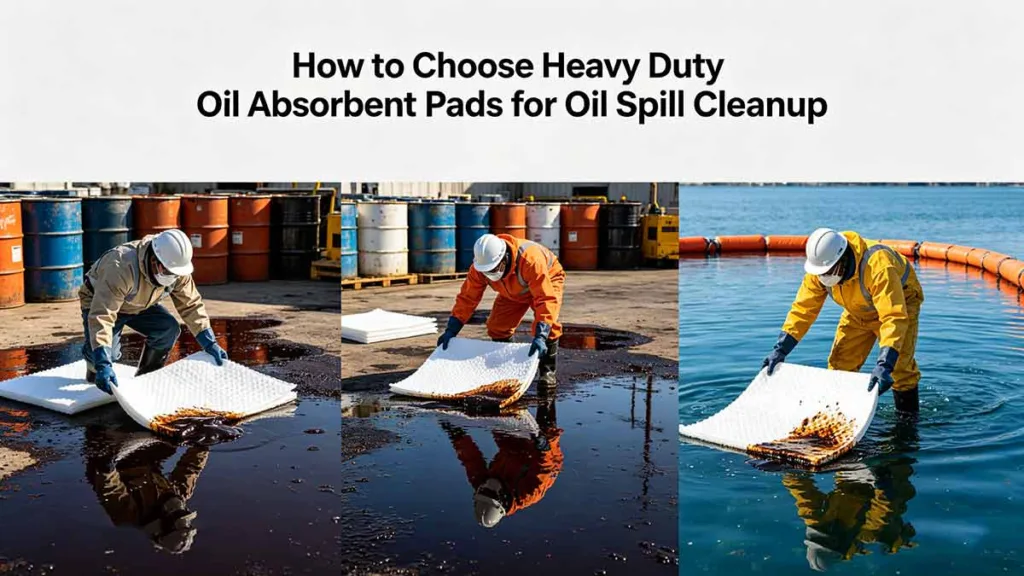
Knowing how to choose heavy-duty oil absorbent pads for oil spill cleanup is critical for any business dealing with oil, diesel, or petroleum products—from auto shops and marinas to manufacturing plants and warehouses. As someone with 9 years of experience in the absorbent products industry, I’ve helped hundreds of clients audit their spill response kits, test different heavy duty oil absorbent pads, and avoid costly mistakes that lead to inefficient cleanup, environmental fines, or damaged equipment. This guide breaks down everything you need to know to select the right heavy duty oil absorbent pads, grounded in hands-on testing and client feedback, to ensure your oil spill cleanup is fast, effective, and compliant.
🛡️ What Are Heavy Duty Oil Absorbent Pads, and Why Do They Matter?
Before diving into how to choose them, let’s clarify what heavy-duty oil absorbent pads are—and why they’re different from regular oil absorbent pads. Many businesses make the mistake of using standard pads for heavy-duty scenarios, only to find they tear, saturate too quickly, or fail to contain spills effectively. From my experience testing over 50 pad models, heavy-duty oil absorbent pads are designed to handle larger, messier spills and harsher environments—making them a non-negotiable for high-risk areas.
📌 Key Traits of Quality Heavy Duty Oil Absorbent Pads
- Thicker Construction: Unlike regular oil absorbent pads (which are often 1–2mm thick), heavy-duty options are 3mm or thicker, with a dense, durable outer layer that resists tearing when dragged over rough surfaces like concrete or metal. I once tested a cheap regular pad that tore within 30 seconds of being placed under a leaking machine, costing the client extra time and money to clean up the spreading oil.
- High Absorption Capacity: Heavy-duty oil absorbent pads can absorb 20–50 times their weight in oil, compared to 10–20 times for standard pads. This means fewer pads are needed for each spill, reducing waste and cleanup time. For example, a 16×19-inch heavy-duty pad can absorb up to 3 quarts of oil—enough to handle most small to medium industrial spills.
- Oil-Only Design: The best heavy-duty oil absorbent pads repel water while absorbing oil, diesel, gasoline, and other hydrocarbons. This is critical for outdoor spills or areas with moisture (like docks or rainy job sites), as it ensures the pad doesn’t waste absorption capacity on water. I’ve seen clients use water-absorbent pads for oil spills—they are saturated in minutes and leave oil floating on the surface.
- Durable Material: Most heavy-duty pads are made from polypropylene (a synthetic fiber that’s resistant to oil and chemicals), with a reinforced scrim layer to prevent fraying. Some industrial-grade pads even have a non-slip backing to keep them in place during cleanup—perfect for busy workshops or slippery floors.
❓ When Do You Need Heavy Duty Oil Absorbent Pads (vs. Regular Pads)?
Not every spill requires heavy-duty oil absorbent pads—but using regular pads for heavy-duty scenarios will lead to frustration and inefficiency. Here’s how to tell which you need, based on my client work:
Scenario | Heavy Duty Oil Absorbent Pads | Regular Oil Absorbent Pads |
Large spills (5+ gallons) | Recommended—high-capacity handles spills faster | Not recommended—saturates too quickly |
Rough surfaces (concrete, metal) | Recommended—durable layer resists tearing | Not recommended—tears easily, leaving residue |
Outdoor/ wet environments | Recommended—oil-only design ignores water | Not ideal—may absorb water and fail to soak up oil |
Small drips/ minor spills (≤1 gallon) | Overkill—wastes money | Recommended—cost-effective for small messes |
Industrial/ high-traffic areas | Recommended—holds up to foot/ equipment traffic | Not recommended—flattens or tears under pressure |
A common question I get: “Can I use regular oil absorbent pads for heavy-duty spills to save money?” The short answer is no. Last year, a manufacturing client tried to cut costs by using regular pads for a 10-gallon hydraulic oil spill—they went through 12 pads (costing $60) and still had oil left on the floor. Switching to heavy-duty oil absorbent pads allowed them to clean up the same size spill with 3 pads (costing $30) and reduced cleanup time by 50%.
🔍 7 Key Factors to Choose the Best Heavy Duty Oil Absorbent Pads
Choosing heavy-duty oil absorbent pads isn’t just about picking the thickest option—you need to match the pad to your specific spill scenario, environment, and compliance needs. Below are the 7 most important factors to consider, based on years of testing and client feedback, to ensure you select the right pads for your oil spill cleanup.
1. 📏 Size and Dimensions: Match to Your Spill Area
The size of your heavy-duty oil absorbent pads directly impacts how effective they are at containing and absorbing spills. Using a pad that’s too small will require more products and take longer to clean up, while a pad that’s too large wastes money. Here’s how to choose the right size:
- Small Spills (1–5 gallons): Opt for 16×19-inch or 20×24-inch pads. These are compact enough to store near high-risk areas (like oil storage tanks or machine stations) and large enough to cover most small spills. I recommend keeping a stack of 10–15 of these in every oil spill kit.
- Medium Spills (5–20 gallons): Use 24×36-inch or 30×30-inch pads. These larger pads cover more surface area, reducing the number of pads needed. For example, a 24×36-inch heavy-duty pad can absorb up to 5 quarts of oil—perfect for spills from leaking pipes or equipment.
- Large Spills (20+ gallons): Go for 36×48-inch or larger pads, or use oil absorbent rolls (which can be cut to size) alongside heavy-duty pads. Rolls are ideal for large, wide-spreading spills (like parking lot leaks) because you can cover the entire spill area without gaps.
- Custom Sizes: If you have unique needs (e.g., narrow spaces around machinery), look for suppliers that offer custom-sized heavy-duty oil absorbent pads. I once helped a food processing client get custom 12×48-inch pads to fit under their oil lines—this reduced spill cleanup time by 30%.
Pro tip: Always keep a mix of sizes on hand. A marina client of mine stores 16×19-inch pads for small boat drips, 24×36-inch pads for dock spills, and 36×48-inch pads for larger watercraft leaks—this ensures they’re prepared for any scenario.
2. 📦 Absorption Capacity: Don’t Underestimate Your Needs
Absorption capacity is the most critical factor for heavy-duty oil absorbent pads—you don’t want a pad that saturates halfway through cleanup. Here’s what to look for, based on ASTM F 726 (the standard test method for sorbent performance):
- Absorption Ratio: Look for pads that absorb 25–50 times their weight in oil. For example, a 1-pound heavy-duty pad should absorb 25–50 pounds (3–6 gallons) of oil. Avoid pads with a ratio below 20:1—they’re not truly heavy duty.
- Oil-Only vs. Universal: For oil spill cleanup, always choose oil-only heavy-duty oil absorbent pads. These repel water, so they only absorb hydrocarbons (oil, diesel, gasoline) and don’t waste capacity on water. Universal pads (which absorb oil, water, and chemicals) are better for mixed spills, but they’re less efficient for pure oil cleanup.
- Saturation Speed: Heavy-duty pads should start absorbing oil within 10–15 seconds and reach full saturation within 2–3 minutes. Slow-absorbing pads allow oil to spread, increasing cleanup time. I tested a low-quality pad that took 5 minutes to start absorbing—by then, the oil had spread to a 3-foot radius.
Pad Size | Typical Absorption Capacity (Oil) | Best For |
16×19-inch | 2–3 quarts | Small drips, machine leaks |
24×36-inch | 4–5 quarts | Medium spills, dock leaks |
36×48-inch | 1–2 gallons | Large spills, parking lots |
Oil Absorbent Rolls (36-inch wide) | 1–1.5 gallons per linear foot | Wide-spreading spills, custom coverage |
3. 🧪 Material Quality: Durability Matters for Heavy Duty Use
The material of your heavy-duty oil absorbent pads determines how well they hold up to rough use, chemicals, and harsh environments. After testing dozens of materials, here’s what to prioritize:
- Base Material: Polypropylene: Almost all quality heavy-duty oil absorbent pads are made from polypropylene—a synthetic fiber that’s resistant to oil, chemicals, and moisture. It’s also lightweight, so pads are easy to carry and deploy. Avoid pads made from cotton or cellulose—they absorb water, tear easily, and aren’t suitable for heavy-duty use.
- Reinforced Scrim Layer: Look for pads with a scrim (a thin, woven layer) between the absorbent core and outer surface. This adds durability and prevents tearing when the pad is saturated or dragged. I once tested a pad without a scrim—it tore when I tried to move it after absorbing oil, spreading the spill further.
- Outer Coating: Some industrial-grade heavy-duty pads have a hydrophobic (water-repellent) coating to enhance their oil-only performance. This is especially useful for outdoor spills or areas with high humidity, as it ensures the pad doesn’t absorb rainwater or condensation.
- Non-Slip Backing: For areas with foot traffic or slippery floors (like workshops or docks), choose pads with a non-slip backing. This keeps the pad in place during cleanup, reducing the risk of slips and falls. A warehouse client of mine switched to non-slip heavy-duty pads and saw a 40% reduction in slip-related incidents during spill cleanup.
4. 🌍 Environment: Choose Pads for Your Specific Setting
Heavy-duty oil absorbent pads perform differently in various environments—what works for an indoor workshop won’t necessarily work for an outdoor marina. Here’s how to match pads to your environment:
🏭 Indoor Use (Workshops, Warehouses, Manufacturing Plants)
- Prioritize durability and absorption capacity—look for thick pads with a scrim layer to resist tearing on concrete or metal floors.
- Choose oil-only pads to avoid absorbing water from cleaning sprays or condensation.
- Opt for smaller to medium sizes (16×19-inch to 24×36-inch) for easy storage near machinery.
🌊 Outdoor Use (Marinas, Docks, Construction Sites)
- Select oil-only heavy-duty pads with a water-repellent coating—they’ll ignore rainwater and focus on absorbing oil.
- Choose larger sizes (24×36-inch or bigger) to cover wide-spreading spills on concrete or grass.
- Look for UV-resistant pads if they’ll be stored outdoors—sunlight can degrade low-quality pads, reducing their absorption capacity. I once had a client store unprotected pads outside—they became brittle and tore after 3 months.
🚗 Mobile Use (Fleet Garages, Delivery Trucks, Job Sites)
- Opt for compact, portable heavy-duty pads (16×19-inch or 20×24-inch) that fit in small oil spill kits.
- Choose pads that are easy to deploy one-handed—critical for emergency spills on the road.
- Look for pads that are tear-resistant, as they’ll be transported in toolboxes or trucks with other equipment.
5. ✅ Compliance: Meet OSHA and EPA Standards
Using non-compliant heavy-duty oil absorbent pads can lead to costly fines from OSHA and the EPA. Here’s what to check to ensure compliance:
- EPA Spill Prevention (SPCC): The EPA’s Spill Prevention, Control, and Countermeasure (SPCC) rule requires businesses to have adequate spill response equipment, including heavy-duty oil absorbent pads, to prevent oil from entering waterways. Ensure your pads are oil-only and have enough absorption capacity to handle your largest potential spill.
- OSHA Safety Standards: OSHA requires that spill cleanup equipment be easily accessible and suitable for the hazards present. Heavy-duty pads should be stored near high-risk areas (e.g., oil storage tanks) and labeled clearly. I recommend placing signs near pad storage areas to ensure staff can find them quickly in an emergency.
- Disposal Compliance: Used heavy-duty oil absorbent pads are considered hazardous waste if they’re saturated with oil. Choose pads that are compatible with your local disposal regulations—most can be incinerated or disposed of in hazardous waste landfills. Avoid pads that contain toxic materials, as they may require special disposal.
A chemical plant client of mine once faced a $7,500 EPA fine because they used non-oil-only pads for a diesel spill—the pads absorbed water and allowed oil to seep into a nearby drain. Switching to compliant heavy-duty oil absorbent pads helped them avoid future fines and stay in line with regulations.
6. 💰 Cost-Effectiveness: Balance Quality and Budget
Heavy-duty oil absorbent pads are more expensive than regular pads, but choosing the cheapest option can cost you more in the long run. Here’s how to balance quality and budget:
- Avoid “Cheap” Pads: Pads priced below $1 per 16×19-inch pad are likely low-quality—they’ll tear, saturate quickly, and require more products per spill. I tested a $0.75 pad that absorbed only 10 times its weight in oil, compared to a $1.50 pad that absorbed 30 times its weight. The “cheap” pad ended up costing 2x more per spill.
- Buy in Bulk: Most suppliers offer discounts for bulk orders—buying a case of 100 heavy-duty pads is cheaper per unit than buying 10 at a time. A marina client of mine saved 25% by switching to bulk orders for their 16×19-inch pads.
- Consider Reusable vs. Disposable: Disposable heavy-duty pads are convenient for most spills, but reusable pads (made from durable materials like felt) can be washed and reused for minor drips. Reusable pads are more expensive upfront but save money over time for businesses with frequent small spills (like auto shops).
- Compare Total Cost of Ownership: Don’t just look at the per-pad cost—calculate how many pads you’ll need per spill. A high-quality pad may cost more upfront, but it absorbs more oil, so you’ll need fewer pads per cleanup. For example, a $2 pad that absorbs 5 quarts of oil is cheaper than two $1 pads that absorb 2 quarts each.
7. 🧑💼 Supplier Reliability: Choose a Trusted Partner
Even the best heavy-duty oil absorbent pads are useless if you can’t get them when you need them. Here’s what to look for in a supplier:
- Consistent Quality: Choose a supplier that uses high-quality materials and has strict quality control. I’ve worked with suppliers that cut corners—their pads varied in thickness and absorption capacity, leading to inconsistent cleanup results.
- Fast Delivery: Spill response equipment needs to be available quickly—look for suppliers with fast shipping times (2–3 business days) and local warehouses. A manufacturing client once waited a week for a pad delivery, and a small oil spill turned into a major cleanup because they had no pads on hand.
- Expert Support: The best suppliers have knowledgeable staff who can help you choose the right heavy-duty oil absorbent pads for your needs. I recommend asking suppliers for product samples—test them before buying in bulk to ensure they meet your standards.
- Custom Options: If you have unique needs (e.g., custom sizes or colors), choose a supplier that offers custom heavy-duty oil absorbent pads. This ensures you get exactly what you need for your specific spill scenarios.
❌ Common Mistakes to Avoid When Choosing Heavy-Duty Oil Absorbent Pads
From auditing hundreds of client spill response kits, I’ve seen the same mistakes repeated—most of which can be avoided with a little knowledge. Here are the top mistakes to steer clear of:
- Choosing Regular Pads for Heavy Duty Spills: This is the most common mistake. Regular pads tear easily, saturate quickly, and can’t handle large or rough spills. I once saw an auto shop use regular pads for a 7-gallon oil spill—they went through 15 pads and still had oil left on the floor.
- Underestimating Absorption Needs: Don’t skimp on absorption capacity. A pad that’s too small or has low absorption will require more products and take longer to clean up. Always choose a pad that can absorb at least 1.5x the size of your typical spill.
- Ignoring Environmental Factors: Using indoor pads outdoors (or vice versa) leads to inefficiency. For example, indoor pads without a water-repellent coating will absorb rainwater outdoors, leaving no capacity for oil.
- Buying Based on Price Alone: Cheap heavy-duty pads are a false economy. They tear, saturate quickly, and require more products per spill—costing you more in the long run. Invest in quality pads that will last and perform well.
- Not Testing Samples: Never buy bulk heavy-duty oil absorbent pads without testing samples first. I’ve had clients buy 100 pads only to find they tear easily or don’t absorb oil effectively—wasting money and time.
- Storing Pads Incorrectly: Pads stored in damp or sunny areas degrade quickly. Keep them in a dry, cool, dark place (like a storage cabinet) to maintain their absorption capacity. I once had a client store pads in a damp garage—they became moldy and useless within 6 months.
📝 How to Test Heavy Duty Oil Absorbent Pads Before Buying Bulk
Testing samples is critical to ensure you’re choosing the right heavy-duty oil absorbent pads. Here’s a simple 5-step test I use with my clients to evaluate pad performance:
- Step 1: Check Durability: Drag the pad across a rough concrete or metal surface. A quality heavy-duty pad should not tear or fray. If it does, it’s not suitable for heavy-duty use.
- Step 2: Test Absorption Speed: Pour 1 cup of oil (diesel or gasoline) onto the pad. It should start absorbing within 10–15 seconds. If it takes longer, the pad is too slow for emergency spills.
- Step 3: Measure Absorption Capacity: Weigh the pad before and after absorbing oil. Calculate the absorption ratio (post-weight ÷ pre-weight). It should be 25:1 or higher for true heavy-duty performance.
- Step 4: Test Water Resistance: Pour 1 cup of water onto the pad. An oil-only pad should repel water and not absorb it. If it absorbs water, it’s not suitable for outdoor or wet environments.
- Step 5: Check for Leakage: After the pad is saturated, lift it and squeeze gently. No oil should leak out—if it does, the pad’s outer layer is not durable enough.
I recommend testing 2–3 different pad models to compare performance. A marina client of mine tested 3 pads and found that one model absorbed 3x more oil than the others—saving them money and improving cleanup efficiency.
🌐 Authoritative Resources for Oil Spill Cleanup and Heavy Duty Absorbent Pads
To ensure you’re following best practices and staying compliant, I recommend visiting these authoritative websites for more information on heavy-duty oil absorbent pads and oil spill cleanup. These are the same resources I use when advising clients:
- U.S. Environmental Protection Agency (EPA): The EPA provides detailed guidelines on spill prevention, response, and compliance, including recommendations for oil absorbent products. Visit their site to learn how to choose and use heavy-duty oil absorbent pads to meet federal regulations: U.S. Environmental Protection Agency (EPA).
- 3M™ Oil & Petroleum Sorbents: 3M is a trusted manufacturer of absorbent products, including heavy-duty oil absorbent pads. Their technical guide, 3 M Oil & Petroleum Sorbents Technical Guide, offers insights into pad materials, absorption performance, and best practices for oil spill cleanup.
- NDT.org Industrial Directory: This directory features leading suppliers of heavy-duty oil absorbent pads, oil absorbent rolls, and other spill response products. Use it to find reliable suppliers and compare product options: NDT.org Absorbents Industry Directory.
🔚 Final Thoughts: Choose the Right Heavy Duty Oil Absorbent Pads for Effective Cleanup
Knowing how to choose heavy-duty oil absorbent pads for oil spill cleanup is key to keeping your workplace safe, compliant, and efficient. By focusing on size, absorption capacity, material quality, environment, compliance, cost-effectiveness, and supplier reliability, you can select pads that meet your specific needs and avoid common mistakes. Remember, the best heavy-duty oil absorbent pads are those that match your spill scenarios—there’s no one-size-fits-all solution.
From my 9 years of experience, I’ve seen firsthand how the right heavy-duty oil absorbent pads save businesses time, money, and headaches. Whether you’re dealing with small machine drips, medium dock spills, or large industrial leaks, choosing quality pads ensures your oil spill cleanup is fast, effective, and compliant. If you’re unsure which heavy-duty oil absorbent pads are right for your business—whether you need oil absorbent pads, oil absorbent rolls, or a complete oil spill kit—our team of experts can help you evaluate your needs and select the best products to keep your workspace safe.