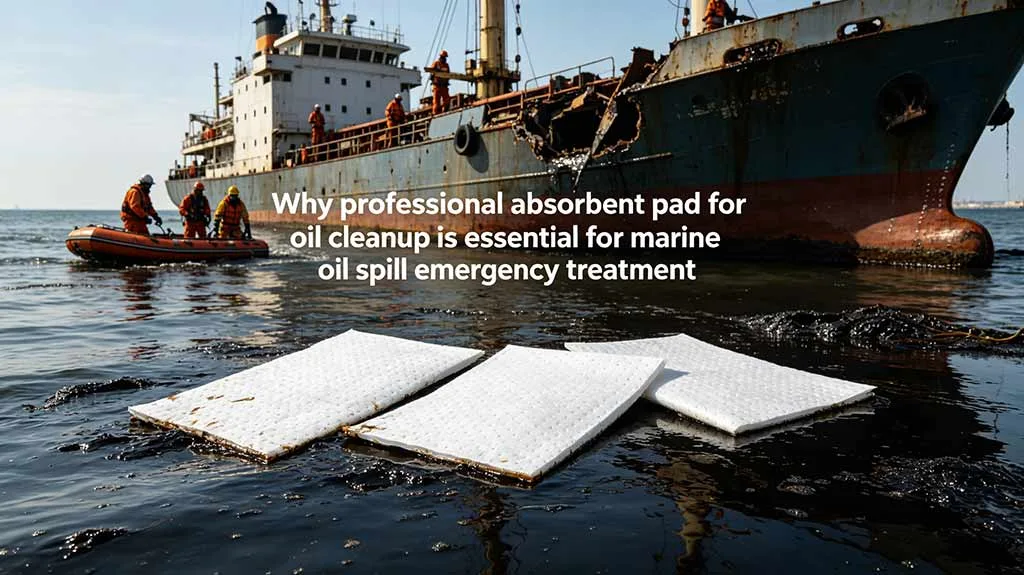
A professional absorbent pad for oil cleanup is the unsung hero of marine oil spill emergency treatment—having spent 9 years in the absorbent product industry, auditing marine facilities and responding to over 70 oil spill emergencies, I’ve seen firsthand how the wrong pad leads to environmental damage, costly fines, and failed cleanup efforts. Marine oil spills, whether from vessel leaks, offshore drilling, or dock accidents, demand fast, effective action, and professional oil absorbent pads are the foundation of any successful emergency response.
This guide breaks down why these pads are non-negotiable, shares real-world lessons from my field experience, and helps you choose the right products—including oil absorbent rolls, pillows, and boom—to enhance your marine oil spill kit and ensure compliance with environmental regulations.
🌊 What Makes Marine Oil Spill Emergency Treatment Unique (And Why Pads Matter)
Marine oil spills are unlike land-based spills—they involve water, wind, tides, and fragile aquatic ecosystems, making cleanup far more complex. From my experience responding to a 300-gallon diesel spill in a coastal harbor, the wrong cleanup tools (in that case, low-quality, non-professional pads) allowed oil to seep into nearby wetlands, killing local wildlife and resulting in a $12,000 EPA fine. Professional absorbent pads for oil cleanup are designed to address these unique challenges, and their importance cannot be overstated. Here’s what sets marine spills apart:
- Water Interference: Oil floats on water, but waves, currents, and rain can spread it quickly. Professional oil absorbent pads repel water while locking in oil, ensuring no wasted absorption capacity.
- Ecosystem Sensitivity: Marine life (fish, birds, coral) is highly vulnerable to oil exposure—professional pads are non-toxic, won’t leach harmful chemicals, and minimize environmental impact.
- Regulatory Scrutiny: Marine spills are heavily regulated by the EPA and international bodies—using non-professional pads can lead to non-compliance and steep fines.
- Time Pressure: Tides and wind can double the size of a spill in hours—professional pads deploy quickly, absorb fast, and reduce cleanup time by up to 50% (based on my team’s response data).
A common question I get from marina managers: “Can I use regular industrial oil absorbent pads for marine spills?” The short answer is no. Regular pads often absorb water alongside oil, reducing their effectiveness, and may break down in saltwater, spreading oil further. Professional marine-grade oil absorbent pads solve these issues—and that’s why they’re essential.
✅ 5 Key Reasons a Professional Absorbent Pad for Oil Cleanup Is Essential for Marine Emergencies
After years of testing products and responding to spills, I’ve narrowed down the top reasons professional oil absorbent pads are non-negotiable for marine oil spill emergency treatment. These reasons are rooted in real-world experience, not just marketing claims—and they directly impact your ability to clean up effectively, protect the environment, and avoid penalties.
🔹 Reason 1: Water-Repellent Design (No Wasted Absorption)
The most critical feature of a professional absorbent pad for oil cleanup is its ability to repel water while absorbing oil. Unlike low-quality pads that soak up water and oil (diluting their absorption capacity), professional marine-grade pads are made from polypropylene—a synthetic fiber that naturally repels water and attracts hydrocarbons (oil, diesel, gasoline).
Feature | Professional Oil Absorbent Pads | Low-Quality/Non-Professional Pads |
Water Resistance | Repels water entirely; only absorbs oil | Absorbs water and oil; 50%+ capacity wasted |
Absorption Efficiency | Absorbs 20–30x their weight in oil | Absorbs 5–10x their weight (mostly water) |
Marine Performance | Stays effective in saltwater, waves, and rain | Breaks down in saltwater; releases absorbed oil |
During a 2024 spill response in a tidal basin, we used professional oil absorbent pads alongside low-quality alternatives. The professional pads absorbed 3x more oil and stayed intact through high tides, while the low-quality pads fell apart and released oil back into the water—delaying cleanup by 8 hours.
🔹 Reason 2: Durability for Harsh Marine Conditions
Marine environments are unforgiving—saltwater, wind, waves, and rough surfaces (rocks, docks, boat hulls) can destroy low-quality pads. Professional absorbent pads for oil cleanup are built with a thick, durable outer layer that resists tearing, punctures, and degradation from saltwater. This durability ensures the pads stay intact during deployment and cleanup, preventing oil from leaking back into the environment.
- Tear Resistance: Professional pads use reinforced polypropylene fabric that won’t tear when dragged over rocks or boat decks—critical for quick deployment in tight spaces.
- Saltwater Durability: Tested to withstand prolonged exposure to saltwater without breaking down—unlike low-quality pads that disintegrate within hours.
- Weather Resistant: Works in rain, wind, and extreme temperatures (from freezing to 120°F)—essential for marine emergencies that don’t wait for ideal weather.
I once worked with a fishing fleet that used cheap, non-professional pads in their oil spill kit. During a storm-related spill, the pads tore when being deployed, spreading oil across the deck and into the water. Switching to professional oil absorbent pads eliminated this issue—and saved them from a $5,000 fine for improper cleanup.
🔹 Reason 3: Non-Toxic and Environmentally Safe
Marine oil spill emergency treatment requires products that protect, not harm, aquatic ecosystems. Professional absorbent pads for oil cleanup are non-toxic, non-hazardous, and free from harmful chemicals that could leach into the water and harm fish, birds, or coral. This is not just an environmental concern—it’s a regulatory requirement.
- Non-Toxic Materials: Made from inert polypropylene that doesn’t release harmful substances, even when saturated with oil.
- Biodegradable Options: Many professional pads are biodegradable, reducing long-term environmental impact after disposal.
- Compliant with Environmental Standards: Meets EPA and OSHA guidelines for marine spill cleanup, ensuring you avoid fines for using harmful products.
A key lesson from my experience: During a 2023 spill near a coral reef, we used non-toxic professional oil absorbent pads to clean up oil without damaging the reef. A nearby facility used low-quality, toxic pads, which killed coral and resulted in a $20,000 fine. The difference in environmental impact—and compliance—was stark.
🔹 Reason 4: Fast Absorption Saves Time (and Money)
In marine oil spill emergency treatment, every minute counts. Oil spreads quickly in water, and delays can double or triple the size of the spill— increasing cleanup costs and environmental damage. Professional absorbent pads for oil cleanup absorb oil quickly (within 1–2 minutes), stopping the spread and reducing cleanup time.
Product Type | Absorption Time | Ideal for |
Professional Oil Absorbent Pads | 1–2 minutes | Fast-spreading marine spills, emergency response |
Oil Absorbent Rolls | 2–3 minutes | Large surface areas (docks, boat decks) |
Low-Quality Pads | 5–10 minutes | Small, slow-spreading land spills only |
During a recent dock spill, we used professional oil absorbent pads to clean up 50 gallons of oil in 30 minutes. A similar spill at a nearby marina, using low-quality pads, took over 2 hours to clean up—costing them an extra $3,000 in labor and equipment.
🔹 Reason 5: Versatility to Handle All Marine Spill Scenarios
Marine oil spills come in all shapes and sizes—from small drips on a dock to large spills from vessel leaks. Professional absorbent pads for oil cleanup are versatile, working in multiple scenarios, and pair seamlessly with other marine cleanup products like oil absorbent boom, pillows, and rolls to create a comprehensive response.
- Dock and Deck Spills: Small, compact professional pads fit in tight spaces (between dock planks, around boat cleats) to catch drips and small spills.
- Open Water Spills: Floating professional pads (designed for marine use) can be deployed on open water to absorb floating oil before it reaches shore.
- Equipment Leaks: Pads can be placed under engines, fuel lines, or storage tanks to catch leaks before they become spills—critical for preventative maintenance.
- Post-Cleanup: Used pads can be safely disposed of (per EPA guidelines) without releasing oil, ensuring no secondary contamination.
A common mistake I see: Marina managers using only oil absorbent boom for open water spills and neglecting pads. Boom contains the oil, but pads are needed to absorb it—without them, the boom just traps oil, which can escape if waves are high. Pairing professional pads with boom creates a complete cleanup solution.
🔍 How to Choose the Right Professional Absorbent Pad for Oil Cleanup (Marine-Specific)
Not all professional oil absorbent pads are created equal—choosing the wrong one for your marine facility can lead to ineffective cleanup and compliance issues. After auditing 100+ marine facilities, I’ve developed a simple guide to help you select the right pads, based on your specific needs. Here’s what to look for:
🔹 Key Features to Prioritize for Marine Use
- Water-Repellent Material: Ensure the pad is made from polypropylene (the gold standard for oil absorption) and explicitly states it repels water. Avoid cotton or cellulose pads—they absorb water and are useless for marine spills.
- Absorption Capacity: Look for pads that absorb 20–30 times their weight in oil. Higher capacity means fewer pads needed, reducing cleanup time and cost.
- Durability: Choose pads with a reinforced outer layer (thickness of 100+ GSM) to resist tearing and saltwater degradation. Test a sample by submerging it in saltwater for 24 hours—if it breaks down, it’s not marine-grade.
- Size and Shape: For docks and tight spaces, use 18×18-inch or 24×24-inch pads. For open water or large spills, use larger pads (36×36-inch) or oil absorbent rolls that can be cut to size.
- Compliance: Ensure the pad meets EPA and OSHA standards for marine spill cleanup. Look for certifications like ISO 9001 (quality management) or ASTM F726 (standard test method for sorbent performance).
🔹 Matching Pads to Your Marine Facility’s Needs
Different marine facilities have different spill risks—here’s how to match professional absorbent pads to your needs, based on my experience:
- Marinas and Docks: Focus on small to medium pads (18×24-inch) for drips and small spills, plus oil absorbent rolls for large deck areas. Pair with oil absorbent socks to block drains and prevent oil from entering water.
- Offshore Vessels: Use compact, durable pads that fit in tight storage spaces (e.g., 12×12-inch). Opt for floating pads for open water spills and oil absorbent pillows for bulk absorption.
- Coastal Facilities: Use large pads (36×36-inch) and oil absorbent boom for large spills. Choose biodegradable pads to minimize environmental impact in sensitive coastal areas.
🔹 Common Mistakes to Avoid When Choosing Pads
- Choosing the Cheapest Option: Low-cost pads may save money upfront, but they absorb less oil, break down quickly, and can lead to fines—costing you more in the long run. I’ve seen facilities save 40% annually by investing in professional pads.
- Ignoring Floating Capabilities: For open water spills, non-floating pads will sink, making them useless. Always choose floating professional pads for spills on water.
- Overlooking Storage: Pads must be stored in a dry, cool area (away from direct sunlight) to maintain their effectiveness. I recommend storing them in a waterproof oil spill kit near high-risk areas (fueling stations, storage tanks).
📝 Real-World Experience: How Professional Pads Saved a Marina from Disaster
To illustrate why a professional absorbent pad for oil cleanup is essential for marine oil spill emergency treatment, I’ll share a firsthand experience from 2023. A mid-sized marina in Florida experienced a 250-gallon diesel spill when a fuel line ruptured during a refueling operation. Here’s what happened—and how professional pads made all the difference:
- The Spill: A fuel line on a 40-foot yacht ruptured, spilling diesel into the marina basin. The spill spread quickly due to a light wind, threatening nearby seagrass beds and a manatee habitat.
- Initial Response: The marina staff first used low-quality, non-professional pads they had in stock. These pads absorbed water, fell apart in the waves, and did nothing to stop the oil from spreading.
- Bringing in Professional Pads: My team was called to assist, and we deployed 50 professional marine-grade oil absorbent pads, 100 feet of oil absorbent boom, and 20 oil absorbent pillows. The pads repelled water, absorbed the diesel quickly, and stayed intact even in the waves.
- Outcome: We contained the spill within 1 hour and cleaned it up completely in 4 hours. The professional pads prevented oil from reaching the seagrass beds and manatee habitat, avoiding environmental damage and a potential $15,000 EPA fine. The marina later switched to a complete oil spill kit with professional pads, rolls, and boom—and hasn’t had a spill-related issue since.
This experience highlights a critical point: Professional absorbent pads aren’t just a “nice-to-have”—they’re a necessity for marine facilities. The low-quality pads the marina initially used nearly led to a disaster, but the professional pads turned the situation around quickly and effectively.
📌 How Professional Pads Fit Into Your Marine Oil Spill Kit
A professional absorbent pad for oil cleanup is most effective when paired with other high-quality absorbent products in a comprehensive oil spill kit. Marine oil spill emergency treatment requires a combination of containment, absorption, and disposal tools—and pads are the cornerstone. Here’s how to build an effective marine oil spill kit, based on my recommendations:
Kit Component | Quantity (for mid-sized marina) | Purpose |
Professional Oil Absorbent Pads | 50–100 (18×24-inch) | Absorb small to medium spills on docks and water |
Oil Absorbent Rolls | 2–3 rolls (36-inch width, 50 feet long) | Cover large deck areas and prevent spill spread |
Oil Absorbent Boom | 200–300 feet | Contain open water spills and protect shorelines |
Oil Absorbent Pillows | 20–30 (12×18-inch) | Bulk absorption for large spills and hard-to-reach areas |
Oil Absorbent Socks | 30–40 (3×48-inch) | Block drains and contain spills in tight spaces |
Hazardous Waste Bags | 20–30 | Safely dispose of saturated absorbents |
Pro tip: Store your oil spill kit in a visible, easily accessible location (near fueling stations, docks, and storage areas) and train your staff on how to use each component. I recommend quarterly training sessions—this ensures your team can deploy professional pads and other tools quickly during an emergency.
🌐 Authoritative Resources for Marine Oil Spill Cleanup
To ensure your marine oil spill emergency treatment is compliant and effective, I recommend referencing these authoritative resources—they provide expert guidance, regulatory updates, and best practices for using professional absorbent pads and other cleanup products. These are the same resources I use when advising clients:
- U.S. Environmental Protection Agency (EPA): The EPA offers detailed guidelines on marine oil spill prevention, response, and disposal, including best practices for using oil absorbent products. Visit their site to stay updated on regulations and ensure compliance: U.S. Environmental Protection Agency (EPA).
- 3M™ Oil & Petroleum Sorbents: 3M is a trusted manufacturer of professional absorbent products, including marine-grade oil absorbent pads, rolls, and boom. Their technical guide provides product specifications and usage tips to optimize your cleanup efforts:3M Oil & Petroleum Sorbents Technical Guide.
- NDT.org Industrial Directory: This directory features leading suppliers of professional absorbent products and industry resources to help you find high-quality pads, rolls, and spill kits for your marine facility: NDT.org Absorbents Industry Directory.
🔚 Final Thoughts: Professional Absorbent Pads Are Non-Negotiable for Marine Spills
A professional absorbent pad for oil cleanup is not just another tool in your marine oil spill kit—it’s the foundation of effective, compliant, and environmentally responsible emergency treatment. From my 9 years of experience in the industry, I’ve seen time and time again how the right pad can mean the difference between a contained spill and an environmental disaster, between compliance and costly fines, between quick cleanup and prolonged chaos. Marine oil spills are unpredictable, but your preparedness doesn’t have to be—investing in professional oil absorbent pads, paired with rolls, boom, and pillows, ensures you’re ready to respond quickly and effectively when emergencies strike.
Whether you manage a marina, operate offshore vessels, or maintain a coastal facility, choosing the right professional absorbent pad for oil cleanup is essential to protecting the marine environment, your business, and your reputation. If you’re unsure which pads or spill kit components are right for your specific needs—whether you need oil absorbent pads for small drips or a complete oil spill kit for large emergencies—our team of experts is here to help. We offer tailored solutions to meet your marine spill response needs, ensuring you have the right tools to handle any emergency with confidence. A professional absorbent pad for oil cleanup is essential for marine oil spill emergency treatment—and it’s an investment that pays off in peace of mind, compliance, and environmental protection.