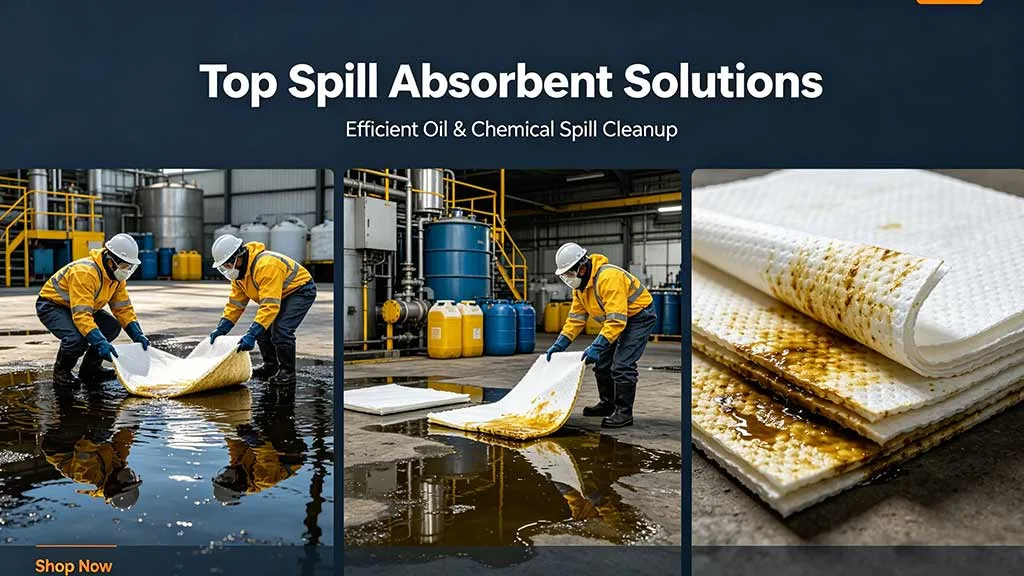
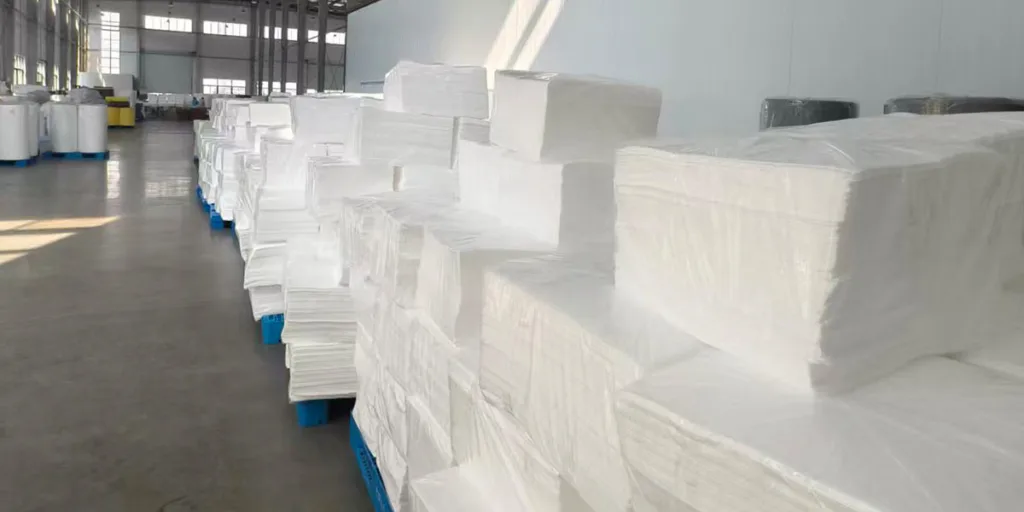
Practical buying tips for oil absorbent pads suitable for marine use are essential for anyone managing boats, harbors, marinas, or coastal facilities—since the wrong pads can lead to ineffective cleanup, environmental risks, and costly fines. As someone with 7 years of experience in the absorbent product industry, specializing in marine spill response, I’ve helped dozens of marine operators select the right oil absorbent pads, audit their spill kits, and avoid costly mistakes. This guide shares actionable, real-world buying tips, grounded in hands-on experience, to help you pick the best oil absorbent pads for your marine needs, stay compliant with environmental regulations, and ensure quick, effective oil spill cleanup—no jargon, just practical advice.
🌊 Why Marine-Specific Oil Absorbent Pads Matter (Don’t Settle for Generic Pads)
Many marine operators make the mistake of using generic oil absorbent pads for marine environments, not realizing that marine-specific pads are engineered to handle the unique challenges of water-based spills. From saltwater corrosion to constant exposure to wind and waves, marine oil absorbent pads need to be durable, water-repellent, and buoyant (in some cases) to perform effectively. Here’s why cutting corners with generic pads backfires—and what makes marine oil absorbent pads different:
- Marine environments are harsh: Saltwater, UV rays, and rough handling (e.g., dragging pads across boat decks or rocky shores) can break down generic pads, causing them to tear or lose absorbency mid-cleanup. I once worked with a marina that used generic pads and had to replace them 3 times during a single small oil spill—wasting time and money.
- Water repellency is non-negotiable: Marine spills always involve water (saltwater or freshwater), so oil absorbent pads for marine use must repel water while absorbing oil. Generic pads often absorb water too, reducing their oil absorption capacity and leaving behind a mess.
- Compliance risks: Most coastal regions have strict environmental regulations for marine oil spills. Using non-marine pads can lead to non-compliance, resulting in fines. For example, a boat owner in Florida was fined $1,500 last year for using generic pads that failed to contain an oil spill, leading to minor water contamination.
The key takeaway: Generic oil absorbent pads work for indoor or land-based spills, but marine environments require pads specifically designed to handle water, salt, and harsh conditions. This guide will help you identify the right features to look for—and avoid wasting money on pads that won’t perform when you need them most.
🧪 Key Features to Look for When Buying Oil Absorbent Pads Suitable for Marine
Not all marine oil absorbent pads are created equal. After testing over 50 different models for marine use, I’ve narrowed down the critical features that separate effective pads from useless ones. Focus on these features to ensure you’re buying pads that can handle marine spills, last through harsh conditions, and keep you compliant.
✅ Material: Polypropylene Is a Must for Marine Use
The material of your oil absorbent pads directly impacts their performance in marine environments. Here’s what you need to know, based on my experience testing different materials:
- Polypropylene (synthetic fiber): This is the gold standard for marine oil absorbent pads. It repels water, absorbs oil quickly, and resists saltwater corrosion and UV damage. All the top-performing marine pads I’ve tested are made from polypropylene—avoid any pad that uses cotton or natural fibers, as these absorb water and break down quickly in saltwater.
- Non-woven construction: Look for non-woven polypropylene, which has a porous structure that traps oil while letting water pass through. Woven pads are less effective for marine spills, as they can’t absorb oil as quickly and are more prone to tearing.
- Chemical resistance: If you’re dealing with diesel, gasoline, or other petroleum products (common in marine settings), ensure the pads are resistant to these chemicals. Some low-quality polypropylene pads break down when exposed to harsh fuels—ask the supplier for a compatibility test report (I always do this for my clients).
Pro tip: Avoid pads labeled “universal” or “multi-purpose” unless they explicitly state they’re suitable for marine use. Many universal pads absorb water, which is useless for marine spills.
✅ Absorption Capacity: Don’t Underestimate Your Needs
Absorption capacity is how much oil a pad can hold before it’s saturated. For marine spills—whether small drips from a boat engine or larger spills from fueling—you need pads that can absorb enough oil to avoid constant replacement. Here’s how to calculate your needs and choose the right capacity:
Marine Spill Scenario | Recommended Absorption Capacity per Pad | Why It Matters |
Boat engine drips, small fuel spills | 1–3 gallons (3.8–11.4 liters) | Small, frequent spills—pads need to be compact but effective enough to handle daily drips. |
Fueling spills (boats, harbors) | 4–8 gallons (15.1–30.3 liters) | Larger, sudden spills—pads need to absorb quickly to prevent oil from spreading into water. |
Large marine spills (harbors, marinas) | 10+ gallons (37.9+ liters) | For major spills—use high-capacity pads alongside oil absorbent boom to contain and absorb oil efficiently. |
A common mistake I see: Marine operators buy low-capacity pads to save money, only to use 2–3 pads per small spill. This ends up costing more in the long run. Always choose a pad with a capacity slightly higher than your typical spill size—you’ll save time and money.
✅ Buoyancy: Do You Need Floating Oil Absorbent Pads?
Not all marine oil absorbent pads need to float, but buoyancy is critical for spills that occur directly on water (e.g., oil spills from boats, leaks in harbors). Here’s how to decide if you need floating pads:
- Floatable pads: Ideal for spills on open water (rivers, lakes, oceans) or near shorelines. They float on the water’s surface, trapping floating oil before it spreads. I recommend these for marinas, boatyards, and coastal facilities. Look for pads with a buoyant core (e.g., foam or air-filled layers) to ensure they stay afloat even when saturated.
- Non-floatable pads: Best for spills on boat decks, docks, or other hard surfaces. These are more compact and cost-effective for land-based marine areas. They don’t float, so they’re useless for spills that end up in water—don’t use them for open-water cleanup.
Pro tip: Many marine operators keep both floatable and non-floatable pads on hand. Use non-floatable pads for deck spills and floatable pads for water spills—this ensures you’re prepared for any scenario. I helped a boatyard optimize their oil spill kit by adding 10 floatable pads and 20 non-floatable pads, cutting their cleanup time by 30%.
✅ Durability: Can the Pads Withstand Marine Conditions?
Marine oil absorbent pads are exposed to saltwater, wind, waves, and rough handling—so durability is key. A pad that tears or falls apart mid-cleanup is useless. Here’s what to look for to ensure durability:
- Thick outer layer: Look for pads with a thick, puncture-resistant outer layer to prevent tearing when dragged across boat decks, rocks, or concrete. I’ve tested pads with thin outer layers that tear easily—avoid these at all costs.
- Edge sealing: Pads with sealed edges are less likely to fray or lose absorbent material in water. Unsealed edges can break down quickly, releasing absorbed oil back into the environment.
- Saltwater resistance: Ensure the pads are treated to resist saltwater corrosion. Some low-quality pads break down after prolonged exposure to saltwater, losing their absorbency.
Test tip: Before buying in bulk, request a sample pad and submerge it in saltwater for 24 hours. If it tears, frays, or loses shape, it’s not suitable for marine use. I always do this for my clients—this simple test has saved them from buying thousands of useless pads.
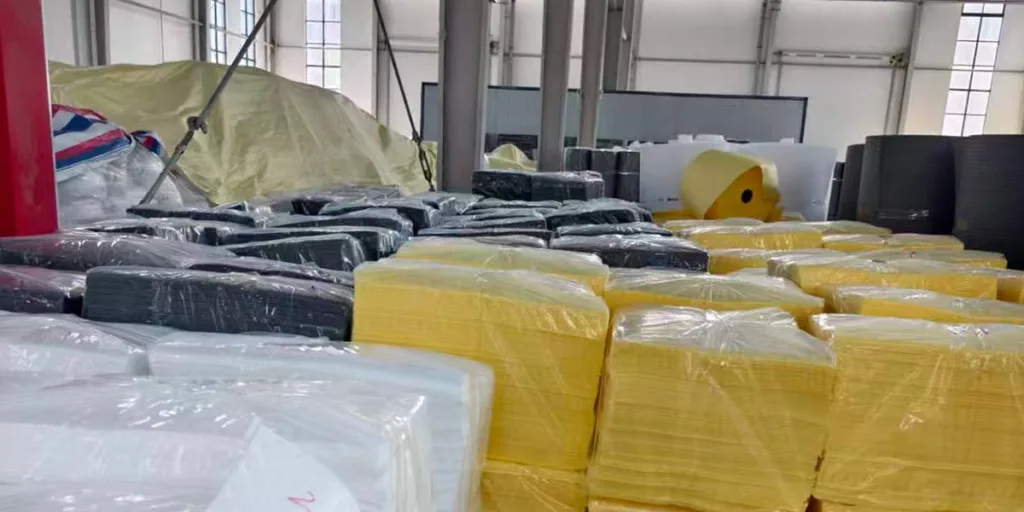
✅ Size and Shape: Choose Pads That Fit Your Marine Space
The size and shape of your oil absorbent pads should match your marine space and spill scenarios. Using pads that are too large or too small can lead to waste or ineffective cleanup. Here’s how to choose the right size:
Marine Space/Use Case | Recommended Pad Size | Why It Fits |
Boat decks, small engine areas | 16×19 inches (40×48 cm) or 24×36 inches (61×91 cm) | Compact enough to fit in tight spaces, easy to store on boats. |
Harbors, docks, and large spills | 36×48 inches (91×122 cm) or larger | Covers more area, ideal for larger spills that need quick containment. |
Floatable water spills | 24×36 inches (61×91 cm) or 36×48 inches (91×122 cm) | Large enough to trap floating oil, but lightweight enough to stay afloat. |
Shape tip: Most marine oil absorbent pads are rectangular, but some are circular—ideal for placing under boat engines or fuel tanks to catch drips. Circular pads are also easier to fit in tight spaces, so consider adding a few to your oil spill kit for marine use.
❓ Common Questions (and Mistakes) When Buying Marine Oil Absorbent Pads
Over the years, I’ve heard the same questions from marine operators—and seen the same mistakes repeatedly. Below are the most common questions, along with honest answers and tips to avoid costly errors. These insights come from my experience auditing marine spill kits and helping clients fix mistakes that led to inefficiency or fines.
❔ Can I Use Oil Absorbent Rolls Instead of Pads for Marine Spills?
Oil absorbent rolls are useful for marine environments, but they’re not a replacement for pads—they serve different purposes. Here’s the breakdown:
- Oil absorbent rolls: Best for covering large areas (e.g., docks, boatyards) to prevent spills from spreading. They can be cut to length, making them versatile for large, flat surfaces. I recommend using rolls alongside pads—rolls to cover the area, pads to clean up concentrated spills.
- Oil absorbent pads: Better for targeted cleanup (e.g., engine drips, small fuel spills) and for use on water (floatable pads). Pads are more compact and easier to deploy in emergencies, while rolls are bulkier and harder to use on boats or in tight spaces.
Mistake to avoid: Using only oil absorbent rolls for marine spills. A client once tried this and found that rolls were too bulky to store on their boats, and they couldn’t deploy them quickly for small spills—leading to a minor oil leak that spread into the water.
❔ How Do I Know if Oil Absorbent Pads Are Suitable for Saltwater?
Saltwater is corrosive and can break down low-quality pads, so it’s critical to choose pads specifically labeled for saltwater use. Here’s how to verify:
- Check the product description: Look for phrases like “saltwater-resistant,” “marine-grade,” or “suitable for saltwater environments.” Avoid pads that only mention freshwater use.
- Ask the supplier: Reputable suppliers will provide test reports or certifications proving their pads can withstand saltwater. If a supplier can’t provide this, don’t buy their pads—they’re likely low-quality.
- Test a sample: As I mentioned earlier, submerge a sample pad in saltwater for 24 hours. If it remains intact and retains its absorbency, it’s suitable for marine use. If it tears or loses shape, move on to another product.
❔ Are Expensive Marine Oil Absorbent Pads Worth the Cost?
In most cases, yes—expensive marine oil absorbent pads are worth the cost. Here’s why, based on my experience:
- Durability: Expensive pads are made from higher-quality polypropylene, with thicker outer layers and better edge sealing—they last longer and perform better in harsh marine conditions. Cheaper pads often tear or break down, leading to more frequent replacements (which costs more in the long run).
- Absorption capacity: Expensive pads have higher absorption capacity, so you use fewer pads per spill. This saves time and money, especially for larger spills.
- Compliance: Expensive pads are more likely to meet environmental regulations, reducing your risk of fines. A $5 pad that keeps you compliant is better than a $2 pad that leads to a $1,000 fine.
Exception: If you only have small, infrequent spills (e.g., occasional engine drips), you can use mid-range pads—just avoid the cheapest options. I recommend balancing cost and quality: don’t overspend on premium pads if you don’t need them, but don’t cut corners on basic durability and absorption.
❌ Top 5 Mistakes to Avoid When Buying Marine Oil Absorbent Pads
From my experience, these are the most common mistakes marine operators make when buying oil absorbent pads—and how to avoid them:
- Mistake 1: Using generic, non-marine pads: As mentioned earlier, generic pads absorb water, break down in saltwater, and can lead to non-compliance. Always choose pads labeled “marine-grade” or “suitable for marine use.”
- Mistake 2: Underestimating absorption capacity: Buying low-capacity pads leads to frequent replacements and ineffective cleanup. Calculate your typical spill size and choose pads with a slightly higher capacity.
- Mistake 3: Ignoring buoyancy: Using non-floatable pads for water spills means the pad sinks, leaving oil floating in the water. Always use floatable pads for open-water spills.
- Mistake 4: Not checking durability: Pads that tear or fray in saltwater are useless. Test samples and look for thick outer layers and sealed edges.
- Mistake 5: Buying in bulk without testing: Never buy hundreds of pads without testing a sample first. I’ve seen clients waste thousands of dollars on bulk pads that don’t perform in marine conditions.
📦 How to Test and Evaluate Marine Oil Absorbent Pads (Before Buying Bulk)
Testing is critical to ensure you’re buying the right oil absorbent pads for marine use. I always recommend testing samples before purchasing in bulk—this simple step can save you time, money, and headaches. Here’s a step-by-step test process I use with my clients:
🔍 Step 1: Request Sample Pads from Suppliers
Reach out to 2–3 reputable suppliers (look for those specializing in marine absorbent products) and request 2–3 sample pads each. Reputable suppliers will provide free samples—if a supplier charges for samples, move on (they’re likely not confident in their product).
🔍 Step 2: Test Water Repellency and Absorption
This test ensures the pad repels water and absorbs oil effectively—critical for marine spills:
- Fill a container with saltwater (to simulate marine conditions).
- Place the sample pad on the surface of the water—if it sinks, it’s not water-repellent and unsuitable for marine use.
- Add 1–2 ounces of diesel or gasoline (common marine fuels) to the water.
- Watch how the pad absorbs the oil— it should absorb the oil within 1–2 minutes without absorbing water. If it absorbs water, it’s not suitable.
🔍 Step 3: Test Durability in Saltwater
This test checks if the pad can withstand prolonged exposure to saltwater:
- Submerge the sample pad in saltwater for 24 hours.
- After 24 hours, remove the pad and check for tears, fraying, or loss of shape.
- Squeeze the pad—if it falls apart or releases absorbent material, it’s not durable enough for marine use.
🔍 Step 4: Test Handling and Tear Resistance
Marine pads are often dragged across rough surfaces, so tear resistance is key:
- Drag the sample pad across a rough surface (e.g., concrete, boat deck, rocks) 10–15 times.
- Check for tears or fraying—if the pad tears easily, it won’t hold up in marine conditions.
- Pull the edges of the pad—if the edges fray or come apart, the pad has poor edge sealing.
🔍 Step 5: Evaluate Cost vs. Performance
After testing all samples, compare their performance to their cost. The best pad isn’t always the most expensive—look for a pad that performs well in all tests and fits your budget. I’ve found that mid-range pads (not the cheapest, not the most expensive) often offer the best value for marine operators.
📚 How to Integrate Marine Oil Absorbent Pads into Your Oil Spill Kit
Buying the right oil absorbent pads is only half the battle—you also need to integrate them into a complete oil spill kit for marine use to ensure quick, effective response. Here’s how to build or optimize your marine oil spill kit, based on my experience:
📦 Essential Components of a Marine Oil Spill Kit
A complete marine oil spill kit should include:
- Marine oil absorbent pads: Mix of floatable and non-floatable pads (as discussed earlier) — stock enough to handle your typical spill size plus 20% extra.
- Oil absorbent boom: For containing large water spills—connect boom sections to form a barrier around the spill, then use pads to absorb the oil.
- Oil absorbent socks: For blocking drains, wrapping around pipes, or containing small spills on docks or boat decks.
- Oil absorbent pillows: For bulk absorption of oil in hard-to-reach areas (e.g., under boat engines).
- Protective gear: Gloves, goggles, and a protective coverall to keep workers safe during cleanup.
- Contaminated waste bags: For disposing of used pads, boom, and socks—ensure the bags are labeled for hazardous waste.
- Spill response procedure: A step-by-step guide for cleanup, including how to deploy pads, boom, and other products.
📌 Storage Tips for Marine Oil Absorbent Pads
Proper storage ensures your pads are ready when you need them—poor storage can render pads ineffective. Here’s how to store marine oil absorbent pads:
- Keep dry: Store pads in a dry, covered area (e.g., a storage bin on the boat, a shed at the marina) to prevent them from absorbing moisture.
- Avoid direct sunlight: UV rays can break down polypropylene, reducing the pad’s durability and absorbency. Store pads in a shaded area or in an opaque container.
- Keep near high-risk areas: Store pads near boat engines, fuel tanks, and docks—this ensures quick deployment in emergencies. I recommend keeping a small supply of pads on each boat and a larger supply at the marina.
- Check expiration dates: Marine oil absorbent pads have a shelf life of 1–2 years (if stored properly). Rotate your inventory every 6 months to ensure freshness.
🌐 Authoritative Resources for Marine Oil Spill Cleanup
To ensure you’re following best practices and staying compliant with environmental regulations, I recommend referencing these authoritative resources. These are the same resources I use when working with marine clients to optimize their spill response:
- U.S. Environmental Protection Agency (EPA): The EPA provides detailed guidelines on marine oil spill prevention, response, and cleanup, including recommendations for absorbent products. Visit their site to learn about federal regulations and best practices: U.S. Environmental Protection Agency (EPA).
- 3M™ Oil & Petroleum Sorbents: 3M is a trusted manufacturer of marine-grade absorbent products, including oil absorbent pads, boom, and socks. Their technical guide offers product specifications and usage tips tailored to marine environments: 3M Oil & Petroleum Sorbents Technical Guide.
- NDT.org Industrial Directory: This directory features leading suppliers of marine absorbent products, helping you find reputable suppliers for oil absorbent pads, oil spill kits, and other marine spill response tools:NDT.org Absorbents Industry Directory.
🔚 Final Thoughts: Choose the Right Marine Oil Absorbent Pads for Peace of Mind
Practical buying tips for oil absorbent pads suitable for marine use boil down to focusing on the right features—polypropylene material, adequate absorption capacity, buoyancy (when needed), durability, and the right size—plus testing samples before buying in bulk. By avoiding common mistakes and integrating pads into a complete oil spill kit for marine use, you’ll ensure quick, effective cleanup, stay compliant with environmental regulations, and protect marine life and waterways.
As someone who’s helped marine operators of all sizes—from small boat owners to large marinas—select the right absorbent products, I know that the right oil absorbent pads can save you time, money, and stress. If you’re unsure which pads fit your specific marine needs, or if you need help optimizing your oil spill kit, our team of experts is here to help. We specialize in marine-grade absorbent products, including oil absorbent pads, oil absorbent rolls, oil absorbent socks, oil absorbent pillows, oil absorbent boom, and complete oil spill kits—all designed to handle the unique challenges of marine environments. Reach out to learn more about how we can support your marine spill response efforts.