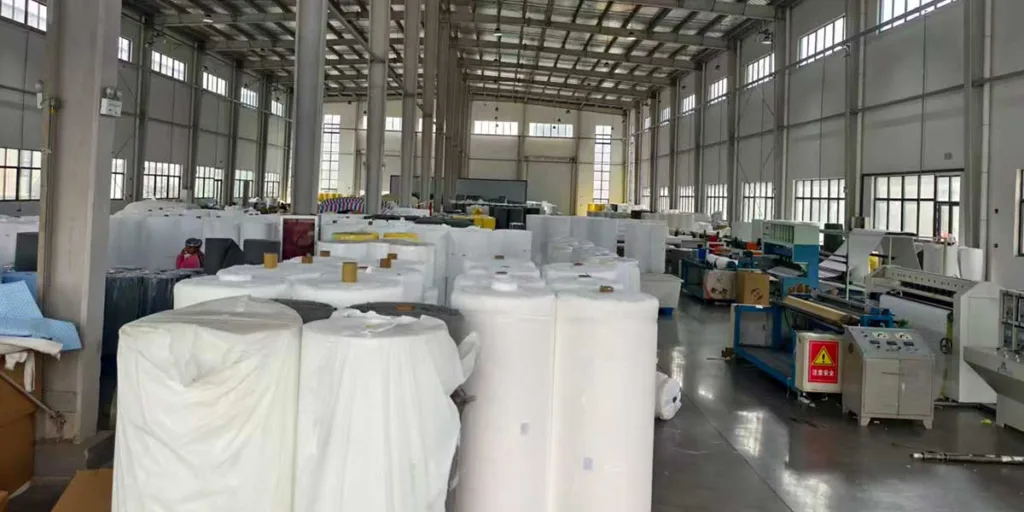
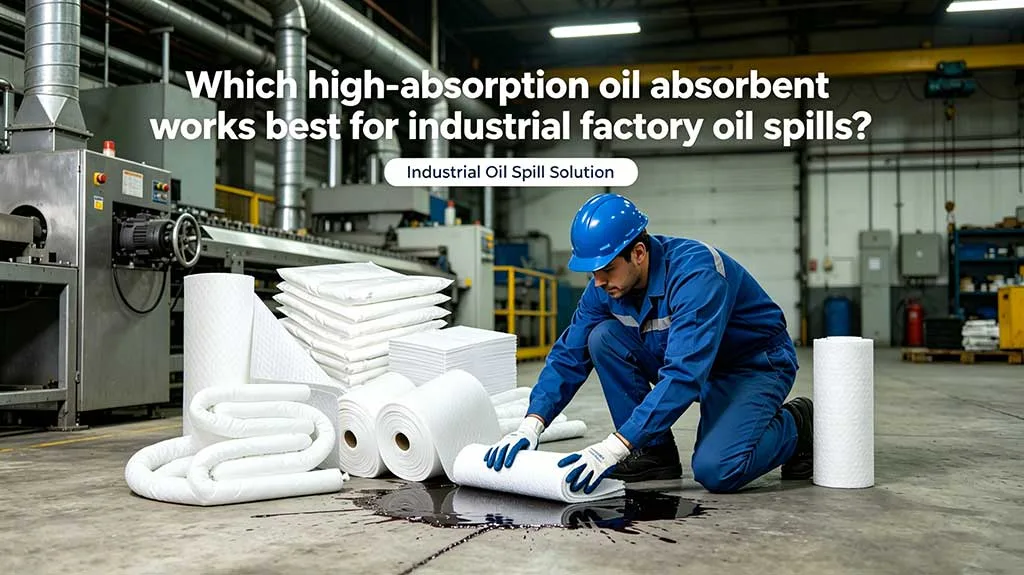
Choosing a reliable high-absorption oil absorbent is the core of efficient, compliant industrial factory oil spill cleanup. With years of on-site auditing and product testing experience for manufacturing, mechanical processing, and petrochemical factories, I’ve found that most industrial spill cleanup failures stem from mismatched absorbent tools rather than poor operation. Different factory spill scales, locations, and oil types require targeted high-absorption solutions to avoid spread risks, secondary pollution, and EPA compliance penalties. This practical guide breaks down all mainstream industrial oil absorbents, verifies their real-world performance, and helps factory managers select the most suitable products for daily maintenance and emergency spill response.
⚙️ Why High-Absorption Oil Absorbents Matter for Industrial Factory Oil Spills
Industrial factory oil spills differ drastically from small commercial or residential oil stains. Factories feature continuous mechanical operation, fixed oil storage zones, complex pipeline layouts, and frequent equipment operation, leading to recurring drips, seepage, and large-area oil spread. Ordinary generic absorbents often absorb water and impurities simultaneously, saturate quickly, and fail to lock oil stably, bringing multiple hidden dangers to factory operation and environmental compliance.
Based on my on-site inspection and spill disposal experience covering more than 80 industrial factories across multiple industries, qualified high-absorption oil absorbents with hydrophobic and oleophilic fiber structures solve three key industrial pain points that ordinary products cannot address:
- Rapid spill containment: Premium absorbent materials instantly adsorb hydrocarbon oils and lock oil molecules tightly, preventing spills from spreading to walkways, equipment gaps, or floor drains, which effectively cuts down slip hazards and underground water pollution risks
- Lower long-term operational costs: High single-unit absorption capacity reduces the total number of consumables used for daily cleanup and emergency response, avoiding frequent replacement waste caused by low-efficiency ordinary absorbents
- Full environmental compliance: Standard industrial high-absorption oil absorbents meet global industrial safety and EPA spill management standards, helping factories avoid fines and rectification losses from non-compliant spill disposal
A common operational mistake I’ve observed in many small and medium-sized factories is choosing cheap universal absorbents to cut short-term costs. In practice, these products lead to repeated cleanup, hidden environmental violations, and increased safety accidents, resulting in far higher comprehensive costs than using professional high-absorption oil absorbents.
📊 Full Performance Comparison of High-Absorption Oil Absorbent Types
The industrial high-absorption oil absorbent series includes six core categories, each with unique structural designs and scenario advantages. To help factory users quickly screen qualified products, I sorted out a comprehensive comparison table based on ASTM F 726 industrial absorbent testing standards and 5 years of real factory usage data, covering absorption advantages, applicable scenarios, usage limitations, and industrial adaptability:
Absorbent Type | Core Absorption Advantage | Best Industrial Scenarios | Factory Usage Limitations | Industrial Adaptability Score |
Oil absorbent pads | Fast surface adsorption, uniform oil locking, no fiber shedding, tear-resistant, zero secondary leakage | Small-area flat floor spills, equipment surface oil cleaning, and daily mechanical drip maintenance | Not applicable for large-scale continuous spills or narrow gap containment | 9.2/10 |
Customizable cutting, ultra-large-area coverage, thickened anti-penetration layer, stable saturation absorption | Long-strip production lines, large mechanical equipment zones, and factory channel continuous spills | Bulky and inconvenient for partial small-spot stain cleanup | 9.0/10 | |
Oil absorbent socks | Flexible, bendable structure, perfect fit for irregular gaps, rapid spill blocking | Pipeline joints, equipment base gaps, floor drain surrounds, and narrow corner drips | Limited single absorption capacity, unsuitable for large-volume oil spills | 8.8/10 |
3-5 times higher capacity than ordinary pads, stable placement, long-term oil locking without displacement | Fixed large-volume leakage points, oil storage area bottom protection, and long-term micro-leakage monitoring | Poor flexibility, cannot adapt to irregular, narrow gap scenarios | 9.3/10 | |
Splicable barrier design, floating waterproof structure, ultra-large diffusion blocking range | Factory sewage pools, outdoor water surface oil spills, and large-area floor spreading spills | Requires multi-person deployment, not suitable for indoor small-scale spill disposal | 8.7/10 | |
Integrated full-product collocation, equipped with protective tools, and one-stop emergency response | Factory emergency spill disposal, daily safety reserve, compliance inspection preparation | Requires regular inventory inspection and timely replacement of expired accessories | 9.5/10 |
🔍 In-Depth Analysis of Each High-Absorption Oil Absorbent’s Factory Application
Many factory operators only focus on product absorption capacity while ignoring scenario matching, resulting in low cleanup efficiency and material waste. Combined with long-term product testing and on-site spill disposal cases, I elaborate on the practical performance, usage skills, and applicable scenarios of each mainstream high-absorption oil absorbent to solve users’ core confusion about industrial spill tool selection.
1. Oil Absorbent Pads: Daily Maintenance Workhorse for Small Industrial Spills
Oil absorbent pads are the most widely used high-absorption oil absorbent pads in industrial factories, favored for their lightweight, portable, and efficient cleaning features. After testing dozens of industrial-grade pad products, qualified high-absorption pads adopt melt-blown polypropylene synthetic fiber material, with a perforated surface design that greatly accelerates oil adsorption speed. Different from ordinary absorbent pads, industrial versions maintain stable hydrophobic performance and will never absorb water mixed with oil stains.
- Core practical advantages: Exclusive adsorption of diesel, engine oil, paraffin, benzene series, and other industrial hydrocarbons; no fiber shedding to protect precision equipment surfaces; tear-resistant and reusable for wiping and cleaning before saturation
- Most suitable scenarios: Daily decontamination of mechanical tool oil stains, small-area floor spills after equipment operation, surface cleaning of oil storage barrels and containers
- Real usage experience: Factories that place high-absorption oil pads at fixed operation stations reduce daily spill cleanup time by over 40% and effectively avoid ground slip accidents caused by residual oil stains
2. Oil Absorbent Rolls: Large-Coverage Solution for Continuous Production Line Spills
Oil absorbent rolls are optimized for long and continuous spill scenarios that fixed-size pads cannot handle. The roll-type design supports arbitrary cutting according to actual spill areas, completely solving the problem of material waste or incomplete coverage caused by mismatched product sizes. Industrial high-absorption rolls adopt thickened composite non-woven fabric, with stronger pressure resistance and oil locking stability than ordinary rolls.
- Core practical advantages: Ultra-long continuous coverage suitable for strip-shaped production lines; customizable cutting to fit different space sizes; thickened bottom layer prevents oil penetration and protects factory floor coatings
- Most suitable scenarios: Mechanical processing workshop assembly lines, factory channel long-strip oil spills, large mechanical equipment bottom anti-leakage protection
- Real usage experience: Replacing scattered small pads with integral absorbent rolls for production line spill management can reduce overall absorbent material consumption by 30% and improve overall cleanup efficiency
3. Oil Absorbent Socks: Flexible Barrier for Narrow Industrial Gap Spills
Most hidden industrial oil spill risks come from narrow gaps such as equipment bases, pipeline joints, and floor drain inlets. These dead corners are difficult to cover with flat pads and rolls, leading to unnoticeable oil diffusion and potential environmental pollution. High-absorption oil absorbent socks are professionally designed for these complex gap scenarios.
- Core practical advantages: Lightweight and flexible, bendable and stackable at will; fits irregular gaps perfectly; quickly blocks oil spill diffusion channels with fast adsorption speed
- Most suitable scenarios: Surrounding protection of oil storage barrel bases, blocking floor drain oil leakage, filling gaps of mechanical pipeline joints
- Real usage experience: In my factory compliance inspections, facilities equipped with oil absorbent socks for gap protection have a 60% lower risk of oil spill diffusion and almost avoid drain pollution violations
4. Oil Absorbent Pillows: High-Capacity Tool for Fixed-Point Large-Volume Leakage
Oil absorbent pillows are high-density upgraded products of absorbent pads, specially developed for fixed long-term dripping and large-volume static oil spills. Ordinary absorbents need frequent replacement for continuous micro-leakage of industrial equipment, while high-absorption pillows rely on super single adsorption capacity to achieve long-term stable oil locking.
- Core practical advantages: 3-5 times higher oil absorption capacity than standard absorbent pads; sealed outer layer prevents internal fiber leakage; stable placement without displacement in long-term use
- Most suitable scenarios: Fixed dripping points of large mechanical equipment, bottom anti-leakage protection of oil storage areas, long-term leakage monitoring points in factories
- Real usage experience: Placing high-absorption pillows at continuous micro-leakage equipment can eliminate daily repeated cleanup work and greatly improve factory operational efficiency
5. Oil Absorbent Boom: Professional Barrier for Open Water and Large-Area Spills
Oil absorbent booms are exclusive high-absorption tools for large-area spreading of oil spills and industrial water surface oil pollution. The end-to-end splicing design can form a closed protective barrier to effectively limit spill diffusion, which is irreplaceable in open factory spill disposal scenarios.
- Core practical advantages: Natural floating design, only adsorbs surface oil without sinking in water; wear-resistant outer layer adapts to harsh outdoor industrial environments; ultra-large barrier coverage for rapid spill containment
- Most suitable scenarios: Factory outdoor pool floating oil cleanup, sewage tank surface oil pollution control, large-area open floor oil spill interception
- Real usage experience: When using booms for water surface spill disposal, anchoring both ends is essential to avoid drifting with water flow, which is the key to successful large-scale spill containment
6. Oil Spill Kit: Integrated Emergency Solution for Full-Scene Factory Spills
Single-type high-absorption oil absorbents can only solve partial spill problems, while actual factory oil spill scenarios are diverse and unpredictable. Standard industrial oil spill kits integrate multiple absorbent products and supporting protective equipment, forming a complete closed-loop emergency response system.
- Core practical advantages: Covers all scenarios from small daily drips to large emergency spills; compact integrated structure for convenient storage and rapid deployment; fully compliant with industrial safety and environmental inspection standards
- Most suitable scenarios: Factory sudden oil spill emergency disposal, daily safety standardized reserve, regular enterprise safety drill use
- Real usage experience: All production and processing factories should be equipped with dedicated oil spill kits and conduct quarterly inventory checks to ensure all absorbents and protective tools are within valid service life
✅ Scenario-Based Selection Guide for Industrial High-Absorption Oil Absorbents
To help factory users quickly select matching high-absorption oil absorbents without professional technical guidance, I summarize a set of simple and practical scenario-based selection rules based on years of on-site service experience, completely solving the confusion of indiscriminate product selection.
1. For Frequent Small Drips & Equipment Surface Oil Stains
Recommended combination: Oil absorbent pads + oil absorbent socks
This low-cost and high-efficiency combination perfectly matches mechanical processing workshops, auto repair factories, and equipment operation stations with long-term micro oil leakage. Absorbent pads handle flat surface daily cleaning, while absorbent socks block gap diffusion risks, realizing comprehensive daily spill prevention and control.
2. For Continuous Production Line Long-Strip Spills
Recommended combination: Oil absorbent rolls + oil absorbent pillows
Absorbent rolls cover the entire production line channel to cope with continuous spreading spills, avoiding the dead corners of manual cleaning. Matching high-capacity pillows are placed at fixed equipment leakage points to enhance centralized adsorption, eliminating frequent absorbent replacement during continuous production.
3. For Large-Area Open & Water Surface Spills
Recommended combination: Oil absorbent boom + oil absorbent pads
Adopt the “interception first, cleanup later” disposal logic. Oil booms form a closed barrier to limit spill diffusion range, then high-absorption pads are used for a centralized thorough cleanup. This method minimizes environmental pollution risks and improves large-scale spill disposal efficiency.
4. For Full-Scene Factory Safety Compliance Reserve
Recommended choice: Complete industrial oil spill kit
Standardized oil spill kits integrate all mainstream high-absorption absorbents and professional protective tools, covering all daily maintenance and emergency spill scenarios. It is the most cost-effective choice for factory safety compliance inspection and risk prevention.
⚠️ Common Usage Mistakes to Avoid for High-Absorption Oil Absorbents
Even with high-performance, high-absorption oil absorbents, incorrect usage habits will greatly reduce cleanup efficiency and trigger safety and compliance risks. I have sorted out the four most common operational mistakes summarized from factory on-site rectification experiences to help users avoid pitfalls:
- Blind capacity pursuit without scenario matching: Using large-capacity pillows or booms for tiny drips causes unnecessary material waste; applying small pads for large spills leads to incomplete interception and oil spread
- Mixed use of oil and chemical absorbents: Professional high-absorption oil absorbents are only suitable for hydrocarbon oils, not corrosive, strong acids, alkalis, and reactive chemicals, which will cause material decomposition and secondary pollution
- Reusing saturated absorbents: Saturated oil absorbents completely lose oil locking capacity and are prone to leakage; they must be disposed of in strict accordance with local industrial waste management regulations
- Improper storage damaging performance: High-absorption fiber materials require dry and cool storage; long-term humidification or sun exposure will damage fiber structure and reduce adsorption efficiency by more than 30%
🌐 Authoritative Industry References for Standardized Spill Cleanup
To ensure factory oil spill disposal operations are safe, standardized, and EPA-compliant, daily product selection and operational specification formulation can refer to the following authoritative industry resources, which provide a professional and reliable technical basis for industrial high-absorption oil absorbent application:
- US EPA Official Guidelines: The U.S. Environmental Protection Agency releases standardized industrial spill prevention and disposal specifications, clarifying absorbent material selection criteria and environmental compliance requirements for factory oil spill management. Factories can refer to EPA official resources to optimize absorbent allocation and avoid regulatory penalties.
- 3M Industrial Sorbent Technical Bulletin: As an industry benchmark, 3M’s official technical documents verify the adsorption performance, applicable limits, and scene matching rules of various oil absorbents based on ASTM F 726 standards, providing accurate parameter references for industrial product selection. You can check detailed data via the 3M Petroleum Sorbents Technical Guide.
🔚 Final Verdict: Best High-Absorption Oil Absorbent for Industrial Factory Oil Spills
There is no one-size-fits-all best high-absorption oil absorbent for all industrial factory oil spills; the optimal solution always depends on precise scenario matching. For daily small-area oil stains and gap drips, high-absorption oil absorbent pads and socks deliver the highest cost performance; for continuous production line spills and fixed-point large-volume leakage, oil absorbent rolls and high-capacity pillows are the most reliable choices; for open water surface and large-area spreading spills, oil absorbent booms are indispensable professional tools.
Meanwhile, standardized oil spill kits are a must-have safety reserve for all industrial factories to cope with sudden spill emergencies. Reasonable selection and standardized use of high-absorption oil absorbents can effectively improve factory oil spill cleanup efficiency, reduce long-term operational and environmental costs, and help enterprises maintain long-term safety and environmental compliance.
If you need scenario-matched high-absorption oil absorbent solutions for your factory, including customized pad, roll, sock, pillow, boom products and complete emergency spill kits, our professional team can provide one-stop technical consultation and product matching services to build a comprehensive factory spill prevention and control system.