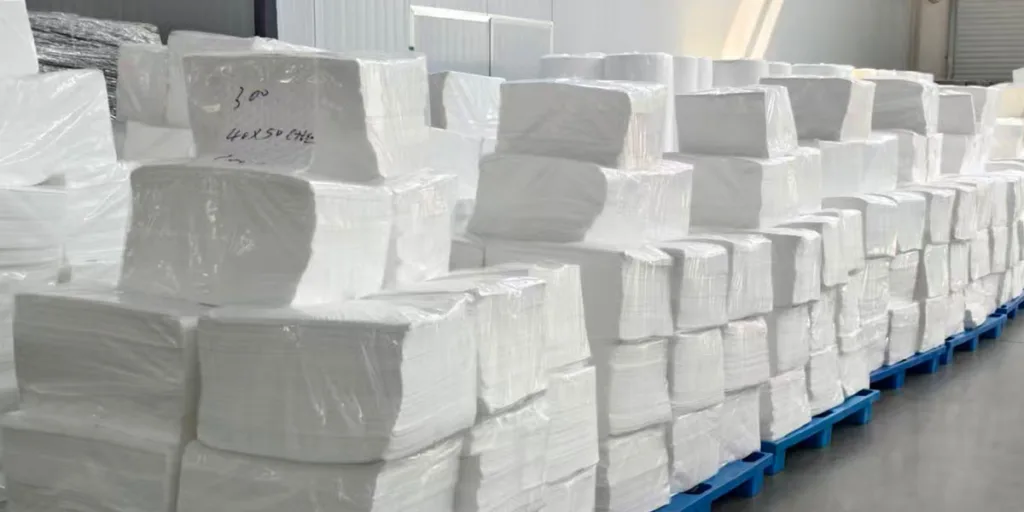
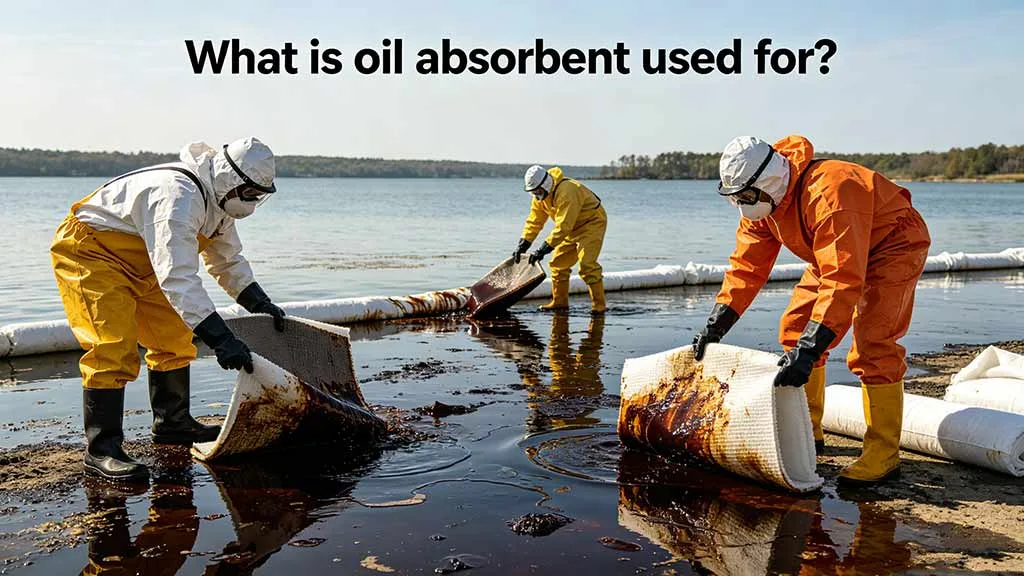
Oil absorbent is a vital tool for containing and cleaning up oil, fuel, and even chemical spills across homes, businesses, and industrial sites—something I’ve witnessed firsthand over 7 years of auditing spill response setups and helping facilities choose the right oil absorbent products. From small garage drips to large marine spills, oil absorbent products like oil absorbent pads, oil absorbent rolls, and oil absorbent boom are designed to stop spills from spreading, protect the environment, and keep workspaces safe.
This guide breaks down the real-world uses of oil absorbent, shares practical insights from my experience, and explains how different products (including chemical absorbent options and spill kits) fit into effective spill response—no jargon, just actionable information.
🧽 What Exactly Is Oil Absorbent? (Quick, Simple Overview)
Before diving into its uses, let’s clarify what oil absorbent is—so you can understand why it’s so essential. As someone who’s tested dozens of oil absorbent products (from budget options to industrial-grade solutions), I can tell you it’s not just “a sponge for oil.” Here’s the basics:
- Core Material: Most oil absorbent products are made from polypropylene, a synthetic fiber that repels water and attracts oil (hydrophobic and oleophilic). This means they soak up oil while leaving water behind—critical for marine or wet-area spills.
- Key Formats: Oil absorbent comes in multiple forms to fit different spills: oil absorbent pads, oil absorbent rolls, oil absorbent socks, oil absorbent pillows, and oil absorbent boom. Each has a specific use, which we’ll break down next.
- Chemical vs. Oil Absorbent: While oil absorbent targets hydrocarbons (oil, diesel, gasoline), chemical absorbent products (like chemical absorbent pads and chemical absorbent boom) handle hazardous chemicals (acids, solvents)—a key distinction I always emphasize to avoid compliance issues.
Pro tip: I once audited a small auto shop that used regular paper towels instead of oil absorbent pads—they wasted time, created more mess, and nearly failed an OSHA inspection. Oil absorbent is designed to be more efficient and compliant than makeshift solutions.
🛠️ Primary Uses of Oil Absorbent (By Product Type)
The use of oil absorbent depends on the product format and the type of spill. Over the years, I’ve helped facilities of all sizes—from small auto shops to large marinas—match the right oil absorbent product to their needs. Below is a breakdown of each product’s main uses, with real-world examples from my experience.
📄 Oil Absorbent Pads: Small Spills and Quick Cleanups
Oil absorbent pads are the most common and versatile oil absorbent product—perfect for small, everyday spills. Here’s how they’re used:
- Everyday Drips and Small Spills: Place under leaking machinery, cars, or oil drums to catch drips. I recommend keeping a stack of oil absorbent pads near garage bays, forklift charging stations, and storage areas—this is what I tell all my auto shop clients.
- Wiping and Cleaning: Use oil absorbent pads to wipe up small spills on floors, tools, or equipment. Unlike rags, they don’t leave lint and soak up oil quickly—saving time during cleanup.
- Emergency Backup: Keep oil-absorbent pads in oil spill kits for a quick response to unexpected small spills (e.g., a spilled oil can in a warehouse). They’re lightweight and easy to grab in a hurry.
Real experience: A restaurant I worked with had a small fryer oil spill in their kitchen—using oil absorbent pads, I cleaned it up in 2 minutes, whereas paper towels took 10 and left a slippery residue. They now keep oil absorbent pads under their fryers full-time.
📜 Oil Absorbent Rolls: Large Surface Areas and Continuous Coverage
Oil absorbent rolls are designed for larger spills or wide areas—they’re rolled out to cover more ground than pads. Here’s their key uses:
- Large Spill Containment: Roll out oil absorbent rolls to cover spills on factory floors, parking lots, or loading docks. They can be torn to length, so you only use what you need—reducing waste.
- Preventative Coverage: Lay oil absorbent rolls under machinery that’s prone to leaking (e.g., industrial pumps, generators) to catch drips before they spread. This is a common practice in manufacturing plants I’ve audited.
- Shoreline Protection: For small marine spills near shore, oil absorbent rolls can be laid along the edge of the water to catch oil before it seeps into soil or vegetation. Pair them with oil absorbent boom for full coverage.
Use Case | Oil Absorbent Roll Benefit | Example Scenario |
Factory Floor Spill | Covers wide areas quickly | A 50-gallon oil spill on a warehouse floor |
Preventative Drip Catch | Continuous coverage under machinery | A leaking industrial pump in a factory |
Shoreline Cleanup | Blocks oil from seeping into the soil | A small boat oil spill near a dock |
🧶 Oil Absorbent Socks: Containment and Tight Spaces
Oil absorbent socks (also called oil absorbent snakes) are cylindrical, flexible, and perfect for containing spills and fitting into tight spaces. Here’s how they’re used:
- Spill Containment: Place oil absorbent socks around the perimeter of a spill to stop it from spreading. They form a barrier that keeps oil in one area, making cleanup easier with oil absorbent pads or rolls.
- Tight Spaces: Wrap oil absorbent socks around pipes, under machinery, or in drain openings to catch drips. I’ve used them in narrow warehouse aisles and under car engines—places where pads or rolls won’t fit.
- Drain Protection: Insert oil absorbent socks into floor drains to prevent oil from entering waterways. This is critical for compliance with EPA regulations—one mistake I’ve seen facilities make is skipping this step, leading to fines.
Real experience: A manufacturing plant I worked with had a problem with oil dripping into their floor drains—after placing oil absorbent socks in the drains, they avoided a $1,500 EPA fine and kept their facility compliant.
🛌 Oil Absorbent Pillows: Bulk Absorption and Hard-to-Reach Areas
Oil absorbent pillows are thick, pillow-shaped oil absorbent products designed for bulk absorption and hard-to-reach spots. Their key uses include:
- Bulk Spill Cleanup: Oil absorbent pillows soak up more oil than pads or socks—ideal for larger spills (e.g., a ruptured oil drum) or areas where you need maximum absorption.
- Hard-to-Reach Areas: Place oil absorbent pillows under machinery, in corners, or in trenches where spills collect. They’re flexible enough to fit into gaps that pads or rolls can’t reach.
- Marine Spills: Oil absorbent pillows float, making them perfect for small marine spills (e.g., around boats or docks). They can be tossed into the water to soak up floating oil before it spreads.
🚤 Oil Absorbent Boom: Large-Scale Containment (Marine and Land)
Oil absorbent boom is the largest oil absorbent product—long, cylindrical, and designed for large-scale spills, especially on water. Here are its main uses:
- Marine Spill Containment: Deploy oil absorbent boom across rivers, lakes, or harbors to form a barrier around floating oil. They float on the water’s surface, trapping oil and preventing it from reaching wetlands or aquatic life. I’ve helped marinas use oil absorbent boom to contain 200+ gallon diesel spills—without it, the oil would have spread miles.
- Large Land Spills: For wide-spreading spills on land (e.g., parking lots, construction sites), oil absorbent boom can be laid to form a perimeter, containing the spill and making cleanup more efficient.
- Channeling Spills: Oil absorbent boom can be used to channel oil into a single area, making it easier to clean up with other oil absorbent products (like pillows or rolls).
Important note: Oil absorbent boom should always be anchored to prevent it from floating away—one mistake I’ve seen is unanchored boom drifting during storms, leading to widespread oil contamination.
⚗️ When to Use Chemical Absorbent (vs. Oil Absorbent)
A common question I get is: “Can I use oil absorbent for chemical spills?” The short answer is no—oil absorbent is designed for hydrocarbons, while chemical absorbent products are made to handle hazardous chemicals. Here’s how to tell the difference and when to use each:
Product Type | What It Absorbs | Common Uses |
Oil Absorbent (Pads, Rolls, Socks, Pillows, Boom) | Oil, diesel, gasoline, fuel, and other hydrocarbons | Garages, marinas, warehouses, factories (oil-based spills) |
Chemical Absorbent (Pads, Roll, Socks, Pillows, Boom) | Acids, solvents, corrosives, and hazardous chemicals | Chemical plants, labs, industrial sites (chemical spills) |
Real experience: A chemical plant once used oil absorbent pads for an acid spill— the pads dissolved, spreading the acid and causing a facility shutdown. After switching to chemical absorbent pads and chemical absorbent socks, they avoided further incidents and stayed compliant with OSHA standards.
📦 How Oil Absorbent Fits Into Spill Kits (Oil and Chemical)
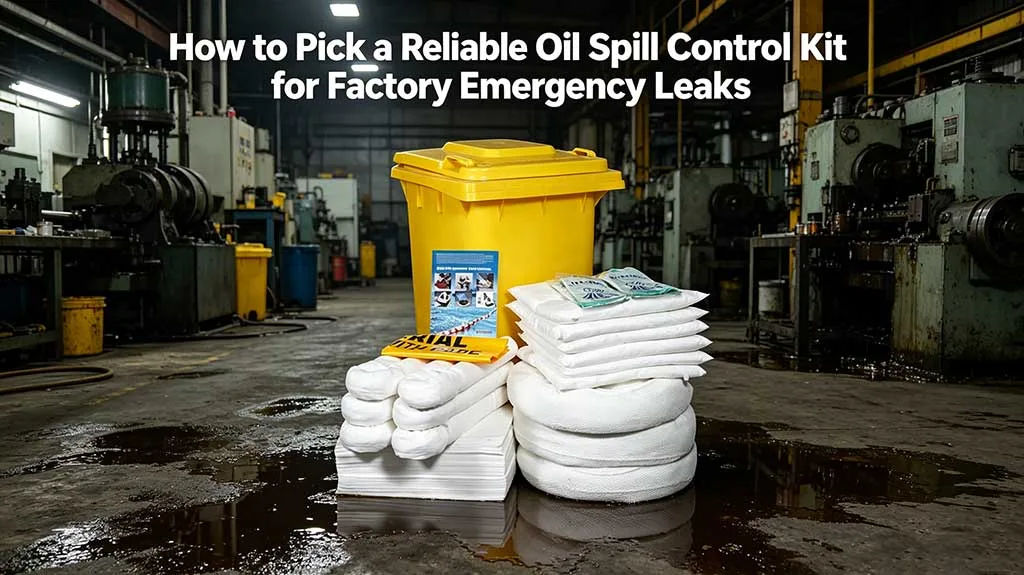
Oil absorbent products are a key component of both oil spill kits and chemical spill kits—without them, spill response is incomplete. Here’s how they’re packaged and used in kits, based on my experience auditing spill kit compliance:
🛢️ Oil Spill Kit: For Oil-Based Spills
Oil spill kits are pre-packaged with oil absorbent products tailored to oil spills. Typical contents include:
- Oil absorbent pads (for small spills and wiping)
- Oil absorbent socks (for containment and drain protection)
- Oil absorbent pillows (for bulk absorption)
- Oil absorbent boom (for large or marine spills, in larger kits)
- Disposable gloves and waste bags (for safe disposal of used oil absorbent)
Uses of oil spill kits: Perfect for auto shops, marinas, gas stations, and warehouses—anywhere oil spills are common. I recommend placing small oil spill kits near high-risk areas (e.g., oil storage tanks) and larger kits near loading docks or water access points.
🧪 Chemical Spill Kit: For Hazardous Chemical Spills
Chemical spill kits use chemical absorbent products instead of oil absorbent. Typical contents include:
- Chemical absorbent pads (for small chemical spills)
- Chemical absorbent socks (for containment)
- Chemical absorbent pillows (for bulk absorption)
- Chemical absorbent boom (for large chemical spills)
- Protective gear (goggles, gloves, coveralls) and hazardous waste containers
Pro tip: Never mix oil absorbent and chemical absorbent products in a spill kit—using the wrong product can make spills worse and lead to compliance violations. I’ve audited facilities that made this mistake and faced costly fines.
🌍 Key Industries That Use Oil Absorbent (And Why)
Oil absorbent is used across dozens of industries—anywhere oil, fuel, or chemicals are stored, handled, or used. Below are the most common industries, with insights into how they use oil absorbent products:
🏗️ Manufacturing and Industrial Plants
- Uses: Oil absorbent rolls under machinery, oil absorbent socks around oil tanks, oil absorbent pads for daily drips, and oil absorbent boom for large spills.
- Why: Prevents equipment damage, keeps workspaces safe, and complies with OSHA regulations. I’ve helped a manufacturing plant reduce spill cleanup time by 35% by upgrading their oil absorbent products.
🚗 Auto Shops and Garages
- Uses: Oil absorbent pads under cars, oil absorbent socks around drain openings, and small oil spill kits for emergency spills.
- Why: Keeps floors clean and safe (prevents slips), avoids oil from entering drains, and meets local environmental standards.
⚓ Marinas and Boating Facilities
- Uses: Oil absorbent boom for marine spills, oil absorbent pillows for floating oil, and oil absorbent pads for dock drips.
- Why: Protects aquatic life, prevents water contamination, and complies with EPA regulations. A marina I worked with avoided a $5,000 fine by using an oil absorbent boom to contain a boat oil spill.
⛽ Gas Stations and Fuel Storage Facilities
- Uses: Oil absorbent pads for fuel drips, oil absorbent socks around fuel tanks, and oil spill kits for emergency fuel spills.
- Why: Prevents fuel from seeping into soil or groundwater, keeps customers and employees safe, and meets EPA guidelines.
🏭 Construction Sites
- Uses: Oil absorbent rolls on job sites, oil absorbent socks around construction equipment, and oil absorbent boom for large spills.
- Why: Keeps construction areas clean, prevents environmental damage, and complies with local construction regulations.
❓ Common Questions About Oil Absorbent (Answered From Experience)
Over the years, I’ve been asked hundreds of questions about oil absorbent—from “How long does oil absorbent last?” to “Can I reuse oil absorbent?” Below are the most common ones, with honest, experience-based answers:
❔ Can oil absorbent be reused?
No—once oil absorbent is saturated, it can’t absorb more oil. Reusing it will spread the spill and increase environmental risk. I’ve seen facilities try to reuse oil absorbent pads to save money, only to face cleanup costs and fines when the spill spreads. Always dispose of used oil absorbent according to local regulations.
❔ How long does oil absorbent take to work?
It depends on the product and spill size: oil absorbent pads and socks absorb quickly (1–3 minutes), while oil absorbent boom and pillows take longer (5–10 minutes) due to their larger size. For large spills, I recommend deploying multiple products at once to speed up cleanup.
❔ What’s the difference between oil absorbent and regular sponges?
Regular sponges absorb water and oil, which is useless for marine spills or wet areas—they’ll fill up with water first and won’t absorb much oil. Oil absorbent is hydrophobic (repels water), so it only soaks up oil—making it far more efficient for oil spill cleanup.
❔ How do I choose the right oil absorbent product?
Ask yourself three questions: (1) What’s the spill size? (small = pads/socks; large = rolls/boom/pillows), (2) Where is the spill? (water = boom/pillows; land = pads/rolls/socks), (3) Is it oil or chemical? (oil = oil absorbent; chemical = chemical absorbent). This framework has helped hundreds of my clients choose the right product.
⚠️ Common Mistakes to Avoid When Using Oil Absorbent
From auditing hundreds of facilities, I’ve seen the same mistakes repeatedly—most of which lead to ineffective cleanup, environmental damage, or fines. Here’s what to avoid:
- Using oil absorbent for chemical spills: As mentioned earlier, this can cause product breakdown and spread chemicals. Always use chemical absorbent products for hazardous spills.
- Understocking oil absorbent: Running out of oil absorbent during a spill leads to delays and spread. I recommend stocking 20% more than you think you’ll need—especially for high-risk areas.
- Storing oil absorbent incorrectly: Wet or damaged oil absorbent won’t work effectively. Store it in a dry, cool area away from sunlight and chemicals—check monthly for damage.
- Ignoring drain protection: Failing to use oil absorbent socks in drains can lead to oil entering waterways and EPA fines. This is one of the easiest mistakes to fix.
- Using low-quality oil absorbent: Cheap oil absorbent often tears easily or doesn’t absorb much oil, wasting money in the long run. I recommend investing in high-quality products to save time and avoid issues.
🌐 Authoritative Resources for Oil Absorbent Best Practices
To learn more about oil absorbent, spill response, and compliance, I recommend visiting these trusted industry resources—they’re the same ones I use when advising clients:
- U.S. Environmental Protection Agency (EPA): The EPA provides detailed guidelines on oil spill prevention, cleanup, and compliance—including how to use oil absorbent products safely. Visit their site to ensure your spill response meets federal regulations: U.S. Environmental Protection Agency (EPA).
- 3M™ Oil & Petroleum Sorbents: 3M is a trusted manufacturer of oil absorbent products, and their technical guide offers valuable insights into product specifications and best uses. This guide has helped me recommend the right oil absorbent products to clients: 3M Oil & Petroleum Sorbents Technical Guide.
- NDT.org Industrial Directory: This directory features leading suppliers of oil absorbent and chemical absorbent products, plus industry resources to help you find reliable solutions for your oil spill kit or chemical spill kit: NDT.org Absorbents Industry Directory.
🔚 Final Thoughts: Oil Absorbent Is Essential for Safe, Compliant Spill Response
To recap, oil absorbent is used to contain, absorb, and clean up oil and fuel spills across homes, businesses, and industrial sites—with different products (oil absorbent pads, oil absorbent rolls, oil absorbent socks, oil absorbent pillows, oil absorbent boom) designed for specific spills and environments. Whether you’re a small auto shop dealing with drips or a large marina preventing marine contamination, oil absorbent is a cost-effective, compliant solution that saves time, money, and the environment. Pairing oil absorbent with the right oil spill kit or chemical spill kit ensures you’re prepared for any spill—big or small.
From my 7 years of experience, I know that choosing the right oil absorbent product and using it correctly is key to avoiding fines, protecting your facility, and keeping the environment safe. If you’re unsure which oil absorbent or chemical absorbent products fit your needs—whether you need oil absorbent boom for marine spills, chemical absorbent pads for lab spills, or a complete oil spill kit—our team of experts can help. We offer tailored solutions to ensure your spill response is efficient, compliant, and effective. Reach out to learn more about how our high-quality oil absorbent products can support your facility.