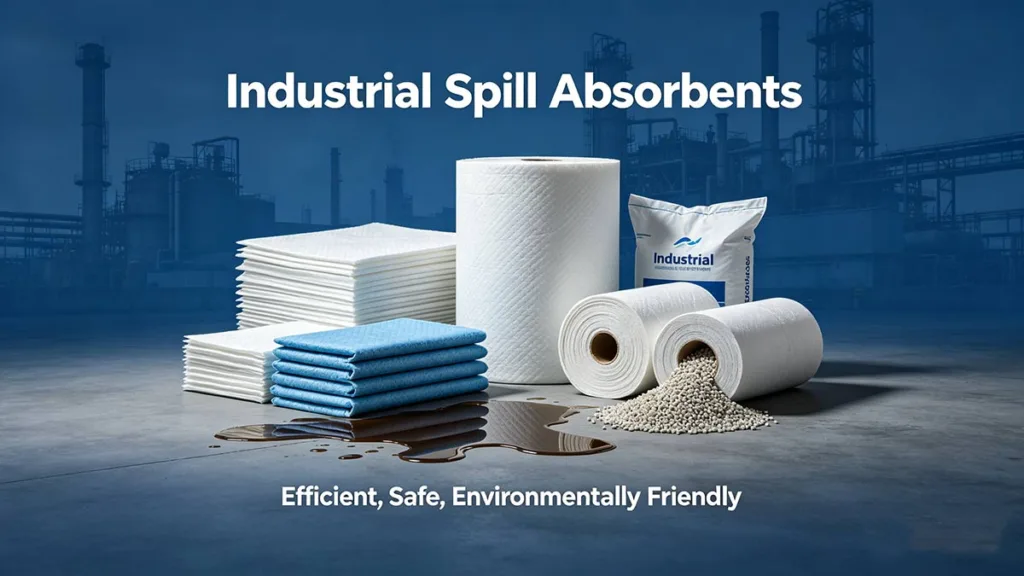
9 common mistakes you make when choosing industrial spill absorbents for their manufacturing plant are more common than you think—and they can cost your facility time, money, and compliance penalties. Manufacturing plants rely on industrial spill absorbents like oil absorbent pads, chemical absorbent socks, and spill kits to handle leaks and spills safely, but choosing the wrong products leads to inefficiency, environmental harm, and unnecessary expenses. This guide breaks down each mistake, explains its impact, and shows you how to avoid it, so you can select the right absorbents for your plant’s unique needs.
📌 Why Choosing the Right Industrial Spill Absorbents Matters for Manufacturing Plants
Industrial spill absorbents are non-negotiable for manufacturing plants—they prevent oil, chemicals, and other hazardous liquids from contaminating workspaces, harming employees, and violating environmental regulations. The wrong absorbents, however, can do more harm than good. Here’s why getting this choice right is critical:
- Compliance Protection: Manufacturing plants must follow regulations like EPA 40 CFR 264.175 and SPCC guidelines for spill control—using improper absorbents can lead to fines of $5,000 or more, plus legal liability.
- Employee Safety: Low-quality or mismatched absorbents can fail to contain hazardous spills, exposing workers to toxic chemicals, slips, and other safety risks.
- Cost Savings: Choosing the right absorbents reduces waste, avoids rework, and prevents expensive cleanup from failed spill responses.
- Environmental Responsibility: Proper absorbents prevent leaks from seeping into soil, water, or air—protecting ecosystems and your plant’s reputation.
The good news is that avoiding these 9 common mistakes is simple once you understand what to look for. Let’s dive into each mistake, how it impacts your plant, and how to fix it—with a focus on the absorbent products your plant actually needs, from oil absorbent rolls to chemical spill kits.
❌ Mistake 1: Confusing Oil Absorbents with Chemical Absorbents (The Most Costly Error)
One of the biggest mistakes manufacturers make is using oil absorbents for chemical spills (or vice versa). Oil absorbents and chemical absorbents are designed for different liquids, and mixing them leads to failed spill control, compliance issues, and environmental harm.
📋 Oil vs. Chemical Absorbents: Key Differences
Feature | Oil Absorbents (e.g., oil absorbent pads, oil absorbent socks) | Chemical Absorbents (e.g., chemical absorbent pads, chemical absorbent boom) |
|---|---|---|
Designed For | Petroleum-based liquids (motor oil, diesel, hydraulic oil)—they repel water and absorb only oil. | Hazardous chemicals (acids, bases, solvents)—they absorb both aqueous and chemical liquids without degrading. |
Material | Polypropylene or natural fibers, treated to repel water; often white in color. | Specialized polypropylene with chemical-resistant coatings; often pink/red for easy identification. |
Risk of Misuse | Will not absorb chemicals—spills will spread, leading to contamination and non-compliance. | Overusing for simple oil spills wastes money; it is not designed for large oil-only leaks. |
Best For | Machine leaks, oil drips, warehouse spills, and water-based oil spills (e.g., factory drains). | Chemical storage areas, lab spills, corrosive liquid leaks, and hazardous material handling zones. |
How to avoid this mistake: Assess your plant’s most common spills first. If you handle both oil and chemicals, stock both types of absorbents—oil absorbent rolls for routine oil leaks and chemical absorbent pillows for hazardous spills. Always check the product label to confirm it’s designed for your specific liquid type.
❌ Mistake 2: Ignoring Absorbent Capacity (Wasting Money on Frequent Replacements)
Many manufacturers choose the cheapest industrial spill absorbents without checking their capacity—and end up replacing them constantly. Absorbent capacity (how much liquid a product can hold relative to its weight) directly impacts efficiency and cost.
💡 Key Facts About Absorbent Capacity
- High-quality oil absorbent pads can absorb 10–20 times their weight in oil, while low-quality options absorb only 5–8 times their weight.
- Chemical absorbent socks with a dense, multi-layer design (like those with thick polypropylene cores) hold more liquid and resist tearing when saturated.
- Underestimating capacity leads to frequent replacements, which adds up—spending a little more on high-capacity absorbents saves money long-term.
How to avoid this mistake: Look for absorbents with a clearly stated absorption capacity (e.g., “absorbs 15x its weight in oil”). For high-volume spills, opt for oil absorbent boom or chemical absorbent boom—they cover larger areas and have higher capacity than pads or socks alone. Avoid “one-size-fits-all” products that claim high capacity but fail to deliver.
❌ Mistake 3: Overlooking Industrial-Grade Durability (Absorbents That Tear or Leak)
Manufacturing plants are harsh environments—heavy machinery, sharp edges, and high-traffic areas can damage flimsy absorbents. Choosing non-industrial-grade absorbents leads to tears, leaks, and secondary contamination.
🛡️ What Makes an Industrial-Grade Absorbent?
- Thick, Tear-Resistant Material: Industrial-grade oil absorbent pads and chemical absorbent rolls use multi-layer polypropylene that resists tearing, even when saturated or dragged across rough surfaces.
- Leak-Proof Design: High-quality absorbents lock in liquid tightly—no dripping or seepage when lifted, which prevents secondary spills.
- Heat and Chemical Resistance: Industrial absorbents can withstand high temperatures (common in manufacturing plants) and won’t break down when exposed to chemicals.
How to avoid this mistake: Avoid household-grade absorbents—they’re not designed for industrial use. Look for products labeled “industrial-grade” and check for features like reinforced edges, dense cores, and chemical-resistant coatings. For areas with heavy machinery, choose reusable oil absorbent pads (cleanable and durable for repeated use) to save even more money.
❌ Mistake 4: Not Considering Spill Location (Wrong Absorbent for the Job)
Another common mistake is using the same absorbent for every spill location. A spill on a smooth factory floor requires a different product than a spill near a drain, water source, or machine base.
📍 Absorbent Selection by Spill Location
- Flat Floors (Machinery, Workstations): Oil absorbent pads or chemical absorbent pads work best—they lay flat, cover large areas, and are easy to replace. For routine leaks, oil absorbent rolls are convenient (tear off as much as you need).
- Drains, Edges, or Machine Bases: Oil absorbent socks or chemical absorbent socks are ideal—their cylindrical shape fits into tight spaces, around pipes, and along edges to block spills from spreading into drains.
- Large Spills (Warehouses, Outdoor Areas): Oil absorbent boom or chemical absorbent boom creates a barrier to contain spills, while oil absorbent pillows or chemical absorbent pillows handle large volumes of liquid quickly.
- Mobile Spills (Transportation, Loading Docks): Oil spill kits or chemical spill kits are portable and pre-stocked with the right absorbents for on-the-go cleanup—critical for quick response.
How to avoid this mistake: Map your plant’s high-risk spill areas and stock the right absorbents for each. For example, keep chemical absorbent pads near chemical storage areas, oil absorbent socks around machine bases, and spill kits in loading docks. This ensures you’re prepared for any spill, anywhere.
❌ Mistake 5: Forgetting About Compliance (Absorbents That Don’t Meet Industry Standards)
Manufacturing plants face strict regulations for spill control, but many choose absorbents that don’t meet industry standards—putting them at risk of fines and legal action. Compliance isn’t optional, and the wrong absorbents can lead to costly penalties.
📜 Key Compliance Standards for Industrial Spill Absorbents
- EPA Regulations: Absorbents used for hazardous chemical spills must be compatible with the liquid and labeled for hazardous waste disposal.
- OSHA Requirements: Absorbents must be readily available, properly stored, and employees must be trained to use them (failure to comply can result in OSHA fines).
- Material Safety Data Sheet (MSDS) Guidelines: Absorbents must be compatible with the chemicals listed on your plant’s MSDS—using incompatible products violates compliance.
How to avoid this mistake: Choose absorbents that are labeled as compliant with EPA and OSHA standards. For chemical spills, ensure the product is rated for the specific chemicals your plant uses (e.g., corrosive-resistant chemical absorbent pads for acids). Keep records of your absorbent purchases and disposal to prove compliance during audits.
❌ Mistake 6: Overstocking or Understocking (Wasting Money or Failing to Respond)
Balancing absorbent inventory is tricky, but overstocking or understocking both lead to problems. Overstocking wastes money on expired products, while understocking means you can’t respond to spills quickly—leading to contamination and compliance issues.
📦 How to Calculate the Right Inventory
- Assess Spill Frequency: If your plant has daily oil leaks (e.g., from machinery), stock enough oil absorbent pads or rolls to last 2–3 weeks.
- Consider Spill Size: For large, infrequent spills (e.g., chemical drum leaks), keep 2–3 chemical spill kits on hand, plus extra chemical absorbent boom and pillows.
- Check Expiry Dates: Most absorbents have a 1–2 year shelf life—rotate inventory to avoid expired products. Avoid overstocking products with short shelf lives (e.g., some chemical absorbents).
How to avoid this mistake: Create an inventory schedule to check stock weekly. Use a simple tracking system to note how many absorbents you use each month, and reorder when stock is 30% full. For high-use items like oil absorbent pads, set up automatic reorders to avoid running out.
❌ Mistake 7: Ignoring Reusability (Wasting Money on Single-Use Products)
Many manufacturers use single-use industrial spill absorbents for every spill—even small, routine leaks—wasting money and creating unnecessary waste. Reusable absorbents are a cost-effective, eco-friendly alternative for many applications.
♻️ Reusable Absorbents Worth Investing In
- Reusable Oil Absorbent Pads: Made from durable polypropylene, these can be cleaned and reused 5–10 times—ideal for routine machine leaks. They’re washable and resist tearing, saving money over single-use pads.
- Reusable Absorbent Socks: For ongoing leaks around pipes or machine bases, reusable oil absorbent socks or chemical absorbent socks can be emptied, cleaned, and refilled—reducing waste and cost.
- Reusable Boom: Industrial-grade oil absorbent boom or chemical absorbent boom can be cleaned and reused for multiple spills, making them ideal for outdoor areas or large, infrequent spills.
How to avoid this mistake: Evaluate your routine spills—if you have daily small leaks, switch to reusable absorbents. For hazardous chemical spills, stick to single-use products (reusing them can lead to cross-contamination). Reusable absorbents pay for themselves in just a few months, thanks to reduced replacement costs.
❌ Mistake 8: Not Training Employees to Use Absorbents Properly
Even the best industrial spill absorbents are useless if employees don’t know how to use them. Many manufacturers invest in quality absorbents but skip training—leading to improper use, failed spill control, and safety risks.
🧑🏭 Key Training Points for Employees
- Absorbent Identification: Teach employees to distinguish between oil absorbents (white) and chemical absorbents (pink/red), and when to use each.
- Proper Application: Show employees how to place oil absorbent boom to contain spills, how to lay pads for maximum coverage, and how to use socks to block drains.
- Disposal Rules: Train employees to dispose of used absorbents properly—hazardous chemical absorbents must be placed in sealed, labeled containers for hazardous waste disposal.
- Spill Response Protocol: Establish a step-by-step process (e.g., contain, absorb, dispose) and train employees to follow it quickly in case of a spill.
How to avoid this mistake: Schedule quarterly training sessions for new and existing employees. Post visual guides near absorbent storage areas (e.g., “Use oil absorbent pads for machine leaks, chemical absorbent pads for acid spills”). Conduct mock spill drills to ensure employees are prepared.
❌ Mistake 9: Choosing Based on Price Alone (Sacrificing Quality for Savings)
The final—and most costly—mistake is choosing industrial spill absorbents based solely on price. Low-cost absorbents often have low capacity, poor durability, and don’t meet compliance standards—leading to more expenses in the long run.
💸 The True Cost of Cheap Absorbents
- Frequent Replacements: Cheap oil absorbent pads absorb less liquid, so you need more of them, costing more over time than high-quality options.
- Compliance Fines: Non-compliant absorbents can lead to EPA or OSHA fines, which are far more expensive than investing in quality products.
- Cleanup Costs: Failed absorbents mean spills spread, requiring costly cleanup and potential environmental remediation.
- Safety Risks: Flimsy absorbents can tear, exposing employees to hazardous liquids and leading to injuries or lawsuits.
How to avoid this mistake: Focus on value, not price. Look for absorbents that balance quality, capacity, and compliance—they may cost a little more upfront but save you money in fines, replacements, and cleanup. For example, high-quality oil spill kits and chemical spill kits are a small investment compared to the cost of a failed spill response.
✅ How to Choose the Right Industrial Spill Absorbents for Your Manufacturing Plant
Now that you know the 9 common mistakes, here’s a simple step-by-step process to choose the right industrial spill absorbents for your plant—ensuring compliance, safety, and cost savings:
- Step 1: Identify Your Spill Risks: List the types of liquids (oil, chemicals, etc.) and locations (floors, drains, outdoor areas) where spills occur most often.
- Step 2: Match Absorbents to Spills: Choose oil absorbent pads, rolls, socks, or boom for oil spills; chemical absorbent pads, rolls, socks, or boom for chemical spills; and spill kits for mobile or emergency spills.
- Step 3: Prioritize Quality and Compliance: Select industrial-grade, EPA/OSHA-compliant products with clear capacity ratings and durability features.
- Step 4: Balance Inventory: Stock enough absorbents to handle routine spills and emergencies, without overstocking expired products.
- Step 5: Train Employees: Ensure all staff know how to identify, use, and dispose of absorbents properly.
📞 Final Thoughts: Avoid These Mistakes to Protect Your Plant
9 common mistakes you make when choosing industrial spill absorbents for their manufacturing plant can be easily avoided with a little planning and focus on quality. By selecting the right absorbents—from oil absorbent pads and chemical absorbent socks to spill kits—you’ll protect your employees, stay compliant, save money, and reduce environmental impact. Remember, the goal isn’t to buy the cheapest absorbents—it’s to buy the right ones that meet your plant’s unique needs.
For manufacturing plants that handle both oil and chemical spills, having a diverse range of absorbents is key. Whether you need oil absorbent rolls for routine leaks, chemical absorbent boom for large spills, or portable spill kits for emergencies, choosing high-quality products ensures you’re prepared for anything. If you’re unsure which absorbents are right for your plant, reach out to a trusted provider who can help you assess your needs and avoid these costly mistakes.
At the end of the day, 9 common mistakes you make when choosing industrial spill absorbents for their manufacturing plant are preventable—and the payoff is significant: a safer workplace, lower costs, and peace of mind knowing you’re compliant and prepared. Don’t let these mistakes cost your plant time, money, or reputation—invest in the right industrial spill absorbents today.