📑 Essential Guide to Spill Kits: Contents, Inspections and Compliance for Industrial Facilities
🧰 Must-Have Components for Fully Compliant Spill Kits
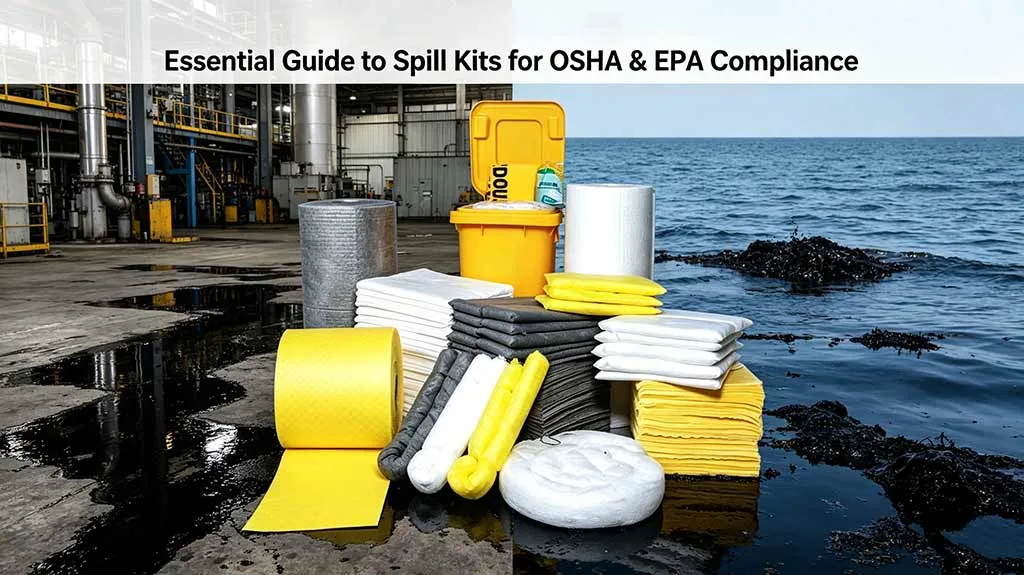
Absorbent materials tailored to specific liquid types
This is the most vital part of any spill kit, and improper absorbent selection is one of the most frequent compliance mistakes found during inspections. Different liquids require dedicated absorbent products to deliver reliable performance:
- Oil-only absorbents: Suited for petroleum products, engine oil, and fuel. These water-repellent materials work perfectly in outdoor areas or locations near floor drains where water may be present.
- Universal absorbents: Designed for general mixed liquids, cooling fluids, and regular water-based solutions. They serve most general industrial workshops and multi-purpose work areas.
- Hazmat absorbents: Engineered to handle strong acids, alkalis, solvents, and other corrosive chemicals. They feature chemical resistance to protect users and prevent material breakdown.
Every standard spill kit should also include absorbent socks, which are used first to build a perimeter around spreading spills and block liquids from reaching drains or other sensitive areas. It is recommended to keep a minimum of two absorbent socks inside each kit.
Personal Protective Equipment (PPE)
OSHA regulations mandate suitable protective gear for all staff involved in spill cleanup. All kits must include basic PPE to prevent skin and eye contact with harmful liquids:
- Chemical-resistant gloves: Nitrile gloves for general liquid handling; neoprene or butyl rubber gloves for working with strong acids and industrial solvents.
- Impact-resistant safety goggles: Standard safety glasses do not provide enough splash protection, so sealed goggles are a non-negotiable requirement.
- Disposable aprons or full coveralls: Highly recommended for all spill tasks and mandatory for kits used to manage hazardous chemical spills.
Waste disposal supplies
Once the cleanup finishes, proper containment of used materials is required to follow environmental protection rules:
- Heavy-duty plastic disposal bags with secure ties for sealing contaminated absorbents and gear.
- Official hazardous waste labels, which list material type, accumulation date, and facility details for regulated waste streams.
Reference and documentation materials
Clear guidance and record-keeping tools ensure consistent response and easy audit preparation:
- Laminated instruction cards with step-by-step spill response procedures are stored inside the kit for quick reference.
- Blank spill report forms to log spill date, liquid type, volume, staff involved, and all actions taken.
- Printed emergency contact information, including on-site safety managers, local emergency teams, and national response hotlines.
📏 How to Select the Correct Spill Kit Size for Different Work Zones
| Work Area & Equipment Type | Recommended Spill Kit Style & Capacity | Core Advantages |
|---|---|---|
| Forklifts, service vehicles, and loading docks | Compact bag kits or 5-gallon bucket kits | Lightweight, portable, and easy to store in small spaces |
| Small chemical storage cabinets & carboy areas | 20-gallon or 30-gallon drum-style kits | Moderate capacity for small container leaks and spills |
| Standard 55-gallon drum storage zones | 55-gallon drum spill kits | Matches full-volume release risks of standard industrial drums |
| IBC totes and large liquid storage tanks | 95-gallon kits or wheeled mobile cart kits | High capacity and mobility for large floor coverage |
| Full-facility emergency response points | Large mobile spill caddies | Centralized high-volume response for site-wide emergencies |
🔍 Complete Spill Kit Inspection Routine to Stay Audit-Ready Year-Round
Monthly visual inspection
Complete a quick check of every spill kit on a monthly basis to catch minor issues early:
- Confirm the kit remains in its designated position and is fully accessible.
- Check that the container lid, seal, or closure is intact to prove no unauthorized use or tampering.
- Examine all PPE items; replace gloves or goggles that have hardened, discolored, or sustained damage.
- Verify disposal bags and labeling supplies are present and free of tears.
- Ensure printed instructions and emergency contact numbers are fully legible.
Immediate restock after every use
Any spill event will deplete kit components, and a partially empty kit is considered non-compliant. Follow these rules right after cleanup:
- Replace all used absorbent pads, socks, and disposable gear immediately.
- Maintain a backup inventory of common replacement parts near spill stations to cut restock time.
- Avoid leaving kits in a depleted state, as inspectors conduct unannounced site visits regularly.
Annual comprehensive full audit
Conduct a thorough end-to-end review once per year to address long-term wear and changing site conditions:
- Count all components and cross-check against the original kit specifications.
- Replace absorbents stored in extreme heat, direct UV light, or high humidity, since these conditions weaken absorption performance over time.
- Reassess liquid hazards in the area and upgrade kit contents if chemical storage has changed.
- Update training records for all employees who handle spill response tasks.
- Revise instruction cards and contact lists if internal procedures or emergency numbers are updated.
📍 Strategic Spill Kit Placement Across Industrial Facilities
- Keep all spill kits within a 10-second walking distance of liquid storage, transfer points, and processing stations.
- Install dedicated kits beside every chemical drum zone, dispensing station, and outdoor loading dock.
- Equip all mobile equipment and service vehicles that transport hazardous liquids with compact portable spill kits.
- Add clear, visible signage around each kit so staff can locate supplies quickly, even in low-light emergency conditions.
- Do not place kits directly next to large tanks or bulk containers, as a major spill could block access entirely.
⚗️ Specialty Spill Kits for Unique Hazardous Materials
- Battery acid spill kits: Equipped with acid-neutralizing agents and heavy-duty chemical PPE to handle sulfuric acid safely.
- Mercury spill kits: Include specialized cleanup tools and vapor suppression products, as regular absorbents cannot contain mercury contamination effectively.
- Body fluid cleanup kits: Fitted with biohazard bags and medical-grade disinfectants, built to meet OSHA rules for bloodborne pathogen control.
❓ Frequently Asked Questions About Spill Kit Management
How frequently should spill kits be inspected?
A basic visual check is required every month. Facilities with frequent liquid handling or high chemical risks should switch to weekly inspections. Remember to document every inspection with dates and inspector names for audit records.
Can one single kit handle both oil and chemical spills?
Only universal or hazmat-rated kits work for mixed hazards. Oil-only absorbents repel water and cannot absorb most water-based chemicals, so keep separate kits if multiple liquid types exist on-site.
What are the consequences of using a kit and failing to restock it?
OSHA treats partially filled or empty spill kits the same as having no kit at all, resulting in compliance violations. There is no grace period for restocking after use, so backup supplies are essential.
Is a spill kit required for sites with only small amounts of chemicals?
Yes. OSHA emergency action and PPE rules apply regardless of chemical volume. Compact bucket or bag-style kits offer a low-cost solution for small-scale operations to stay compliant.
How to correctly dispose of used absorbent materials?
Materials contaminated with hazardous liquids count as regulated waste. Seal them in labeled containers and work with licensed waste haulers for disposal. For non-hazardous spills, follow local municipal waste guidelines for regular disposal.