🌐 Overview: Why Industrial Absorbent Pads Are Essential for Modern Facilities
Industrial absorbent pads are the most practical and cost-effective frontline solution for handling unexpected liquid spills across all industrial workplaces. Every manufacturing, processing, and storage facility faces recurring leak and spill risks that threaten operational stability, staff safety, and environmental compliance.
Many facility managers underestimate the value of targeted absorbent pad selection and rely on generic cleaning materials. This common mistake leads to incomplete spill cleanup, persistent slip hazards, equipment damage, and costly regulatory violations.
Professional industrial absorbent pads are crafted from high-performance modified polypropylene materials, tailored to absorb specific liquid types while resisting external environmental interference. They deliver reliable spill containment for diverse industrial scenarios and support long-term workplace safety management.
The core advantages of deploying standard industrial absorbent pads include the following key benefits
- Eliminates slip and fall accidents caused by residual oil and liquid spills on work floors
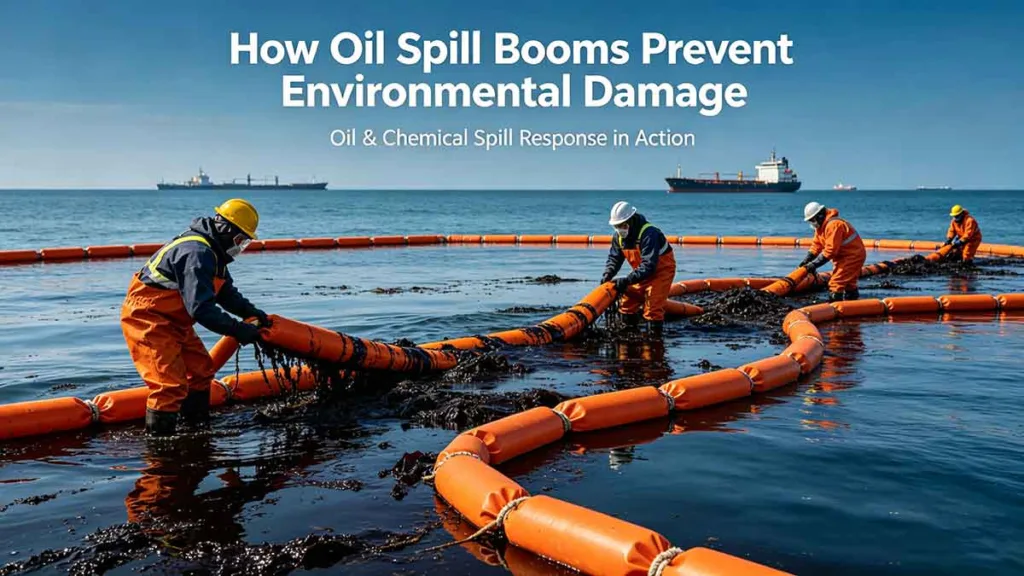
- Prevents chemical and petroleum liquid diffusion to protect soil and water resources
- Reduces equipment corrosion and maintenance costs caused by unaddressed liquid leakage
- Helps facilities fully comply with industrial safety and environmental protection regulations
📌 Core Classification and Functional Traits of Industrial Absorbent Pads
Industrial absorbent pads are divided into three mainstream types based on material formulas and functional positioning, covering all common industrial spill scenarios. Each pad type features unique performance traits and applicable ranges to meet differentiated safety needs.
🔹 Universal Absorbent Pads Multi-Scene Daily Industrial Solution
Universal absorbent pads are designed for daily mixed liquid spill cleanup in conventional industrial environments. Made of blended dual-purpose polypropylene materials, these pads can effectively absorb both water-based and mild oil-based non-corrosive liquids.
They serve as versatile daily cleaning supplies with balanced cost performance and functional versatility, suitable for most low-risk indoor industrial work scenarios.
Key Functional Characteristics
- Dual absorption capacity for coolants, lubricants, cleaning solutions, and ordinary water
- Lightweight and flexible design for easy cutting and placement in narrow work areas
- Fast liquid infiltration and absorption to avoid residual liquid spread
- Economical configuration for long-term daily industrial use
Usage Limitations
Universal absorbent pads cannot resist strong acid, strong alkali, and toxic corrosive chemicals. They also lack waterproof performance and are not suitable for outdoor rainy or water surface operation scenarios.
🔹 Oil Only Absorbent Pads Professional Petroleum Spill Solution
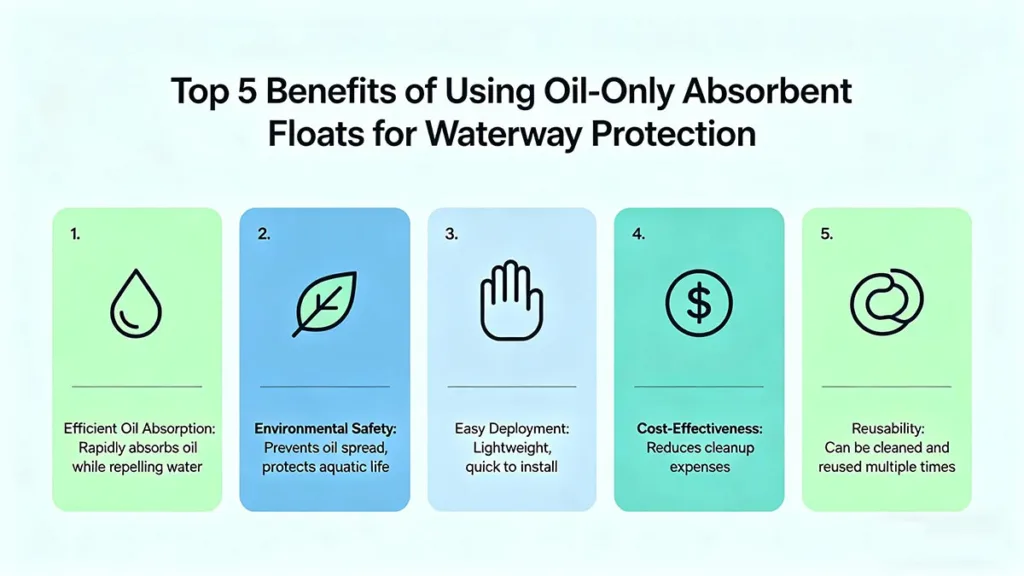
Oil-only absorbent pads adopt hydrophobic and oleophilic modified polypropylene materials, achieving zero water absorption and efficient targeted adsorption of petroleum liquids. This exclusive design solves the outdoor oil spill cleanup pain point where ordinary pads fail due to rainwater interference.
These professional pads are specially engineered for all petroleum-based fluid spills, becoming essential safety supplies for outdoor and water-related industrial operations.
Key Functional Characteristics
- Strict water repellency enables floating on water surfaces to capture floating oil slicks completely
- High oil absorption rate with fast saturation of petroleum liquids
- Weather-resistant material adapts to long-term outdoor open-air placement
- Distinct white appearance for quick saturation identification and timely replacement
Usage Limitations
Oil-only absorbent pads have no adsorption effect on water-based liquids and cannot withstand chemical corrosion. They only apply to single petroleum spill scenarios and are invalid for mixed liquid and hazardous chemical leaks.
🔹 Hazmat Absorbent Pads High Risk Chemical Spill Solution
Hazmat absorbent pads are high-grade professional spill disposal tools customized for corrosive, toxic, and unknown hazardous chemical spills. Made of chemically enhanced polypropylene materials, they can resist erosion from various dangerous industrial liquids.
With professional safety performance, these pads provide reliable protection for staff and facilities in high-risk chemical operation environments.
Key Functional Characteristics
- Superior chemical resistance to avoid material decomposition and leakage failure
- Bright yellow color coding for obvious risk warning in complex workshops
- Neutralizing fiber structure to reduce chemical damage to surfaces and personnel
- Stable performance for sudden and uncertain hazardous spill emergencies
Usage Limitations
Hazmat absorbent pads have higher procurement costs. Using them for ordinary oil and water spills causes functional waste, so targeted deployment for high-risk chemical scenarios is required.
📊 Intuitive Performance Comparison of Three Industrial Absorbent Pad Types
The following comparison table systematically sorts out the core differences of universal, oil-only, and hazmat absorbent pads in multiple key dimensions, helping industrial users quickly select matching products according to on-site spill risks.
Comparison Dimension | Universal Absorbent Pads | Hazmat Absorbent Pads | |
Core Material | Dual-purpose polypropylene | Hydrophobic oleophilic polypropylene | Chemical-resistant modified polypropylene |
Applicable Liquids | Water, oil, coolant, mild solvents | Gasoline, diesel, crude oil, and all petroleum fluids | Acid, alkali, toxic, corrosive chemicals |
Applicable Environment | Indoor daily industrial work areas | Outdoor construction, marine water surface sites | Laboratory chemical processing hazardous material zones |
Visual Color | Gray | White | Bright Yellow |
Core Strength | Cost-effective, versatile daily cleanup | Waterproof floating targeted oil absorption | High safety, chemical corrosion resistance |
Compliance Standard | Basic OSHA workplace safety rules | EPA water pollution prevention regulations | Strict OSHA hazmat and EPA chemical standards |
🏭 Top 5 Practical Industrial Applications of Absorbent Pads
Different industrial scenarios have unique spill hazards and safety requirements. Matching the correct type of industrial absorbent pads can maximize spill disposal efficiency and avoid safety and compliance risks. The following are the five most common and valuable industrial uses covering mainstream industry scenarios.
🔹 Manufacturing Plant Petroleum Spill Cleanup
Mechanical manufacturing plants rely heavily on various lubricating oils, hydraulic oils, and fuel oils for equipment operation. Long-term machine operation and frequent equipment maintenance inevitably cause oil leakage and scattered spills on workshop floors.
Uncleaned oil spills form slippery surfaces that easily cause staff falls, and accumulated oil stains also bring potential fire hazards, affecting workshop operational safety and standardized management.
Recommended Absorbent Pad Solution: Oil-only absorbent pads
Application Advantages
- Quickly adsorb all petroleum spills without being affected by residual cleaning water
- Maintain dry and non-slip workshop ground to eliminate workplace accident risks
- Support daily equipment maintenance and regular workshop safety cleaning work
🔹 Laboratory and Chemical Plant Hazardous Spill Containment
Laboratories, pharmaceutical factories, and chemical processing plants often use corrosive acids, alkalis, and various toxic chemical reagents. Accidental leakage or dumping of these hazardous liquids may cause staff burns, poisoning, equipment corrosion, and serious environmental pollution.
Ordinary cleaning materials cannot resist chemical corrosion and will fail rapidly when contacting hazardous liquids, leading to secondary leakage and risk expansion.
Recommended Absorbent Pad Solution: Hazmat absorbent pads
Application Advantages
- Resist corrosion of various hazardous chemicals to achieve thorough spill containment
- Bright yellow color reminds staff of high-risk areas to standardize operations
- Effectively reduce personal injury and equipment damage caused by chemical spills
🔹 Mechanical Workshop Daily Maintenance Cleaning
Auto repair shops, mechanical maintenance workshops, and equipment repair stations face frequent minor spill risks. Daily operations such as oil changes, coolant replacement, and tool cleaning produce mixed spills of oil, water, and cooling liquids.
Small cumulative spills will pollute the working environment, affect maintenance efficiency, and increase hidden safety hazards in the workshop.
Recommended Absorbent Pad Solution: Universal absorbent pads
Application Advantages
- Adapt to mixed spills of oil, water, and coolant for all-around daily cleanup
- Flexible placement under equipment and workstations to prevent liquid spread
- Improve workshop cleanliness and optimize daily maintenance work efficiency
🔹 Warehouse Emergency Spill Response
Industrial warehouses store a large number of liquid raw materials, finished products, and auxiliary materials in drums and containers. Accidental collision, tipping, and container rupture during handling and storage often cause sudden liquid leakage.
Timely and rapid disposal of warehouse spills can effectively reduce product loss, avoid inventory pollution, and prevent spill liquid from spreading to the entire warehouse area.
Recommended Absorbent Pad Solution: Universal and specialized matched absorbent pads
Application Advantages
- Lightweight and easy to deploy quickly in emergency spill situations
- Layered placement copes with different spill volumes to limit the pollution range
- Protect valuable inventory and reduce economic losses from leakage accidents
🔹 Outdoor Construction and Site Environmental Protection Treatment
Construction sites, logistics loading docks, and outdoor utility yards are exposed to natural weathering all year round. Oil spills from construction machinery, transport vehicles, and storage equipment are easily washed by rainwater into soil and municipal rainwater pipes, triggering environmental protection risks.
Outdoor spill control needs to solve the problem of oil liquid diffusion caused by rainwater mixing, which is the key to meeting environmental compliance requirements for outdoor operations.
Recommended Absorbent Pad Solution: Oil-only absorbent pads
Application Advantages
- Float on rainwater and puddles to selectively absorb oil pollutants
- Prevent petroleum pollutants from entering soil and stormwater systems
- Help facilities meet EPA environmental protection compliance standards for outdoor operations
✅ Key Selection Principles for Industrial Absorbent Pads
Many industrial facilities face safety and compliance problems not due to a lack of absorbent supplies, but incorrect product selection. Mastering scientific selection principles can help enterprises match the most suitable industrial absorbent pads to achieve efficient spill control and cost-saving effects.
🔹 Match Pad Type with On-Site Spill Liquid Type
The primary selection principle is to classify spill liquids accurately. Different liquid attributes correspond to exclusive absorbent pad types, and cross-use will lead to poor cleanup effect and safety hazards.
- Mild mixed oil and water spills choose universal absorbent pads
- Single petroleum spills in outdoor and water environments choose oil-only absorbent pads
- Corrosive and toxic chemical spills choose hazmat absorbent pads
🔹 Adapt Pad Performance to Working Environment
Indoor and outdoor industrial environments have completely different requirements for absorbent pad performance. Indoor scenarios focus on basic absorption efficiency, while outdoor scenarios require weather resistance and waterproof performance.
- Indoor closed workshops prioritize versatile and cost-effective universal pads
- Outdoor open sites prioritize weather-resistant and floating oil-only pads
- High-risk chemical workshops prioritize corrosion-resistant hazmat pads
🔹 Balance Product Specification and Actual Spill Volume
Industrial absorbent pads have different sizes, thicknesses, and absorption capacities. Small workstations with occasional minor spills can choose lightweight thin pads, while large factories with frequent large-scale spills need high-capacity thickened pads.
Reasonable specification matching avoids insufficient absorption capacity affecting emergency disposal or excessive configuration causing cost waste.
⚠️ Common Absorbent Pad Use Mistakes and Correct Solutions
In daily industrial operation, many facilities have formed incorrect absorbent pad usage habits, which reduce spill disposal efficiency and bring hidden dangers to safety and compliance. Correcting these common mistakes is an important part of standardized workplace safety management.
🔹 Mistake 1 Universal Pads for Outdoor Oil Spills
Some facilities use universal gray absorbent pads to clean outdoor oil spills. Universal materials absorb rainwater while adsorbing oil, resulting in rapid saturation, low cleanup efficiency, and residual oil pollution.
This practice cannot completely remove outdoor oil spills and fails to meet EPA environmental pollution control standards, easily triggering supervision penalties.
Correct Solution
Replace with professional oil-only absorbent pads with hydrophobic performance. The special modified polypropylene material completely repels rainwater and efficiently absorbs petroleum liquids, thoroughly solving outdoor oil-water mixed spill problems and ensuring environmental compliance.
🔹 Mistake 2: Ordinary Pads for Hazardous Chemical Spills
Using universal or oil-only absorbent pads to clean acid, alkali, and other hazardous chemical spills is a serious safety hazard. Ordinary pads have no corrosion resistance and will decompose and break when contacting chemicals.
Material failure will cause secondary leakage of hazardous liquids, easily leading to staff injury, equipment corrosion, and environmental pollution accidents.
Correct Solution
Deploy standard hazmat absorbent pads made of chemical-resistant polypropylene materials. These pads can safely contain and absorb all kinds of hazardous chemicals, protecting staff and facilities while meeting industrial safety specifications.
🔹 Mistake 3 Single Pad Type for Mixed Risk Sites
Comprehensive industrial parks with indoor maintenance, outdoor oil storage, and chemical auxiliary workshops often use only one type of absorbent pad. This single configuration cannot cover all spill risks and forms safety blind spots.
Correct Solution
Adopt mixed deployment mode. Equip universal absorbent pads for indoor daily maintenance areas, oil-only absorbent pads for outdoor petroleum storage and operation areas, and hazmat absorbent pads for chemical operation areas to achieve full-scene risk coverage.
📜 EPA and OSHA Compliance Standards for Absorbent Pad Deployment
The deployment and use of industrial absorbent pads are strictly regulated by US occupational safety and environmental protection authorities. Standardized configuration and use of qualified absorbent pads are key prerequisites for facilities to pass safety audits and avoid penalties.
🔹 OSHA Workplace Safety Compliance Requirements
OSHA requires all industrial employers to equip targeted spill containment supplies according to on-site hazard types, to ensure timely disposal of liquid spills and protect staff safety.
- Deploy matched industrial absorbent pads according to on-site oil, water, and chemical spill risks
- Place absorbent pads and spill cleaning supplies in accessible and clearly marked positions
- Train staff on correct absorbent pad use and emergency spill disposal methods
🔹 EPA Environmental Protection Compliance Requirements
EPA focuses on preventing industrial spills from polluting soil and water resources, with clear requirements for outdoor oil and chemical spill disposal.
- Outdoor oil spill disposal must use waterproof oil-only absorbent pads to avoid rainwater diffusion pollution
- Chemical spill cleanup must use corrosion-resistant hazmat absorbent pads to achieve harmless containment
- Retain complete spill disposal records and standardized disposal of contaminated absorbent pads
💡 FAQ About Industrial Absorbent Pads Selection and Use
Most industrial facility managers have similar questions about absorbent pad selection, application, and compliance. The following targeted answers solve common user doubts and help standardize product use.
🔹 Which industrial absorbent pad is best for daily workshop use?
Universal absorbent pads are the best choice for daily workshop use. They can handle mixed spills of oil, water, and coolant, with low cost and wide applicability, fully meeting the daily low-risk spill cleanup needs of ordinary manufacturing and warehousing workshops.
🔹 Can oil-only absorbent pads be used in rainy outdoor environments?
Yes. Oil-only absorbent pads adopt professional hydrophobic and oleophilic technology, which can repel rainwater completely and float on water surfaces to absorb oil pollutants. They are specially designed for rainy outdoor and water surface oil spill disposal scenarios.
🔹 Are hazmat absorbent pads necessary for laboratory operation?
Absolutely necessary. Laboratories involve various corrosive and unknown chemical reagents. Ordinary absorbent pads cannot resist chemical corrosion. Equipping professional hazmat absorbent pads is the basic guarantee for laboratory safety and regulatory compliance.
🏆 Professional Industrial Absorbent Pad Solutions for Full Scenario Compliance
High-quality industrial absorbent pads are indispensable safety supplies for modern industrial facilities to achieve standardized operation, staff safety protection, and environmental compliance. Reasonable selection and standardized deployment of universal, oil-only, and hazmat absorbent pads can completely solve various industrial spill risks.
Our series of industrial absorbent products is made of high-purity modified polypropylene materials, with stable absorption performance, durable structure, and strict quality control. All products fully meet OSHA workplace safety and EPA environmental protection standards, providing customized spill containment solutions for manufacturing, chemical, marine, construction, laboratory, and other industries.
We focus on solving customers’ on-site spill management pain points, helping all types of industrial facilities eliminate safety hazards, avoid compliance penalties, and build efficient and standardized workplace safety systems. Whether you need daily universal cleaning pads, outdoor professional oil absorption pads, or high-risk chemical hazmat pads, we can provide matched high-performance products and one-stop safety solutions.
To further standardize your facility’s spill management system and maintain long-term safety compliance, you can refer to authoritative industry specifications. You can learn standardized workplace spill response and safety deployment rules from OSHA official safety guidelines, master industrial spill environmental pollution control standards from EPA official environmental regulations, and refer to unified national industrial safety standard specifications from ANSI standard guidelines to continuously upgrade your enterprise’s safety management level.
Conclusion
Industrial absorbent pads are simple but powerful core tools for industrial spill control and workplace safety management. Different types of universal absorbent pads, oil-only absorbent pads, and hazmat absorbent pads have their unique functional positioning and applicable scenarios, covering all mainstream industrial spill risks from daily minor leaks to high-risk chemical emergencies.
Correct selection and standardized use of industrial absorbent pads can effectively reduce workplace safety accidents, avoid environmental pollution risks, save enterprise operation and maintenance costs, and ensure long-term compliance with industrial safety and environmental protection regulations. Proactive spill management with qualified absorbent pads is the key to maintaining stable and efficient industrial operation.