
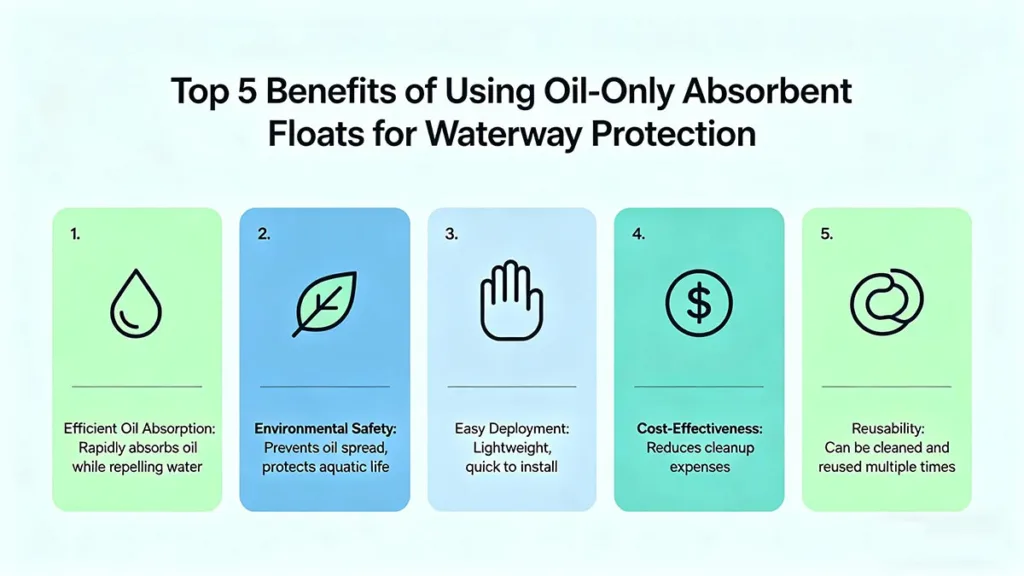
The top 5 benefits of using oil-only absorbent floats for waterway protection are essential knowledge for anyone responsible for safeguarding lakes, rivers, harbors, or coastal areas from oil spills. Oil-only absorbent floats are specialized tools designed to target and contain oil while repelling water, making them a game-changer for waterway protection. Whether you’re managing a marina, industrial facility near water, or an environmental cleanup team, understanding these benefits helps you make informed decisions, reduce environmental harm, and streamline spill response—all while staying compliant with regulations.
📌 Why Oil-Only Absorbent Floats Matter for Waterway Protection
Waterways are vital for ecosystems, communities, and industries—they support marine life, provide drinking water, and facilitate transportation. Oil spills, whether from vessel leaks, industrial runoff, or accidental discharges, pose a catastrophic threat: they coat wildlife, contaminate water supplies, and damage habitats that take years to recover. Regular absorbent tools often fall short, as they soak up water alongside oil, reducing efficiency and creating more waste. This is where oil-only absorbent floats stand out—they’re engineered to focus solely on oil, delivering targeted protection that regular floats can’t match. Here’s why they’re a non-negotiable tool for waterway protection:
- Targeted Oil Absorption: Unlike universal absorbents that soak up water and oil, oil-only absorbent floats use specialized materials (typically 100% polypropylene) with an oil-attracting, water-repelling design. This means they lock in oil while leaving water untouched, ensuring no unnecessary waste and maximum efficiency.
- Continuous Floating Capability: Even when fully saturated with oil, these floats remain buoyant, allowing them to stay on the water’s surface where oil accumulates. This eliminates the risk of them sinking and spreading contamination to the waterbed.
- Compliance with Environmental Standards: Most regions, including the EPA, require oil spill response tools that minimize environmental impact. Oil-only absorbent floats meet these standards by reducing waste and preventing secondary contamination, helping you avoid costly fines.
- Versatility Across Settings: They work in all types of waterways—calm lakes, flowing rivers, and even rough marine environments—and can handle various oil types, from motor oil to crude oil.
Before diving into the top 5 benefits, it’s critical to address a common question: Are oil-only absorbent floats effective for all waterway scenarios? The answer is yes—they’re designed to adapt to different water conditions, from calm harbors to choppy coastal waters, and their specialized design ensures they outperform regular floats in oil spill containment.
✅ The Top 5 Benefits of Using Oil-Only Absorbent Floats for Waterway Protection
Oil-only absorbent floats offer a range of advantages that make them the preferred choice for waterway protection. Below are the top 5 benefits, each designed to address key pain points in oil spill response—from efficiency and cost-saving to environmental protection and compliance.
🌊 Benefit 1: Superior Oil Absorption (No Water Waste)
The most significant benefit of oil-only absorbent floats is their ability to absorb oil without soaking up water—a feature that sets them apart from regular absorbent floats. This targeted absorption delivers two critical advantages for waterway protection:
- High Absorption Capacity: Oil-only absorbent floats can absorb up to 20–40 times their weight in oil, depending on the oil type and float design. For example, a single 3-meter float can absorb up to 80 liters of oil, making them ideal for both small leaks and large spills. This high capacity means fewer floats are needed to contain a spill, reducing waste and cleanup time.
- No Water Dilution: Regular absorbent floats soak up water alongside oil, which dilutes the absorbent material and reduces its effectiveness. Oil-only floats repel water, so every bit of their absorption capacity is used for oil—ensuring faster cleanup and less waste. This also means the collected oil is easier to recover and dispose of, as it’s not mixed with water.
- Fast Absorption Speed: The polypropylene fibers used in oil-only floats have a porous structure that allows oil to be absorbed in less than 5 minutes. This speed is critical for waterway protection, as oil spreads quickly on water—every minute saved reduces the area of contamination and harm to marine life.
Float Type | Absorbs Water? | Absorption Capacity (vs. Weight) | Cleanup Efficiency |
|---|---|---|---|
Oil-Only Absorbent Floats | No | 20–40x (oil only) | High (targeted, fast) |
Regular Absorbent Floats | Yes | 10–15x (oil + water) | Low (diluted, slow) |
This superior absorption means oil-only absorbent floats are more efficient and cost-effective than regular floats—saving you time, money, and reducing environmental impact.
🌱 Benefit 2: Eco-Friendly Design Protects Marine Life & Ecosystems
Waterway protection is ultimately about safeguarding ecosystems, and oil-only absorbent floats are engineered with environmental responsibility in mind. Their eco-friendly design offers multiple benefits for marine life and habitats:
- Non-Toxic Materials: Most oil-only absorbent floats are made from non-toxic, inert materials like polypropylene, which are safe for marine life and won’t leach harmful chemicals into the water. Unlike chemical spill response methods (like dispersants), they don’t harm fish, birds, or plants—making them ideal for sensitive ecosystems.
- Minimizes Secondary Contamination: Because they don’t absorb water, oil-only floats prevent the spread of contaminated water to other areas of the waterway. They also reduce the amount of waste generated during cleanup, as you’re not disposing of water-soaked absorbent material. Used floats can often be recycled or incinerated without releasing toxic fumes, with ash residue as low as 0.02%.
- Protects Water Quality: By containing and absorbing oil quickly, these floats prevent oil from seeping into the water column or settling on the waterbed—where it can contaminate sediment and harm bottom-dwelling organisms. This helps maintain water quality for drinking, recreation, and marine life.
- Biodegradable Options Available: Many manufacturers now offer biodegradable oil-only absorbent floats, made from plant-based materials like cotton or kenaf, which break down naturally in the environment over time. These are perfect for sensitive waterways where even small amounts of synthetic material could cause harm.
A common question about oil-only absorbent floats is: Do they harm marine life if left in the water? When used correctly, no—they’re designed to be non-toxic, and their floating design means they can be easily retrieved after use, preventing any long-term impact on ecosystems.
💸 Benefit 3: Cost-Saving & Time-Efficient for Spill Response
For businesses, marinas, and environmental teams, cost and time are critical factors in spill response. Oil-only absorbent floats deliver significant cost savings and efficiency gains compared to regular floats or other spill response methods:
- Reduced Material Costs: Their high absorption capacity means you need fewer floats to handle a spill. For example, a single oil-only float can replace 2–3 regular floats, reducing the amount of material you need to purchase and store. Additionally, their durability means they can be reused multiple times (after cleaning and drying), further lowering costs.
- Faster Cleanup Time: Because they absorb oil quickly and don’t waste capacity on water, cleanup time is cut in half compared to regular floats. This is critical for large spills, where every minute counts to prevent oil from spreading. For example, a small oil leak that would take 2 hours to clean up with regular floats can be handled in 1 hour with oil-only floats.
- Lower Disposal Costs: Since they don’t absorb water, the volume of waste generated is much lower. Disposing of oil-saturated floats is also cheaper than disposing of water-soaked material, as it’s easier to separate and recycle the oil. Some used floats can even be incinerated for energy recovery, further offsetting disposal costs.
- Reduced Downtime: For businesses near waterways (like marinas or industrial plants), spills can lead to costly downtime. Oil-only absorbent floats speed up cleanup, allowing operations to resume faster—saving you money on lost productivity.
Cost/Time Factor | Oil-Only Absorbent Floats | Regular Floats | Cost/Time Savings |
|---|---|---|---|
Material Cost (per spill) | $50–$100 | $150–$200 | 50–67% |
Cleanup Time (small spill) | 1 hour | 2–3 hours | 50–67% |
Disposal Cost | $20–$30 | $50–$70 | 60% |
📏 Benefit 4: Versatile & Easy to Use in All Waterway Conditions
Waterway conditions vary widely—from calm lakes to rough oceans, and shallow rivers to deep harbors. Oil-only absorbent floats are designed to be versatile and easy to use in any condition, making them a reliable tool for any spill scenario:
- Adapts to Water Movements: Their lightweight, floating design allows them to move with water currents and waves, ensuring they stay with the oil slick instead of being pushed away. Many models feature interlocking connectors, allowing you to link multiple floats together to form a continuous barrier—ideal for large spills or wide waterways.
- Suitable for All Oil Types: They work effectively with all types of oil, including motor oil, diesel, crude oil, and hydraulic oil. This versatility means you don’t need multiple types of absorbents—one oil-only float can handle any oil spill in your waterway.
- Easy to Deploy & Retrieve: Unlike heavy spill response equipment, oil-only absorbent floats are lightweight and easy to deploy—even by a single person. They can be thrown directly into the water, and their bright color (often white or orange) makes them easy to spot and retrieve after use. Some models even feature handles or loops for quick retrieval.
- Durable in Harsh Conditions: High-quality oil-only floats are made from tough, weather-resistant materials that can withstand UV rays, saltwater, and extreme temperatures (from -30℃ to 60℃). This durability means they can be stored outdoors for long periods without deteriorating, making them ready for emergency use at any time.
Whether you’re dealing with a small leak from a boat in a calm harbor or a large spill in rough coastal waters, oil-only absorbent floats are versatile enough to handle the job—with minimal effort and maximum effectiveness.
📜 Benefit 5: Compliant with Environmental Regulations
For businesses and organizations responsible for waterway protection, compliance with environmental regulations is non-negotiable. Oil-only absorbent floats help you meet and exceed these regulations, avoiding costly fines and reputational damage:
- Meets EPA & International Standards: Most oil-only absorbent floats are certified to meet EPA guidelines for oil spill response, as well as international standards like ISO 14001. They’re designed to minimize environmental impact, which is a key requirement for compliance in most regions.
- Reduces Compliance Risks: Using oil-only floats ensures you’re using a “best practice” method for oil spill containment, which reduces the risk of non-compliance. For example, the EPA requires that oil spill response tools do not cause secondary contamination—something oil-only floats excel at, as they don’t absorb water or leach harmful chemicals.
- Documentation & Traceability: Many manufacturers provide documentation to prove their floats meet regulatory standards, making it easy to show compliance during audits. This documentation can include test reports, certifications, and material safety data sheets (MSDS).
- Supports Sustainability Goals: More and more regulations are focusing on sustainability, and oil-only absorbent floats align with these goals by reducing waste, using eco-friendly materials, and minimizing environmental harm. This not only helps you stay compliant but also enhances your organization’s reputation as an environmental leader.
A common concern is: Do oil-only absorbent floats require special disposal to stay compliant? The answer is no—most can be disposed of in accordance with regular hazardous waste guidelines (for oil-saturated floats) or recycled, making compliance simple and straightforward.
⚠️ Common Mistakes to Avoid When Using Oil-Only Absorbent Floats
To maximize the benefits of oil-only absorbent floats for waterway protection, it’s important to avoid common mistakes that can reduce their effectiveness or lead to non-compliance:
- Mistake 1: Using Them for Non-Oil Spills: Oil-only floats are designed exclusively for oil—they will not absorb water-based liquids like coolants or chemicals. Using them for non-oil spills wastes material and fails to contain the spill.
- Mistake 2: Not Retrieving Floats After Use: Leaving oil-saturated floats in the water can lead to secondary contamination if they break down over time. Always retrieve floats after cleanup and dispose of them properly.
- Mistake 3: Underestimating Spill Size: Using too few floats can allow oil to spread beyond the containment area. Always have extra floats on hand to handle larger-than-expected spills.
- Mistake 4: Storing Floats Improperly: Storing floats in damp or dirty areas can reduce their absorption capacity. Keep them in a dry, clean storage area away from oil or chemicals.
- Mistake 5: Choosing Low-Quality Floats: Cheap, low-quality floats may not repel water effectively or may break down in harsh conditions. Invest in high-quality floats to ensure they perform when you need them most.
🔍 How to Choose the Right Oil-Only Absorbent Floats for Your Waterway
To get the most out of oil-only absorbent floats, it’s important to choose the right type for your specific waterway and needs. Here’s what to consider:
Consideration | Key Questions to Ask | Recommended Float Type |
|---|---|---|
Waterway Type | Is it a calm lake, flowing river, or rough marine environment? | Marine-grade floats for rough waters; lightweight floats for calm waters |
Spill Size | Do you handle small leaks or large spills? | Small floats (1–3 meters) for leaks; interlocking floats for large spills |
Oil Type | Do you deal with light oil (diesel) or heavy oil (crude)? | High-capacity floats for heavy oil; fast-absorbing floats for light oil |
Environmental Sensitivity | Is the waterway home to sensitive marine life? | Biodegradable or non-toxic floats |
Additionally, look for floats with certifications from reputable organizations (like the EPA or ISO) to ensure they meet quality and compliance standards. High-quality floats will also have clear instructions for use and disposal, making them easier to integrate into your spill response plan.
📞 Final Thoughts: The Top 5 Benefits of Using Oil-Only Absorbent Floats for Waterway Protection
Oil-only absorbent floats are a critical tool for waterway protection, offering superior oil absorption, eco-friendly design, cost savings, versatility, and compliance with environmental regulations. By choosing these floats, you’re not only protecting waterways from oil spills but also streamlining your spill response, reducing costs, and demonstrating a commitment to environmental responsibility.
Whether you’re a marina manager, industrial facility operator, or environmental cleanup professional, understanding the top 5 benefits of using oil-only absorbent floats for waterway protection helps you make the right choice for your needs. These floats are more than just a spill response tool—they’re an investment in the health of our waterways and the marine life that depends on them.
If you’re unsure which oil-only absorbent floats are right for your waterway, or if you need guidance on integrating them into your spill response plan, reach out to a trusted provider of oil/liquid absorbent products. They can help you select the perfect floats to meet your needs, ensuring you get the maximum benefit from this essential waterway protection tool. The top 5 benefits of using oil-only absorbent floats for waterway protection are clear—they’re efficient, eco-friendly, cost-effective, versatile, and compliant—making them the best choice for safeguarding our waterways.