Industrial spill control absorbents and supporting industrial safety equipment form the core foundation of compliant, risk-free facility operation for manufacturing, marine, chemical, and maintenance workspaces. Every facility that handles oils, solvents, flammable fluids, or hazardous waste faces dual pressures: meeting strict EPA environmental protection rules and following OSHA workplace safety standards. Without a matched set of spill containment absorbents and dedicated safety gear, businesses face expensive fines, workplace injuries, irreversible aquatic contamination, and costly operational downtime. This in-depth guide breaks down all essential spill control and safety tools, clarifies their real-world use cases, answers frequent user questions about absorbent performance, and outlines how to build a full compliance toolkit for all site spill risks.
Facility managers and maintenance teams often piece together random safety supplies without a unified spill response plan. Mismatched absorbent materials, inadequate floating containment barriers, and uncertified hazardous material storage cabinets leave gaps during leak or spill emergencies. High-quality industrial spill control absorbents work hand-in-hand with supporting safety equipment to limit fluid spread, contain hazardous waste, secure flammable substances and simplify on-site waste processing. Below, we break down every must-have product category, its practical advantages, ideal deployment scenarios, and tips to select items aligned with local industrial regulatory requirements.
♻️ Portable Incinerators: On-Site Hazardous Waste Disposal for Spill Cleanup Waste
Once industrial spill control absorbents become saturated with oil, chemicals, or other combustible contaminants, storage and off-site transport of used absorbent waste creates extra compliance burdens and safety hazards. Portable incinerators solve this pain point by enabling fully contained waste disposal directly at your facility, eliminating long-distance waste hauling risks.
- Core operational advantages of portable incinerator units
- Supports complete combustion of both hazardous and non-hazardous combustible waste including saturated oil sorbents, disposable cleaning cloths and contaminated protective gear
- Built-in emission control systems to limit toxic air release and meet regional environmental protection standards
- Compact mobile frame allows repositioning across multiple workshop bays, storage yards, or marine staging areas
- Cuts down the dedicated storage space required for stockpiling contaminated absorbent waste before removal
- Ideal facility types to invest in portable incinerators
- Heavy manufacturing plants generate large volumes of used chemical absorbents
- Marine terminals and dock facilities are processing regular oil spill cleanup waste
- Independent maintenance garages and vehicle service centers with consistent petroleum waste output
Many facility operators ask whether portable incinerators can replace third-party waste removal services entirely. While large-scale chemical processing sites still require supplementary certified disposal vendors, small to mid-sized industrial operations can drastically reduce monthly waste management costs by processing low-risk combustible spill waste on location with these mobile units. Proper incineration of saturated industrial spill control absorbents also removes the risk of leaked residual fluids contaminating soil or stormwater runoff on your premises.
🌊 Floating Water Booms: Aquatic Spill Containment to Protect Water Ecosystems
Workplaces adjacent to lakes, rivers, harbor docks, and industrial drainage channels face unique spill threats that standard industrial spill control absorbents cannot resolve. Floating water booms act as temporary floating physical barriers to trap drifting oil and chemical contaminants before they spread across wide aquatic surfaces.
- Key functional benefits of industrial-grade water booms
- Flexible floating structure blocks the outward spread of petroleum liquids and mild industrial chemicals across open water
- Lightweight modular design for fast manual deployment during unexpected spill incidents
- Weather-resistant, durable outer casing that withstands prolonged contact with saltwater, UV sunlight, and fluctuating water temperatures
- Simple retrieval process after spill cleanup for repeated reuse across future containment events
- Recommended deployment locations for water booms
- Commercial shipping harbors and private dock loading zones
- Factory drainage outlets that empty into local freshwater ponds or streams
- Offshore construction sites and coastal maintenance yards with regular oil transfer activities
When paired with oil sorbent pads and absorbent booms, floating water booms create a two-stage aquatic spill response system: barriers contain the spread zone first, then oil-only industrial spill control absorbents extract floating petroleum contaminants. This layered containment strategy drastically reduces environmental remediation costs and helps facilities stay aligned with EPA stormwater and aquatic pollution prevention mandates.
🧶 Microfiber Absorbent Materials: Lightweight General-Purpose Spill Wiping Solutions
A top frequently searched question among maintenance teams is whether microfiber materials deliver reliable liquid absorption for daily industrial cleanup tasks. Microfiber absorbents feature ultra-fine woven fiber construction that creates expanded surface area to trap water, light oils, and mild maintenance fluids quickly.
- Standout performance perks of microfiber absorbent cloths and pads
- Rapid liquid capture to stop small surface drips from spreading across workbenches and machinery surfaces
- Reusable construction that holds consistent absorbency after multiple rounds of washing and decontamination
- Ultra-lightweight build that simplifies storage inside spill kits and portable maintenance toolboxes
- Flexible thin form factor to wipe tight gaps around pipe joints, valve fittings, and electrical machinery housings
- Best paired with primary industrial spill control absorbents
- Secondary surface wiping after bulk fluid removal with oil sorbent rolls and pads
- Daily routine spot cleaning of minor coolant and water drips on assembly lines
- Quickly clean up inside spill pallets and secondary containment trays to extend the lifespan of bulk absorbent materials
Microfiber absorbents cannot replace heavy-duty hazmat or oil-only industrial spill control absorbents for large-volume chemical or petroleum spills, but they cut down waste of premium sorbent products by handling small, routine drips and surface wiping tasks. Facility teams that separate microfiber daily cleaning supplies from specialized spill absorbents consistently report lower monthly spending on bulk sorbent inventory.
🔥 Fireproof Storage Cabinets: OSHA & NFPA Compliant Flammable Fluid Protection
Facilities storing gasoline, solvents, thinners, and other flammable liquids require dedicated fireproof cabinets to meet core OSHA and NFPA industrial safety standards. These storage units act as a critical safety layer that prevents small container fires from escalating into full facility blazes that could destroy bulk stock of industrial spill control absorbents and production equipment.
- Mandatory design features of certified fireproof cabinets
- Multi-layer fire-retardant wall construction to contain internal flames for extended emergency response windows
- Sealed vent systems and spill sump bases to catch leaking flammable fluids before they spread across floor surfaces
- Lockable secure door hardware to restrict unsupervised staff access to hazardous liquid inventory
- Clear exterior labeling aligned with global workplace hazard communication guidelines
- Risk reduction outcomes from installing fireproof cabinets
- Limits fire spread to isolated storage zones to protect nearby oil sorbents and spill containment equipment
- Reduces facility legal liability in the event of fire or fluid leakage incidents
- Passes routine OSHA on-site safety audits without costly corrective action notices
Many site managers overlook the link between fireproof storage cabinets and industrial spill control absorbent performance. If unsecured flammable containers leak unchecked, the pooled fluid will saturate large volumes of absorbent materials and create an elevated fire risk. Centralized, certified fireproof storage eliminates this hidden spill hazard before cleanup intervention is needed.
🛢️ Oil Absorbent Booms & Oil-Only Sorbents: Primary Marine & Workshop Oil Spill Response
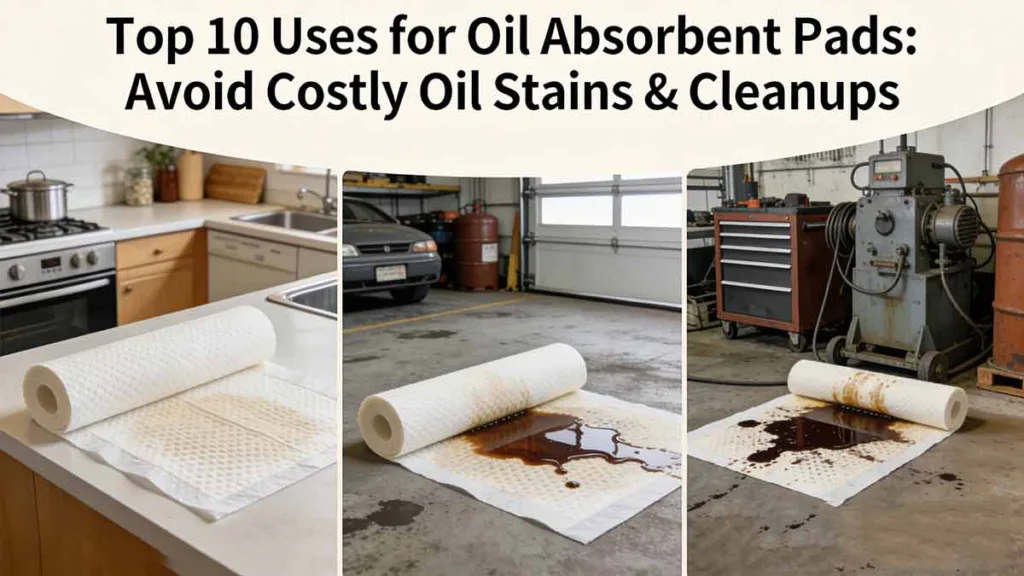
Oil absorbent booms and standalone oil sorbent pads, rolls, and granules serve as the frontline industrial spill control absorbents for all petroleum-based fluid leaks, both on dry factory floors and open water surfaces. This product category addresses the most common spill risk across automotive, marine, mining, and mechanical maintenance sectors.
Oil Absorbent Floating Booms
- Traps and absorbs floating oil layers while fully repelling surrounding water
- Interlocking modular segments connect to create custom-length containment lines on water
- Resilient outer shell resists tearing during retrieval and repeated floating deployments
Bulk Oil Sorbent Products (Pads, Rolls, Loose Granules)
- Hydrophobic design repels pure water while soaking up motor oil, diesel, hydraulic fluid, and crude petroleum
- Multiple format options fit unique use cases: large rolls for wide machinery bases, compact pads for spot drips, loose granules for uneven floor crack spills
- Compact stacking packaging minimizes storage footprint inside warehouse spill kit stations
Combining floating oil absorbent booms for aquatic spills with floor-based oil sorbent rolls and pads creates a complete oil spill response toolkit for mixed land-and water industrial facilities. Unlike universal or hazmat industrial spill control absorbents, oil-only variants eliminate waste by avoiding saturation from non-target water liquids during routine cleanup operations.
🧰 Building a Unified Facility Spill Control & Safety Equipment System
Individual industrial spill control absorbents and safety gear deliver limited value without a coordinated site-wide response strategy. Below is a simplified reference table to match core safety products to your facility’s primary spill hazards, for quick inventory planning by maintenance and safety managers.
| Primary On-Site Spill Hazard | Core Industrial Spill Control Absorbent | Supporting Required Safety Equipment |
|---|---|---|
| Small daily oil drips (workshops) | Oil sorbent pads & perforated rolls | Wall-mounted spill kit stations, fireproof cabinets |
| Large open-water oil spills | Floating oil absorbent booms | Standard floating water containment booms |
| Mild water/coolant surface drips | Reusable microfiber absorbent cloths | Labeled small storage bins for daily cleaning |
| Hazardous chemical leaks | Hazmat universal sorbent rolls | Portable incinerators for saturated waste disposal |
| Bulk flammable liquid storage risks | Universal absorbent granules for floor containment | NFPA-certified fireproof storage cabinets |
- Simple site setup best practices to maximize absorbent efficiency
- Position matched sets of industrial spill control absorbents and relevant safety equipment within a 30-second walking distance of all high-risk spill zones
- Label all storage stations by spill hazard type to avoid staff using mismatched sorbent materials during emergencies
- Schedule quarterly inventory checks to restock depleted oil sorbents, microfiber cloths, and disposable safety accessories
- Host brief team training sessions covering correct deployment of water booms, incinerator waste handling, and fireproof cabinet storage rules
A unified system removes guesswork for on-site staff during high-stress spill events, cutting response time and reducing excess waste of premium industrial spill control absorbents. Facilities that implement this matched product layout consistently pass EPA stormwater audits and OSHA safety inspections with minimal corrective feedback.
🎯 Final Takeaways: Invest in Targeted Industrial Spill Control Absorbents & Safety Gear
Well-matched industrial spill control absorbents and complementary industrial safety equipment are far more than a regulatory checkbox for EPA and OSHA compliance—these supplies protect your frontline employees, prevent permanent environmental contamination, and reduce long-term operational costs related to spill cleanup, waste disposal, and audit fines. From portable incinerators that process saturated sorbent waste on-site, floating water booms that block aquatic contaminant spread, certified fireproof cabinets for flammable fluid storage, microfiber cloths for routine minor drips, and specialized oil absorbent booms plus oil sorbents for petroleum leak response, every product fills a critical gap in your facility’s full spill protection strategy.
Selecting absorbents and safety equipment tailored to your unique spill hazards eliminates the common mistake of purchasing generic one-size-fits-all supplies that waste inventory and fail to contain high-risk leaks effectively. Standardizing your site toolkit around purpose-built industrial spill control absorbents streamlines maintenance workflows, lowers monthly restock expenses, and creates a safer, audit-ready workplace year-round.