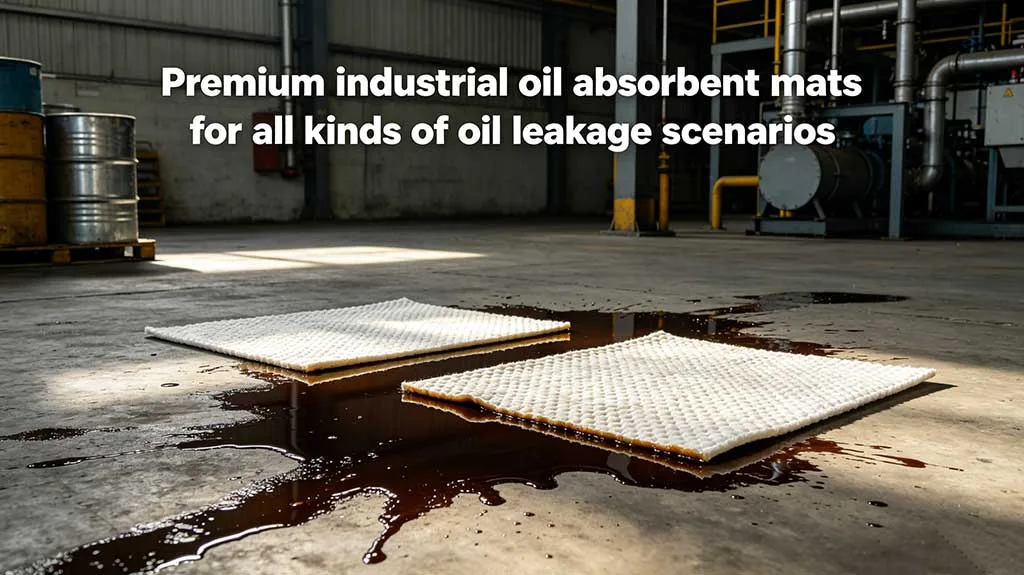
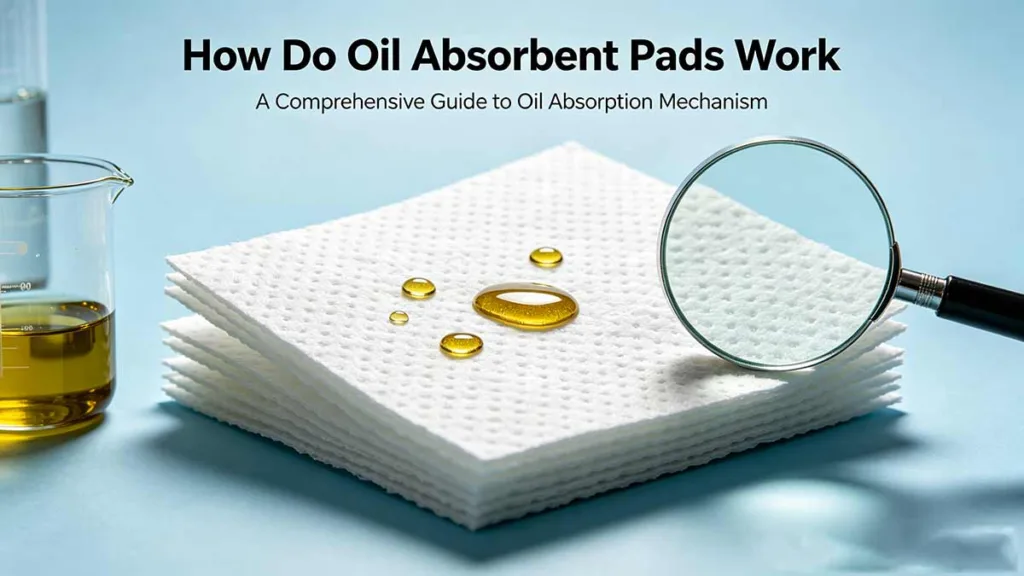
How do oil absorbent pads work? It’s a common question for anyone who deals with oil spills—whether in industrial settings, auto shops, marine environments, or even at home. Oil absorbent pads are essential tools for cleaning up oil, grease, and other hydrocarbons, but many people don’t know exactly how they trap and lock in these liquids without making a bigger mess. This guide breaks down the science behind oil absorbent pads in simple terms, covers their key types, proper usage, and how they compare to other absorbent products like oil absorbent rolls, oil absorbent socks, and oil absorbent pillows—helping you use them effectively and make informed choices for your spill cleanup needs.
📌 What Are Oil Absorbent Pads, and Why Do They Matter?
Before diving into how oil absorbent pads work, it’s important to understand what they are and why they’re a go-to for spill cleanup. Oil absorbent pads are thin, flexible sheets made from specialized materials designed to soak up oil and repel water (or absorb all liquids, depending on the type). They’re used across industries to clean up small to medium spills, prevent contamination, and keep workspaces safe.
- Core Purpose: Oil absorbent pads quickly contain and absorb oil spills, preventing the liquid from spreading to soil, water, or equipment. This not only protects the environment but also reduces the risk of slips, falls, and equipment damage.
- Key Uses: They’re ideal for wiping up oil drips from machinery, cleaning small spills on floors or workbenches, absorbing oil from water surfaces (like ponds or docks), and preparing for larger spills when paired with oil spill kit supplies.
- Why They’re Better Than Alternatives: Unlike rags or paper towels, oil absorbent pads don’t break down when saturated, don’t leave lint or residue, and can absorb far more oil relative to their weight—up to 15–40 times their own weight in some cases.
Whether you’re a business owner stocking an oil spill kit or a homeowner cleaning up a garage leak, understanding how oil absorbent pads work helps you use them more effectively and choose the right type for your needs. A common follow-up question is, “are oil absorbent pads reusable?”—we’ll answer that later, along with how to use oil absorbent pads correctly.
🔬 The Science Behind Oil Absorbent Pads: How They Work
Oil absorbent pads work through two key processes: adsorption (not absorption—yes, there’s a difference!) and capillary action. These processes work together to pull oil into the pad’s fibers and lock it in, preventing leakage or reabsorption. Let’s break this down simply, no complex chemistry required:
🧽 Adsorption vs. Absorption: What’s the Difference?
Many people confuse adsorption and absorption, but the distinction is key to understanding how oil absorbent pads work:
Process | How It Works | Example |
|---|---|---|
Adsorption | Oil molecules stick to the surface of the pad’s fibers (like a magnet attracting metal). | A sponge soaking up oil (the oil sticks to the sponge’s pores). |
Absorption | Oil molecules are pulled into the center of the material (like water soaking into a towel). | A paper towel soaking up water (the water moves through the towel’s fibers). |
Oil absorbent pads use both processes: adsorption to trap oil on the fiber surfaces and absorption to pull oil deep into the pad, ensuring it doesn’t leak out once saturated. This dual action is what makes them so effective for spill cleanup.
🌀 Capillary Action: The “Pull” That Draws Oil In
Capillary action is the force that pulls oil into the pad’s fibers, even against gravity. Here’s how it works in simple terms:
- Fiber Structure: Oil absorbent pads are made from tiny, porous fibers (usually polypropylene, a synthetic material). These fibers have small gaps between them, like tiny tubes.
- Surface Tension: Oil has a lower surface tension than water, which means it’s more likely to spread and be pulled into small spaces. When the pad touches oil, the oil is drawn into the gaps between the fibers.
- Locking In Oil: Once the oil is pulled into the pad’s fibers, the porous structure traps it. High-quality pads are designed to hold the oil even when squeezed, preventing leakage.
This combination of adsorption and capillary action is what makes oil absorbent pads so efficient. Unlike paper towels, which just soak up oil on the surface, oil absorbent pads pull oil deep into their structure, making them more effective for larger spills and preventing the oil from spreading.
🧪 Key Materials: What Makes Oil Absorbent Pads Work?
The materials used to make oil absorbent pads play a huge role in how well they work. Most pads are made from synthetic fibers, with polypropylene being the most common—here’s why:
- Polypropylene: This is the go-to material for oil absorbent pads because it’s hydrophobic (repels water) and oleophilic (attracts oil). It’s also durable, doesn’t break down when saturated, and is lightweight. Polypropylene fibers are often melt-blown to create a porous, absorbent structure that maximizes oil retention.
- Cellulose (Natural Fibers): Some eco-friendly pads use cellulose (from wood or cotton), which is biodegradable. These work well for small, non-hazardous spills but are less effective for large or industrial spills because they can break down when wet.
- Blended Fibers: Some pads combine polypropylene with other fibers (like polyester) to boost absorption capacity or add durability. These are common in heavy-duty industrial settings where spills are frequent.
Chemical absorbent pads use similar materials but are treated with special coatings to handle hazardous chemicals (like acids or solvents). Unlike oil absorbent pads, chemical absorbent pads are designed to absorb both oil and chemicals, making them essential for chemical spill kit supplies.
📊 Types of Oil Absorbent Pads: How They Work Differently
Not all oil absorbent pads work the same way—they’re designed for different types of spills and environments. Understanding the different types helps you choose the right pad for your needs, whether you’re cleaning up a small drip or a large marine spill. Here’s a breakdown of the most common types:
⚪ Oil-Only Absorbent Pads
Oil-only absorbent pads are the most common type, designed to absorb oil, grease, and hydrocarbons while repelling water. Here’s how they work:
- Hydrophobic Treatment: The polypropylene fibers are treated to repel water, so when placed on water (like a pond or ocean), the pad floats and only soaks up the oil on the surface.
- Best For: Marine spills, outdoor spills that might get rained on, or any spill where water is present (like a leak near a sink or drain).
- Key Benefit: They don’t absorb water, so they can focus on the oil—making them more efficient and reducing waste.
🔴 Chemical Absorbent Pads
Chemical absorbent pads (also called hazardous material pads) work differently than oil-only pads—they’re designed to absorb chemicals, oils, and other hazardous liquids. Here’s what makes them unique:
- Chemical-Resistant Fibers: They’re made from polypropylene or other synthetic fibers that can withstand harsh chemicals (like acids, alkalis, and solvents) without breaking down.
- Universal Absorption: Unlike oil-only pads, they absorb both oil and water, making them ideal for chemical spills that might mix with water.
- Best For: Laboratories, chemical plants, or any setting where hazardous chemicals are used—they’re a key component of a chemical spill kit.
🔘 Universal Absorbent Pads
Universal absorbent pads are a middle ground—they absorb oil, water, and non-hazardous liquids (like coolants or detergents). Here’s how they work:
- Non-Treated Fibers: They’re made from polypropylene or cellulose fibers that aren’t treated to repel water, so they absorb all liquids.
- Best For: General-purpose cleanup, like small spills in garages, warehouses, or offices where you’re not sure if the liquid is oil or water.
- Key Benefit: Versatile—one pad can handle multiple types of spills, making them convenient for everyday use.
📏 Oil Absorbent Pads vs. Other Absorbent Products
Oil absorbent pads are just one part of a complete spill cleanup solution. They often work alongside other absorbent products, each with its own unique function. Here’s how they compare:
Product | How It Works | Best For |
|---|---|---|
Oil Absorbent Pads | Adsorbs oil (or chemicals) via capillary action; thin and flexible for small spills. | Small to medium spills, wiping drips, tight spaces. |
Oil Absorbent Rolls | Same absorption process as pads, but in a roll for easy cutting to size. | Large spills, covering wide areas (e.g., factory floors). |
Oil Absorbent Socks | Cylindrical pads filled with absorbent fibers; placed around spills to contain them. | Containing spills, blocking drains, wrapping around pipes. |
Thick, pillow-shaped pads with high absorption capacity; soak up large pools of oil. | Large spills, pooling oil, marine or industrial settings. | |
Long, floating tubes filled with absorbent material; contain large spills on water. | Marine spills, lakes, rivers, or large outdoor water surfaces. |
For most businesses, a combination of these products (along with an oil spill kit or chemical spill kit) is the best way to handle all types of spills. Oil absorbent pads are great for quick cleanup, while oil absorbent socks and oil absorbent boom help contain larger spills before they spread.
✅ How to Use Oil Absorbent Pads Correctly (Avoid Common Mistakes)
Even the best oil absorbent pads won’t work effectively if you use them the wrong way. Knowing how to use oil absorbent pads correctly ensures you clean up spills quickly, safely, and without wasting supplies. Here are the key steps and common mistakes to avoid:
📝 Step-by-Step Guide to Using Oil Absorbent Pads
- Assess the Spill: First, identify what’s spilled (oil, chemical, or a mix) and how large it is. Choose the right pad type (oil-only, chemical, or universal) based on the spill.
- Contain the Spill (If Needed): For larger spills, use oil absorbent socks to block the spill from spreading before placing the pads. This prevents the oil from seeping into drains or soil.
- Place the Pads Correctly: Lay the pads flat over the spill, ensuring full coverage. For water-based spills (like marine oil spills), place the pads directly on the oil surface—they’ll float and absorb the oil without soaking up water.
- Let It Absorb: Give the pads time to soak up the oil—don’t rush to remove them. Most pads take 1–5 minutes to become fully saturated, depending on the spill size.
- Dispose of Properly: Once saturated, remove the pads and place them in a sealed container. Used oil absorbent pads are considered hazardous waste if they’re soaked in oil or chemicals—dispose of them according to local regulations to avoid environmental harm.
❌ Common Mistakes to Avoid
- Using the Wrong Pad Type: Using an oil-only pad for a chemical spill won’t work—chemicals will just sit on the surface, increasing the risk of contamination. Always match the pad to the spill type.
- Not Covering the Entire Spill: If you don’t cover the entire spill, oil will spread around the edges of the pad, making cleanup harder.
- Removing Pads Too Early: Taking pads out before they’re saturated wastes supplies and leaves behind oil.
- Disposing of Pads Improperly: Throwing used pads in the regular trash can lead to oil leakage and environmental contamination—always follow local hazardous waste guidelines.
❓ Are Oil Absorbent Pads Reusable?
A common question we get is, “are oil absorbent pads reusable?” The short answer is: it depends on the type of pad and the spill. Here’s a clear breakdown:
- Disposable Pads: Most standard oil absorbent pads are disposable. Once saturated, they’re meant to be disposed of properly—reusing them can lead to leakage and contamination.
- Reusable Pads: Some heavy-duty industrial pads are designed to be reusable. These are made from thicker, more durable materials (like reinforced polypropylene) and can be wrung out, cleaned, and reused multiple times—though they should be disposed of once they start to break down.
- Key Note: Never reuse chemical absorbent pads—they absorb hazardous chemicals that can leach out if reused, posing a safety risk.
🌍 How Oil Absorbent Pads Fit Into Environmental Safety
Oil spills—even small ones—can cause significant environmental harm, from contaminating soil and groundwater to killing aquatic life. Oil absorbent pads play a crucial role in environmental safety by containing and cleaning up spills quickly, preventing toxins from spreading. Here’s how they help:
- Prevent Soil Contamination: By absorbing oil before it seeps into the soil, oil absorbent pads protect plant life and prevent toxins from reaching groundwater (a key source of drinking water).
- Protect Aquatic Ecosystems: Oil-only absorbent pads float on water, absorbing oil without harming fish, birds, or other aquatic life. They’re essential for marine spill cleanup, where even small amounts of oil can be devastating.
- Comply With Regulations: Most regions have strict regulations for handling oil and chemical spills. Using oil absorbent pads (and other absorbent products like oil absorbent boom or chemical absorbent socks) helps businesses stay compliant and avoid costly fines.
For businesses, using high-quality oil absorbent pads and maintaining a well-stocked oil spill kit or chemical spill kit isn’t just a legal requirement—it’s a commitment to environmental responsibility. Choosing eco-friendly pads (like biodegradable cellulose pads) can further reduce your environmental impact.
💡 Tips for Choosing the Right Oil Absorbent Pads
With so many types of oil absorbent pads available, choosing the right one can be overwhelming. Here are key factors to consider to ensure you get the best pad for your needs:
- Spill Type: Oil-only pads for petroleum spills, chemical absorbent pads for hazardous chemicals, and universal pads for mixed liquids.
- Spill Size: Small spills (e.g., drips) need standard pads, while large spills may require oil absorbent rolls or a combination of pads and oil absorbent pillows.
- Environment: Outdoor or water-based spills need oil-only pads (they float), while indoor spills can use universal or oil-only pads.
- Durability: Industrial settings with frequent spills may need heavy-duty pads, while home or office use can use standard disposable pads.
- Compliance: Ensure the pads meet local regulations for hazardous waste disposal—look for certifications or labels indicating they’re suitable for your industry.
If you’re unsure which pad to choose, consider your most common spill scenarios. For example, auto shops will likely need oil-only pads and oil absorbent rolls for frequent oil drips, while laboratories will need chemical absorbent pads and a well-stocked chemical spill kit.
🔚 Final Thoughts: How Do Oil Absorbent Pads Work?
To wrap it up, how do oil absorbent pads work? They use a combination of adsorption (oil sticking to fiber surfaces) and capillary action (oil being pulled into porous fibers) to trap and lock in oil, grease, or chemicals—all while being durable, easy to use, and designed for specific spill types. Whether you’re using oil absorbent pads for a small garage drip or a large industrial spill, understanding their science and proper usage helps you clean up effectively, protect the environment, and stay compliant.
Oil absorbent pads are just one part of a complete spill cleanup solution—paired with oil absorbent rolls, oil absorbent socks, oil absorbent pillows, oil absorbent boom, and a well-stocked oil spill kit or chemical spill kit, they provide a comprehensive way to handle any spill. Remember to choose the right pad type, use it correctly, and dispose of it properly to maximize effectiveness and minimize environmental impact.
If you’re looking for high-quality oil absorbent pads, chemical absorbent pads, or other absorbent products to meet your spill cleanup needs, our team of experts is here to help. We offer a full range of products designed for durability, efficiency, and compliance—reach out to learn more about how we can support your business’s safety and environmental goals. And remember, knowing how do oil absorbent pads work is the first step to using them effectively.
📚 Additional Resources: Industry Authority Websites
To learn more about oil absorbent pads, spill cleanup best practices, and industry regulations, we recommend visiting these authoritative websites. They provide expert guidance, safety standards, and product information to help you make informed decisions:
- U.S. Environmental Protection Agency (EPA): The EPA offers detailed guidelines on spill prevention, response, and disposal, including best practices for using oil absorbent products. Visit their site to learn more about environmental regulations and how to protect ecosystems: EPA Environmental Protection.
- 3M™ Oil & Petroleum Sorbents: 3M is a trusted manufacturer of absorbent products, including oil absorbent pads, rolls, and booms. Their technical resources explain product specifications and proper usage: 3M Oil & Petroleum Sorbents Technical Guide.