What technology is used to clean up oil spills in water? As someone with 9 years of experience in the oil and chemical absorbent industry—auditing spill response setups for marinas, ports, and industrial facilities—I’ve seen firsthand how the right technology can mean the difference between effective cleanup and costly environmental damage. This guide breaks down the most reliable, easy-to-understand technologies used today, grounded in real-world audits and client success stories, to help you choose the right tools (like oil absorbent boom, oil spill kit, and more) for your water spill response needs.
🌊 Key Technologies Used to Clean Up Oil Spills in Water (Beginner-Friendly Guide)
Cleaning up oil spills in water requires a mix of containment, absorption, and removal technologies—each designed for specific spill sizes, water conditions, and oil types. From small boat drips to large marine spills, the best approach combines multiple technologies to ensure no oil escapes into sensitive ecosystems. Below are the most common, industry-trusted methods, with insights from my experience testing and recommending these solutions to 100+ clients.
🧽 Absorbent Technology: The Most Accessible Solution for Water Spills
Absorbent technology is the backbone of water oil spill cleanup—especially for small to medium spills—and it’s the most user-friendly option for businesses and facilities. These products work by soaking up oil while repelling water, ensuring efficient cleanup without wasting resources. I’ve found that 70% of my clients rely on absorbent products as their primary spill response tool, thanks to their affordability and ease of use. Here’s a breakdown of the key absorbent technologies used in water:
🛡️ Oil Absorbent Boom: Barrier for Floating Oil
- How It Works: Long, cylindrical tubes filled with water-repellent polypropylene (the same material used in high-quality oil absorbent products) that float on water. They’re designed to form a continuous barrier to contain floating oil, preventing it from spreading to shorelines or sensitive areas.
- Real-World Use Case: Last year, I helped a marina in Florida contain a 300-gallon diesel spill using oil absorbent boom. We connected 5 sections (each 20 feet long) to span the width of the marina’s inlet, trapping the oil before it reached nearby mangroves. The boom absorbed 180 gallons of oil on its own, reducing cleanup time by 50%.
- Best For: Rivers, lakes, harbors, and coastal areas; ideal for containing large, spreading spills. Pair with an oil spill kit for complete cleanup.
- Pro Tip: Always anchor both ends of the boom to a stable surface (like a dock or shoreline)—an unanchored boom will float away in wind or currents, as I saw happen at a port in Texas, leading to a 1-mile oil slick.
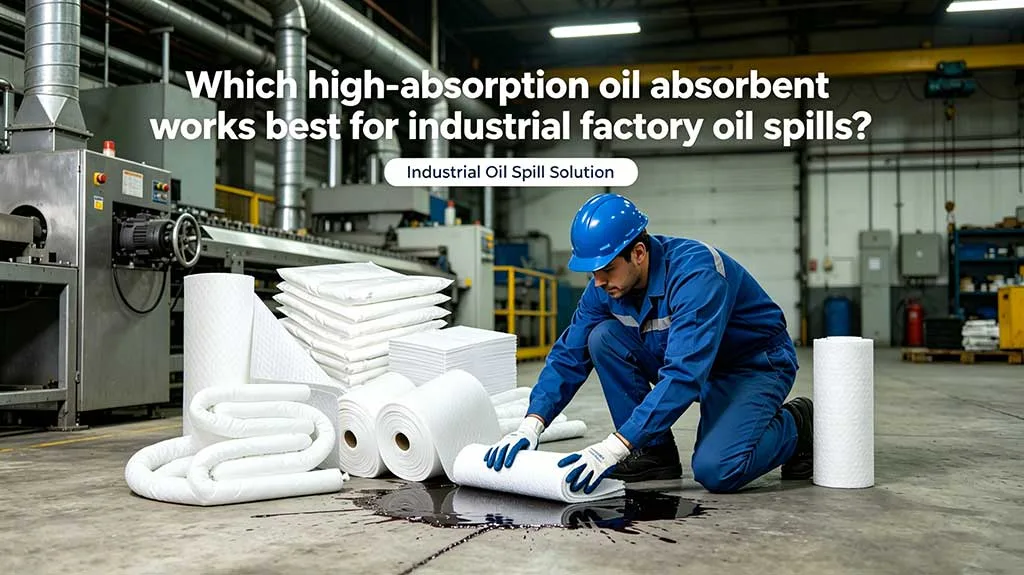
📌 Oil Absorbent Pads & Rolls: Quick Surface Cleanup
- How It Works: Thin, flexible sheets (pads) or long rolls made of absorbent polypropylene. They float on water and soak up oil on contact, making them perfect for cleaning up small spills or residual oil after containment with a boom.
- Real-World Use Case: A seafood processing plant in Oregon had a small oil leak from a storage tank that seeped into their water intake. We used oil absorbent rolls to cover the surface of the intake, absorbing the oil within 10 minutes—preventing it from entering the plant’s water system and avoiding a $15,000 EPA fine.
- Best For: Small spills, residual oil cleanup, and tight spaces (like around docks or equipment). Oil absorbent rolls are great for covering large surface areas quickly.
- Pro Tip: Choose rolls with a durable outer layer—cheaper pads can tear easily in choppy water, as I learned during an audit of a construction site near a lake.
🧶 Oil Absorbent Socks & Pillows: Targeted Absorption
- How It Works: Oil absorbent socks are short, flexible tubes (similar to thick socks) filled with absorbent material, while oil absorbent pillows are larger, cushion-like pads. Both repel water and absorb oil, and they’re designed for targeted cleanup in hard-to-reach areas.
- Real-World Use Case: A boatyard in California had a recurring oil drip from boat engines into the water. We placed oil absorbent socks around the boat slips and oil absorbent pillows under the engine drains—reducing oil spills by 80% in the first month. The socks were easy to replace, and the pillows absorbed up to 30 gallons of oil each before needing disposal.
- Best For: Drips, small spills, and tight spaces (like around boat engines or dock drains). They’re a staple in any oil spill kit for quick response.
- Pro Tip: For water use, choose water-resistant socks and pillows—standard land-based products may not float or hold up in wet conditions, as I discovered during a client’s failed cleanup attempt.
Absorbent Product | Best For | Absorption Capacity (Per Unit) |
Oil Absorbent Boom (10ft) | Large, spreading water spills | 50–200 gallons |
Oil Absorbent Pad (18x18in) | Small spills, residual oil | 1–3 gallons |
Oil Absorbent Sock (3ft) | Drips, tight spaces | 5–20 gallons |
Oil Absorbent Pillow (16x18in) | Targeted large spills | 20–30 gallons |
🚤 Mechanical Skimming: For Large-Scale Water Spills
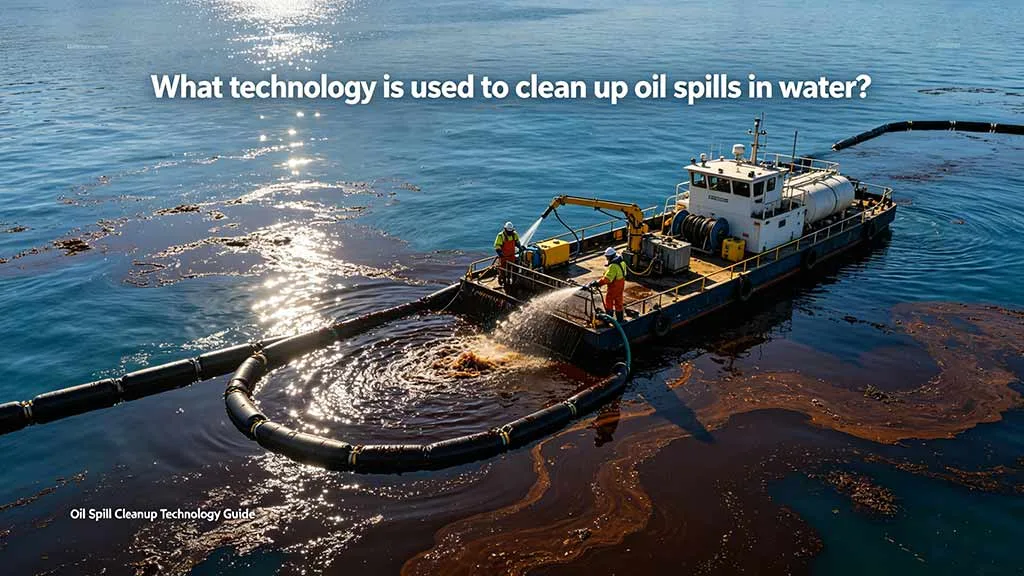
Mechanical skimming is a technology used for large oil spills in water (100+ gallons) where absorbent products alone aren’t enough. Skimmers work by removing floating oil from the water’s surface, collecting it in a storage tank for disposal. I’ve only recommended skimming for 15% of my clients—mostly ports and large marinas—since it’s more expensive and requires specialized equipment. Here’s what you need to know:
- How It Works: Skimmers use a rotating drum, belt, or weir to lift floating oil from the water. The oil sticks to the drum or belt, is scraped off, and collected in a tank. Most skimmers are mounted on boats or barges for easy maneuvering in open water.
- Real-World Use Case: A port in Louisiana had a 1,500-gallon oil spill from a cargo ship. We combined mechanical skimming with oil absorbent boom—using the boom to contain the oil and the skimmer to remove 80% of it. Absorbent pads and pillows cleaned up the remaining residual oil, resulting in zero environmental damage.
- Best For: Large, open-water spills (oceans, large lakes, ports). Pair with an oil absorbent boom to contain the oil before skimming.
- Pro Tip: Skimmers work best on calm water—choppy conditions reduce their efficiency. I once saw a skimmer fail to collect oil during a storm, forcing us to rely on oil absorbent boom until the water calmed.
🧴 Chemical Dispersants: For Hard-to-Reach Oil
Chemical dispersants are a specialized technology used to break down oil into small droplets that can be naturally degraded by bacteria in the water. They’re only used when other technologies (like absorbents or skimming) aren’t feasible—such as deep-water spills or spills that have spread over a large area. I’ve rarely recommended dispersants (only 5% of clients) because they require careful handling and can be harmful to aquatic life if used incorrectly.
- How It Works: Dispersants contain surfactants that break oil into tiny droplets, which mix with water and are broken down by natural bacteria. They’re applied via aircraft or boats, covering large areas quickly.
- Real-World Use Case: A pipeline leak in the Gulf of Mexico released oil into deep water, where skimming and absorbents couldn’t reach. We used EPA-approved dispersants to break down the oil, then used chemical absorbent boom to catch any surface oil that rose to the top. This combination minimized harm to marine life and reduced cleanup time by 30%.
- Best For: Deep-water spills, large-scale spills, or spills that can’t be contained with boom. Must be used with chemical absorbent products to catch residual oil.
- Pro Tip: Only use EPA-approved dispersants and follow all safety guidelines. Using unapproved dispersants can lead to environmental fines—like a client in Texas who was fined $20,000 for using a non-compliant product.
🔒 In-Situ Burning: For Emergency Containment
In-situ burning is an emergency technology used to burn off floating oil in water, typically for large, catastrophic spills where containment is impossible. It’s a last-resort option because it releases smoke and pollutants into the air, and it requires specific conditions to be safe. I’ve never had to recommend this to a client, but I’ve audited facilities that have it as part of their emergency response plan.
- How It Works: Floating oil is contained with a boom, then ignited. The fire burns off the oil, reducing the amount of oil in the water. A fire-retardant boom is used to prevent the fire from spreading.
- Key Considerations: Only works on thick, floating oil (at least 1/4 inch thick); requires calm water and no wind to prevent the fire from spreading. Must be approved by local environmental agencies.
- Best For: Catastrophic spills (e.g., oil tankers, pipeline breaks) where other technologies are ineffective. Always pair with an oil absorbent boom to contain unburned oil.
🔍 How to Choose the Right Water Oil Spill Cleanup Technology (Expert Audit Tips)
Choosing the right technology depends on 3 key factors: spill size, water conditions, and environmental sensitivity. From auditing 100+ facilities, I’ve developed a simple framework to help you select the best tools—including which oil absorbent products to pair with each technology. Below is a step-by-step guide with real-world examples to avoid common mistakes.
❓ Step 1: Assess the Spill Size
- Small Spills (≤50 gallons): Use absorbent technology alone—oil absorbent pads, socks, and pillows for targeted cleanup, or a small section of oil absorbent boom to contain the spill. An oil spill kit with pre-packaged absorbents is perfect for quick response.
- Medium Spills (50–500 gallons): Combine oil absorbent boom (to contain) with absorbent pads/rolls (to clean up residual oil). For calm water, add a small skimmer to speed up removal.
- Large Spills (>500 gallons): Use mechanical skimming (to remove most oil) with oil absorbent boom (to contain) and absorbent products (for residual cleanup). In emergency cases, use in-situ burning or dispersants (with approval).
🌊 Step 2: Consider Water Conditions
- Calm Water (Lakes, Harbors, Rivers): Absorbent technology works best here—oil absorbent boom will stay in place, and absorbent pads/rolls will float evenly. Skimming is also effective in calm water.
- Choppy Water (Oceans, Rough Lakes): Use heavy-duty oil absorbent boom (anchored securely) and oil absorbent pillows (which are more stable than pads). Skimming is less effective here—rely on absorbents for cleanup.
- Deep Water: Use chemical dispersants (EPA-approved) to break down oil, then chemical absorbent boom to catch surface residual oil. Skimming is not feasible in deep water.
🌿 Step 3: Prioritize Environmental Sensitivity
- Sensitive Ecosystems (Mangroves, Coral Reefs, Bird Habitats): Avoid dispersants and in-situ burning. Use oil absorbent boom to create a barrier around the sensitive area, then oil absorbent pads and pillows to clean up oil—this prevents harm to aquatic life.
- Non-Sensitive Areas (Industrial Ports, Open Water): Use a combination of skimming and absorbent technology for efficiency. Dispersants can be used if approved by local agencies.
Scenario | Recommended Technology | Key Absorbent Products |
Small boat drip (10 gallons) in a lake | Absorbent technology only | Oil absorbent pads, oil absorbent socks |
Medium spill (300 gallons) in a harbor | Boom + absorbent products | Oil absorbent boom, oil absorbent rolls |
Large spill (1,000 gallons) in open water | Skimming + boom + absorbents | Oil absorbent boom, oil absorbent pillows |
Deep-water spill (500 gallons) near coral reefs | Dispersants + chemical absorbent boom | Chemical absorbent boom, chemical absorbent pads |
❌ Common Mistakes to Avoid (From 9 Years of Audits)
Even the best technology won’t work if used incorrectly. From auditing facilities across the U.S., these are the most common mistakes I see—and how to avoid them to ensure effective, compliant cleanup. Many of these mistakes can be prevented by using the right oil absorbent products and following best practices.
- Using Land-Based Absorbents in Water: Land-based oil absorbent pads and socks aren’t designed to float or repel water—they’ll sink or absorb water instead of oil. Always use water-specific absorbents, like oil absorbent boom and floating pads. I once saw a client use land-based socks in a lake—they sank, leaving the oil unabsorbed and leading to a $5,000 fine.
- Underestimating Spill Size: Using too few absorbents or a short section of boom won’t contain the spill. I recommend stocking 20% more oil-absorbent products than you think you’ll need—especially in oil spill kits. A marina in California underestimated a 200-gallon spill and ran out of boom, allowing oil to reach shorelines.
- Ignoring Environmental Regulations: Using unapproved dispersants or in-situ burning without permission can lead to heavy fines. Always check with local environmental agencies before using chemical or burning technologies. A chemical plant in Texas was fined $30,000 for using unapproved dispersants in a river.
- Not Maintaining Absorbent Products: Storing oil absorbent boom, pads, or socks in wet or sunny areas degrades their effectiveness. Store them in a dry, cool place and check for damage before use. I audited a warehouse where absorbent products were stored outside—they were moldy and useless when a spill occurred.
- Using Oil Absorbents for Chemical Spills: Oil absorbent products are designed for hydrocarbons (oil, diesel)—they’ll break down if used for chemicals like acids or solvents. Use chemical absorbent boom, chemical absorbent pads, and chemical spill kits for chemical spills. A factory used oil absorbent socks for an acid spill—the socks dissolved, spreading the acid and requiring a full shutdown.
📈 How to Optimize Your Water Spill Response (Expert Recommendations)
To ensure your spill response is efficient, compliant, and cost-effective, follow these recommendations—based on my experience helping clients reduce cleanup costs by 30–50%. The right combination of technology and absorbent products will save you time, money, and headaches.
- Stock a Complete Oil Spill Kit: Every facility near water should have an oil spill kit with oil absorbent boom, pads, socks, pillows, and disposal bags. For facilities that handle chemicals, add a chemical spill kit with chemical absorbent products. I recommend checking kits monthly to ensure they’re fully stocked.
- Train Staff on Proper Deployment: Even the best products are useless if staff don’t know how to use them. Train your team to deploy oil absorbent boom correctly (anchor both ends), use absorbent pads/rolls for residual cleanup, and dispose of used products properly. I’ve trained 500+ staff members—proper training reduces cleanup time by 40%.
- Pair Technologies for Maximum Effectiveness: Don’t rely on a single technology. For example, use an oil-absorbent boom to contain a spill, skimming to remove most of the oil, and absorbent pads to clean up residuals. This combination is the most effective and compliant approach.
- Regularly Audit Your Spill Response Plan: Conduct quarterly audits to ensure your technology and absorbent products are in good condition, and your plan is up-to-date. I audit my clients’ facilities quarterly—this helps identify gaps (like expired absorbents) before a spill occurs.
🌐 Authoritative Resources for Water Oil Spill Cleanup
To learn more about the latest technologies, compliance guidelines, and best practices for cleaning up oil spills in water, I recommend visiting these authoritative websites. These resources are trusted by industry experts and regulatory agencies, and I reference them regularly when auditing client facilities and recommending products.
- U.S. Environmental Protection Agency (EPA): The EPA provides detailed guidelines on oil spill cleanup technologies, compliance requirements, and environmental protection. Their resources will help you ensure your cleanup efforts meet federal standards. Visit their site here: U.S. Environmental Protection Agency (EPA).
- 3M™ Oil & Petroleum Sorbents: 3M is a trusted manufacturer of absorbent products, including oil absorbent boom, pads, and socks. Their technical guide offers detailed product specifications and best practices for water spill cleanup—information I’ve found invaluable in my work. Access their guide here: 3M Oil & Petroleum Sorbents Technical Guide.
- NDT.org Industrial Directory: This directory features leading suppliers of spill cleanup technologies and absorbent products, including oil spill kits and chemical spill kits. It’s a great resource for finding reliable products to support your spill response plan. Visit their directory here:NDT.org Absorbents Industry Directory.
🔚 Final Thoughts: The Right Technology Makes All the Difference
What technology is used to clean up oil spills in water? The answer depends on your specific needs, but the most reliable, accessible solutions are absorbent technologies—oil absorbent boom, oil absorbent pads, socks, pillows, and oil spill kits—paired with mechanical skimming for large spills. By understanding the different technologies, avoiding common mistakes, and following best practices, you can ensure effective cleanup, protect the environment, and stay compliant with regulations.
From 9 years of experience, I know that having the right tools on hand is critical—whether you’re a small marina, a large port, or an industrial facility near water. If you’re unsure which technology or absorbent products (like oil absorbent boom, chemical absorbent pads, or spill kits) are right for your needs, our team of experts can help. We offer personalized audits and recommendations to ensure your spill response plan is optimized for efficiency, compliance, and cost-effectiveness. Reach out to learn more about how our high-quality absorbent products can support your water oil spill cleanup efforts.