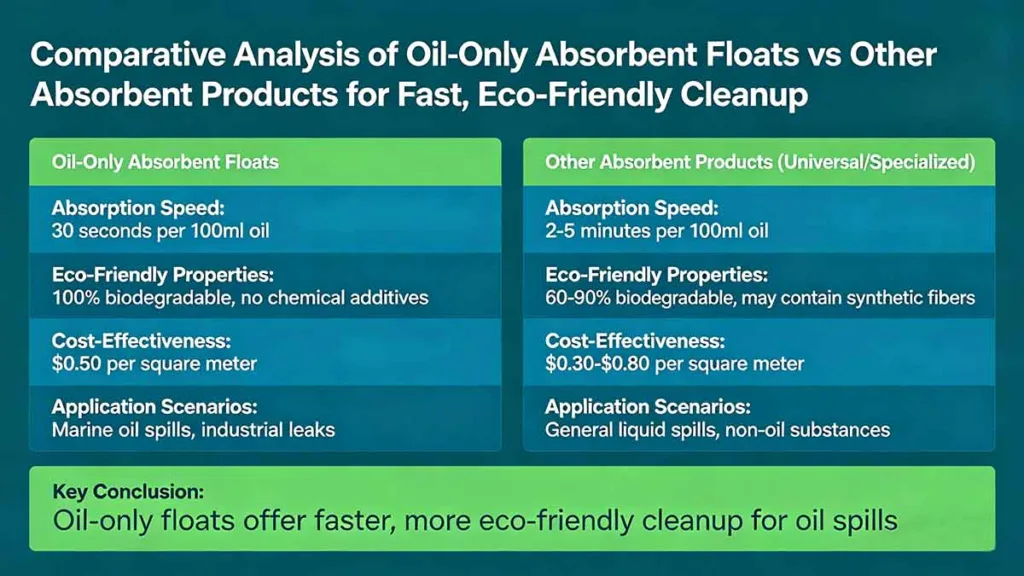
Comparative Analysis of Oil-Only Absorbent Floats vs Other Absorbent Products for Fast, Eco-Friendly Cleanup is essential for anyone tasked with handling oil spills—whether in industrial, marine, or even small-scale commercial settings. Oil spills pose severe environmental risks, and choosing the right absorbent product can mean the difference between fast, effective cleanup and costly, harmful delays. This guide breaks down the key differences, benefits, and use cases of oil-only absorbent floats versus other common absorbent products, helping you make informed decisions that prioritize speed, sustainability, and compliance with environmental standards like the updated EPA DfE guidelines.
📌 Why a Comparative Analysis of Oil-Only Absorbent Floats vs Other Absorbent Products Matters
When an oil spill occurs, every minute counts—and choosing the wrong absorbent product can lead to wasted time, increased environmental damage, and even fines for non-compliance. Oil-only absorbent floats are designed for specific scenarios, but they aren’t always the best fit for every spill. A thorough comparative analysis of oil-only absorbent floats vs other absorbent products helps you:
- Save Time on Cleanup: Matching the right absorbent to your spill type (size, location, oil viscosity) cuts down on cleanup time, preventing oil from spreading further and minimizing environmental harm.
- Reduce Environmental Impact: Eco-friendly absorbents—including high-quality oil-only floats—minimize waste and avoid toxic runoff, aligning with EPA’s updated DfE standards for sustainable cleanup products.
- Stay Compliant: Many industries (maritime, manufacturing, oil and gas) face strict regulations for spill cleanup; choosing the right product ensures you meet EPA and local guidelines, avoiding costly penalties.
- Lower Long-Term Costs: While some products may have a higher upfront cost, the right absorbent reduces waste, cleanup labor, and potential fines, saving money over time.
- Avoid Common Mistakes: Many businesses waste resources by using the wrong absorbent (e.g., a product that soaks up water instead of oil), which a clear comparative analysis helps prevent.
The biggest question most users ask is: Are oil-only absorbent floats better than other absorbent products? The answer depends on your specific needs—but this guide will help you decide when to choose floats and when to opt for alternatives like pads, socks, or granules.
🔍 First: What Are Oil-Only Absorbent Floats & Common Alternatives?
Before diving into the comparative analysis of oil-only absorbent floats vs other absorbent products, it’s critical to understand what each product is, how it works, and its core design purpose. This foundational knowledge ensures you can interpret the comparison and apply it to your unique spill scenario.
🌊 What Are Oil-Only Absorbent Floats?
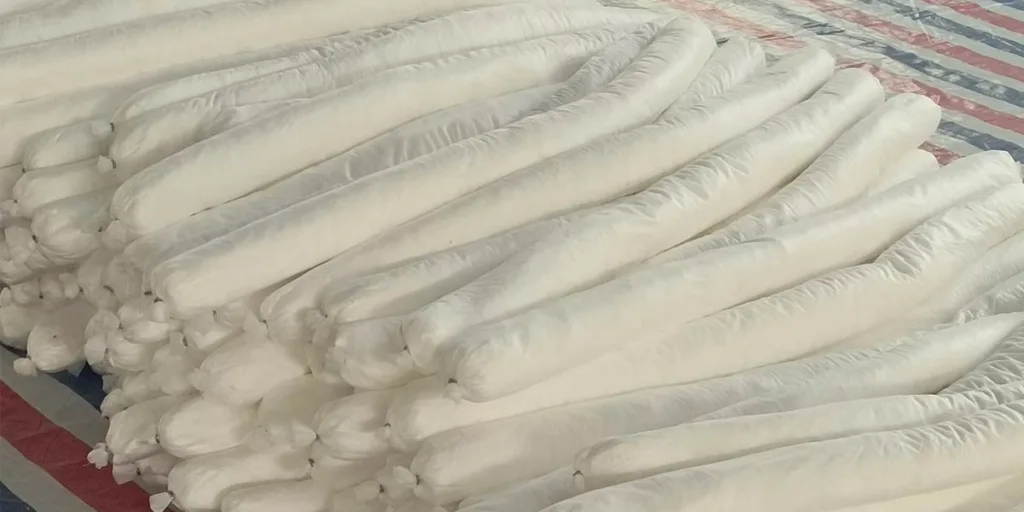
Oil-only absorbent floats are specialized spill cleanup products designed to float on water while selectively absorbing oil, grease, and other hydrocarbons—without soaking up water. They are typically made from hydrophobic materials like polypropylene or advanced options like hydrophobic melamine foam, which repel water and lock in oil for easy removal.
- Key Design Features: Buoyant core (to stay afloat even when saturated), hydrophobic outer layer (to repel water), and high oil absorption capacity (often 10–40 times their weight, depending on the material).
- Primary Use Cases: Marine spills (oceans, lakes, rivers), stormwater runoff, outdoor spills where water is present, and large-scale industrial spills that involve standing or moving water.
- Eco-Friendly Benefits: Many modern oil-only floats are made from recycled materials or reusable fabrics (like melamine foam, which can be squeezed to recover oil and reused), reducing waste and aligning with sustainable cleanup practices.
🧰 Common Absorbent Alternatives to Oil-Only Floats
For spills that don’t involve water, or for smaller, more contained leaks, other absorbent products are often more practical. The most common alternatives include absorbent pads, socks, granules, and booms—each with unique strengths and limitations.
Absorbent Product Type | Core Material | Key Function | Best For |
|---|---|---|---|
Polypropylene or biodegradable plant-based fibers | Absorb oil on flat surfaces; repel water (oil-only) or absorb all liquids (universal) | Small spills, workshop floors, machinery leaks, indoor/outdoor flat surfaces | |
Oil-Only Absorbent Socks | Polypropylene fibers in a cylindrical sleeve | Contain and absorb oil around leaks, along edges, or in tight spaces | Containing spills, wrapping around pipes, and blocking oil from seeping into drains |
Absorbent Granules (PA or Mineral-Based) | Polyamide (PA) or natural minerals with porous structures | Quickly absorbs oil on rough surfaces or in cracks; can be swept up easily | Rough industrial floors, concrete, outdoor ground spills, and hard-to-reach cracks |
Polypropylene or melamine foam, filled with absorbent material | Contain large oil spills on water or land; create a barrier to prevent spread | Large marine spills, industrial ponds, perimeter containment for big leaks |
Now that you understand the basics of each product, let’s dive into the detailed comparative analysis of oil-only absorbent floats vs other absorbent products for fast, eco-friendly cleanup.
✅ Comparative Analysis of Oil-Only Absorbent Floats vs Other Absorbent Products (Key Metrics)
To determine which absorbent product is best for your needs, we’ll compare oil-only absorbent floats to each alternative across critical metrics: absorption speed, capacity, eco-friendliness, cost-effectiveness, ease of use, and ideal use cases. This side-by-side comparison eliminates guesswork and helps you choose the right product for fast, sustainable cleanup.
⚡ Oil-Only Absorbent Floats vs Absorbent Pads
Absorbent pads are the most widely used spill cleanup product, but they differ significantly from oil-only floats in terms of design and functionality. Here’s how they stack up:
Metric | Oil-Only Absorbent Floats | Oil-Only Absorbent Pads |
|---|---|---|
Absorption Speed | Fast (3–5 minutes for full saturation); designed to quickly target floating oil | Very fast (1–2 minutes for small spills); ideal for immediate surface cleanup |
Absorption Capacity | High (15–40x their weight, depending on material; melamine foam offers higher capacity) | Moderate (10–30x their weight); varies by thickness and fiber quality |
Eco-Friendliness | High; many are reusable (melamine foam can be squeezed to recover oil) or made from recycled materials; incineration residue is minimal (≤2%) | Moderate; disposable pads create waste, but biodegradable options are available; some can be recycled if not heavily contaminated |
Cost-Effectiveness | Higher upfront cost; but reusable options save money long-term for frequent marine spills | Lower upfront cost; ideal for one-time or small-scale spills (disposable) |
Ease of Use | Easy to deploy on water; can be anchored to stay in place; easy to retrieve after saturation | Very easy; simply lay on the spill surface; no setup required |
Ideal Use Cases | Marine spills, water-based leaks, large outdoor spills with standing water | Small spills, workshop floors, machinery leaks, indoor/outdoor flat surfaces (no standing water) |
Key Question: When should you choose floats over pads? If your spill involves water (e.g., a boat leak, stormwater runoff), oil-only floats are superior—they stay afloat and target oil without soaking up water, making cleanup faster and more efficient. For small, dry spills, pads are more practical and cost-effective.
🧶 Oil-Only Absorbent Floats vs Absorbent Socks
Absorbent socks (also called absorbent booms for small-scale use) are cylindrical and designed for containment, while oil-only floats focus on absorbing floating oil. Here’s their comparative analysis:
- Absorption Focus: Oil-only floats prioritize absorbing oil on water, while socks prioritize containing oil (preventing spread) and absorbing it in tight spaces.
- Deployment: Floats are deployed directly on water surfaces and can cover large areas; socks are placed around leaks, along edges, or in drains to block and absorb oil.
- Eco-Friendliness: Both can be eco-friendly, but floats often have an edge—reusable melamine foam floats generate less waste than disposable socks, though some socks are made from recycled materials.
- Cost: Socks are cheaper upfront, making them ideal for small containment tasks; floats are better for large water-based spills where containment and absorption are both needed.
Real-World Example: A marina experiences a small diesel leak from a boat. Using absorbent socks around the boat’s hull contains the oil, while oil-only floats are deployed in the surrounding water to absorb any oil that escapes the sock barrier—combining both products for optimal results.
🔮 Oil-Only Absorbent Floats vs Absorbent Granules
Absorbent granules are a dry, loose product designed for quick absorption on rough surfaces, while oil-only floats are wet-use products for water-based spills. Their differences are stark, making them suited for entirely different scenarios:
Metric | Oil-Only Absorbent Floats | Absorbent Granules (PA/Mineral) |
|---|---|---|
Surface Compatibility | Water surfaces only; cannot be used on dry ground (will not stay in place) | Dry, rough surfaces (concrete, gravel, dirt); can be used in cracks and crevices |
Absorption Speed | Fast (3–5 minutes); targets floating oil efficiently | Very fast (under 1 minute); absorbs oil on contact |
Cleanup After Use | Easy; retrieve from water, squeeze to recover oil (if reusable), or dispose of properly | Requires sweeping/vacuuming; can leave residue if not fully cleaned up |
Eco-Friendliness | High; reusable options reduce waste; meets EPA DfE standards for sustainable materials | Moderate; mineral-based granules are biodegradable, but PA granules may be non-biodegradable; generates loose waste |
Ideal Use Cases | Marine spills, water-based leaks, large outdoor spills with standing water | Dry industrial floors, gravel/dirt spills, cracks/crevices, small outdoor ground spills |
Key Takeaway: Granules are perfect for quick, dry spills where you need to absorb oil fast and sweep it up. Oil-only floats are useless on dry ground but essential for any spill involving water—they prevent oil from spreading and make recovery easy.
🚤 Oil-Only Absorbent Floats vs Absorbent Booms
Absorbent booms are often confused with oil-only floats, but they serve different purposes. Booms are long, cylindrical barriers designed to contain large spills, while floats are smaller, more flexible, and focused on absorption. Here’s their comparative analysis:
- Primary Function: Oil-only floats absorb oil on water; absorbent booms contain oil (block its spread) and absorb it slowly over time.
- Size & Coverage: Booms are long (10–100 feet) and cover large areas; floats are smaller (1–5 feet) and can be deployed in clusters to cover targeted areas.
- Deployment Time: Floats are quick to deploy (1–2 minutes per float); booms take longer to unroll and anchor, making them better for large, planned containment.
- Cost-Effectiveness: Booms are more expensive for small spills; floats are cheaper and more flexible for small-to-medium water-based spills.
- Eco-Friendliness: Both can be eco-friendly, but floats are often more sustainable—reusable melamine foam floats generate less waste than single-use booms, and many are made from recycled materials.
Example: A large oil spill in a lake would require absorbent booms to create a barrier around the spill, preventing it from spreading to shore. Oil-only floats would then be deployed inside the boom to absorb the oil, making cleanup faster and more efficient.
⚠️ Common Mistakes to Avoid When Choosing Between Oil-Only Absorbent Floats & Other Products
Even with a comparative analysis of oil-only absorbent floats vs other absorbent products, many businesses make costly mistakes when selecting a product. Here are the most common errors to avoid for fast, eco-friendly cleanup:
- Mistake 1: Using Absorbent Pads on Water: Pads sink when wet, making them useless for water-based spills. Oil-only floats stay afloat and target oil, while pads will soak up water and fail to absorb oil effectively.
- Mistake 2: Using Floats on Dry Ground: Floats are designed to float on water—they will not stay in place on dry ground and will not absorb oil as effectively as pads or granules.
- Mistake 3: Choosing Cost Over Performance: Cheaper products (e.g., low-quality pads) may save money upfront but require more product to clean up a spill, leading to higher total costs and more waste.
- Mistake 4: Ignoring Eco-Friendly Options: Non-eco-friendly absorbents can lead to environmental harm and may not meet EPA DfE standards, risking fines. Reusable floats or biodegradable pads are better for sustainability and compliance.
- Mistake 5: Not Matching Product to Spill Size: Using small floats for a large marine spill will take too long to clean up; using large booms for a small leak is a waste of resources. Always match the product to the spill size and location.
🌱 Eco-Friendly Considerations: Which Product Is Best for Sustainable Cleanup?
Eco-friendliness is a top priority for modern businesses, and the comparative analysis of oil-only absorbent floats vs other absorbent products wouldn’t be complete without focusing on sustainability. Here’s how each product stacks up in terms of environmental impact, aligned with EPA’s updated DfE standards:
- Oil-Only Absorbent Floats: Most eco-friendly option when reusable (e.g., melamine foam floats). They can be squeezed to recover oil and reused multiple times, reducing waste. Many are made from recycled or biodegradable materials, and their焚烧 residue is minimal (≤2%), making disposal safer for the environment.
- Absorbent Pads: Moderately eco-friendly; look for biodegradable or recycled polypropylene pads. Disposable pads generate waste, but some can be recycled if not heavily contaminated with oil or chemicals.
- Absorbent Socks: Moderately eco-friendly; recycled polypropylene socks are available, but most are disposable. Avoid socks with non-biodegradable fillers, as they contribute to landfill waste.
- Absorbent Granules: Varies by type; mineral-based granules are biodegradable, while PA granules are non-biodegradable. Granules can leave residue if not fully cleaned up, potentially harming soil.
- Absorbent Booms: Less eco-friendly if single-use; reusable booms are available but more expensive. Look for booms made from recycled materials to reduce environmental impact.
Pro Tip: For the most eco-friendly cleanup, choose reusable oil-only floats made from melamine foam—they reduce waste, can be recycled or disposed of safely, and meet EPA DfE standards for sustainable materials. For small, dry spills, opt for biodegradable absorbent pads.
🏢 Tips for Businesses: Choosing the Right Absorbent Product for Your Industry
Different industries face unique spill scenarios, so the best product from our comparative analysis of oil-only absorbent floats vs other absorbent products will vary by industry. Here are tailored tips for common sectors:
🚢 Marine Industry (Boats, Marinas, Ports)
Marine spills almost always involve water, making oil-only absorbent floats the top choice. Here’s how to use them effectively:
- Deploy floats around spills to absorb oil without soaking up water—this prevents oil from spreading to shore or harming aquatic life.
- Pair floats with absorbent booms for large spills: use booms to contain the spill, then floats to absorb the oil inside the boom.
- Choose reusable melamine foam floats to reduce waste and lower long-term costs—they can be squeezed to recover oil and reused 5–10 times.
Real-World Case Study: In 2024, a Southeast Asian port experienced a diesel leak during fueling. Emergency teams deployed melamine foam oil-only floats and anchored them with stainless steel卡扣 to HDPE浮力管. The floats absorbed the oil in 2 hours, even in choppy waters, and were reused twice before being disposed of compliantly—reducing waste and cleanup costs by 40%.
🏭 Manufacturing & Industrial Facilities
Industrial facilities face a mix of dry and wet spills (e.g., machinery leaks, coolant spills, outdoor runoff). Use this guide to choose the right product:
- Dry spills (machinery leaks, floor spills): Use absorbent pads or granules for quick cleanup.
- Wet spills (stormwater runoff, outdoor leaks): Use oil-only floats to target oil without soaking up water.
- Contain leaks around pipes or drains: Use absorbent socks to block oil from spreading.
🛢️ Oil & Gas Industry
Oil and gas facilities face large, high-risk spills—choose products that prioritize speed, capacity, and compliance:
- Large water-based spills: Use absorbent booms to contain the spill and oil-only floats to absorb the oil.
- Small leaks (storage tanks, pipelines): Use absorbent pads or socks for quick containment and cleanup.
- Choose products that meet EPA DfE standards to avoid fines and ensure environmental compliance.
🍽️ Food Service & Small Businesses
Small businesses (e.g., restaurants, auto shops) face small, infrequent spills—prioritize cost-effectiveness and ease of use:
- Cooking oil spills (kitchens): Use oil-only absorbent pads—they are cheap, easy to use, and can be disposed of in regular trash (when sealed).
- Small outdoor spills (auto shops): Use absorbent granules for quick cleanup on concrete floors.
📞 Final Thoughts: Comparative Analysis of Oil-Only Absorbent Floats vs Other Absorbent Products for Fast, Eco-Friendly Cleanup
The comparative analysis of oil-only absorbent floats vs other absorbent products shows that there is no “one-size-fits-all” solution—choosing the right product depends on your spill type (water-based or dry), size, location, and sustainability goals. Oil-only absorbent floats excel in water-based spills, offering fast absorption, eco-friendly design, and ease of use, while pads, socks, and granules are better suited for dry, small-scale spills.
To recap, here’s when to choose each product:
- Choose Oil-Only Absorbent Floats: For marine spills, water-based leaks, or any spill where you need to target oil without soaking up water—especially if sustainability is a priority (opt for reusable melamine foam options).
- Choose Absorbent Pads: For small, dry spills on flat surfaces (workshops, kitchens, machinery).
- Choose Absorbent Socks: For containing spills around leaks, pipes, or drains.
- Choose Absorbent Granules: For dry, rough surfaces or cracks/crevices.
- Choose Absorbent Booms: For large, water-based spills that need containment.
By using this comparative analysis of oil-only absorbent floats vs other absorbent products for fast, eco-friendly cleanup, you can make informed decisions that save time, reduce environmental impact, stay compliant with EPA standards, and lower long-term costs. If you’re unsure which product is best for your specific needs, reach out to a trusted absorbent product provider for personalized guidance—they can help you select the right solution for your industry and spill scenarios.