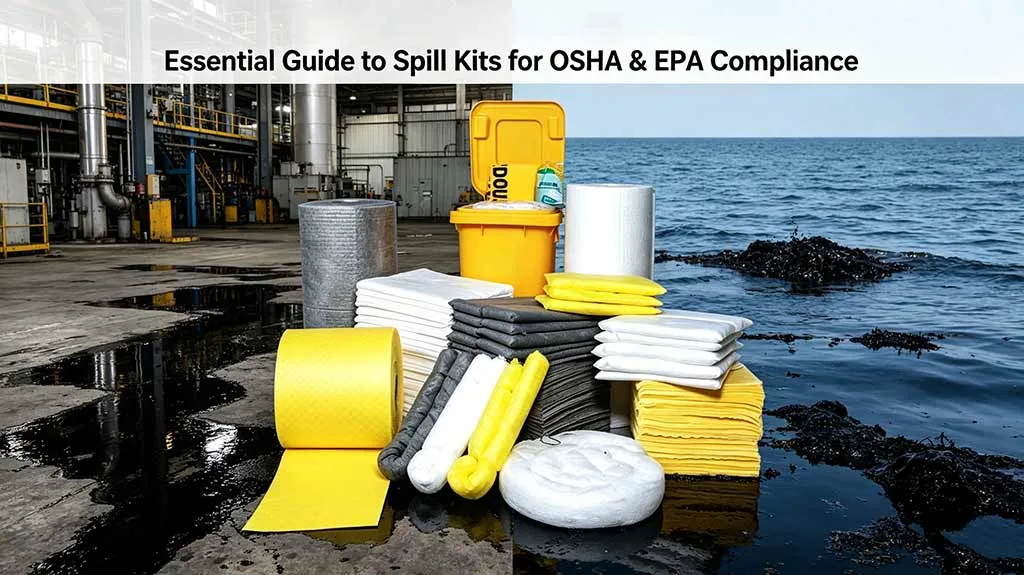
🌊 What Are Polypropylene Oil Absorbent Booms & Why Disposal Matters
Industrial facilities widely use polypropylene oil absorbent booms for aquatic and open-site spill containment to control the spread of petroleum leakage. Crafted from virgin melt-blown polypropylene, these tubular floating tools feature strict hydrophobic and oleophilic properties that repel clean water while efficiently absorbing diesel, crude oil, hydraulic fluid, and other hydrocarbon liquids.
Unlike disposable low-performance absorbents, premium polypropylene oil booms maintain stable buoyancy even when fully saturated, supporting rapid emergency deployment in marinas, harbors, power plant ponds, and offshore industrial zones. Their reusable structural design cuts long-term spill control costs, making them a staple of standard industrial spill containment systems.
Many facility managers focus only on boom deployment for spill response but overlook post-use disposal standards. Improper handling of contaminated polypropylene booms creates hidden operational and environmental risks that undermine entire site safety compliance systems.
⚠️ Environmental & Legal Risks of Improper Used Oil Boom Disposal
Unregulated disposal of polypropylene oil absorbent booms triggers cascading environmental damage and costly regulatory consequences for industrial operations. Even minor disposal errors can escalate to long-term site liability issues for manufacturing, energy, and logistics facilities.
🌱 Ecological Damage Consequences
- Secondary pollution spread: Discarded saturated booms release trapped petroleum residues back into soil, surface water, and groundwater, expanding original spill contamination zones
- Ecosystem disruption: Leaked oil contaminants harm aquatic organisms, block water oxygen circulation, and damage local wetland and marine ecological balance
- Persistent pollution hazards: Polypropylene base materials degrade slowly, so residual oil pollutants remain in the environment for years without standardized treatment
⚖️ Regulatory Penalty & Business Risks
- Federal and local fines: EPA and state environmental agencies impose substantial financial penalties for non-compliant hazardous waste disposal involving oil-contaminated absorbents
- Operational suspension: Severe repeated violations may lead to temporary facility shutdowns for compliance rectification, disrupting production schedules
- Brand credibility loss: Non-compliance records damage corporate environmental reputation, affecting supplier partnerships, customer trust, and regulatory inspection ratings
Understanding compliant disposal protocols for used polypropylene oil absorbent booms is not just an environmental obligation but a core requirement for continuous legal industrial operation.
✅ Step-by-Step Compliant Disposal Workflow for Used Polypropylene Oil Absorbent Booms
Standardizing disposal procedures eliminates compliance errors and environmental risks. This EPA-aligned four-step workflow adapts to all industrial scenarios, covering on-site processing to final waste disposition for contaminated oil booms.
1. Classify Contaminant Oil Types for Targeted Handling
Different petroleum and hydraulic oil types carry distinct hazardous waste classifications and disposal requirements, making accurate identification the foundation of compliant disposal. Misclassification is the most common cause of disposal non-compliance for industrial spill teams.
- Motor & hydraulic oil: Classified as regulated industrial hazardous waste, requiring professional detoxification and centralized disposal
- Crude oil & diesel: High-flammability contaminants with strict transportation and disposal restrictions under federal safety rules
- Vegetable & organic oil: Lower hazard levels but still require specialized treatment to avoid organic water pollution
Facility teams should record spill oil types immediately after cleanup and consult local EPA branch guidelines to confirm regional disposal specifications before proceeding.
2. Secure Onsite Temporary Storage of Used Oil Booms
Proper interim storage prevents secondary leakage before professional waste collection, meeting OSHA onsite safety and EPA pollution prevention standards. Unregulated open storage is a frequent audit violation for industrial facilities.
- Specialized container usage: Place used polypropylene booms in leak-proof, hazardous waste-certified containment bags or rigid bins to block residual oil dripping
- Clear hazard labeling: Mark all storage containers with labels indicating “used oil-contaminated polypropylene absorbent booms” and contamination dates for traceability
- Designated storage zones: Store containers in covered, flat, low-traffic areas away from storm drains, water sources, and flammable materials
- Regular condition checks: Inspect stored booms weekly to confirm container integrity and prevent leakage during long waiting periods
3. Cooperate With Certified Hazardous Waste Management Providers
Used oil-saturated polypropylene booms qualify as industrial hazardous waste in most regions and cannot be discarded as general waste. Partnering with licensed waste management companies ensures full-process compliance with federal and local regulations.
- Verify provider qualifications: Confirm waste handlers hold valid EPA and local environmental department certifications for hazardous oil waste processing
- Confirm service scope: Ensure providers offer dedicated container delivery, secure transportation, and regulated final disposal for absorbent boom waste
- Standardize handover procedures: Complete formal waste handover records on collection day to retain audit-required documentation
Professional waste teams handle complex permit applications and pollution control processes, eliminating onsite operational risks for facility managers.
4. Complete Formal Disposal Documentation & Record-Keeping
Complete documentation is critical for passing annual environmental safety audits and avoiding compliance disputes. OSHA and EPA require long-term retention of all spill waste disposal records for industrial facilities.
- Core record content: Record boom quantity, contamination oil type, storage duration, disposal date, and cooperating waste management company information
- Long-term file retention: Archive all handover receipts, qualification certificates, and disposal reports for a minimum of three years
- Regular data sorting: Organize disposal records quarterly to identify waste management optimization opportunities
📜 Key EPA & OSHA Regulatory Standards for Oil Boom Disposal
All industrial spill containment waste handling must adhere to unified federal standards and regional supplementary rules. Mastering these core regulations helps facilities build standardized disposal systems and avoid blind operational errors.
EPA Regulatory Requirements
The U.S. EPA strictly governs hazardous absorbent waste disposal under the Resource Conservation and Recovery Act (RCRA), with clear rules for oil-contaminated polypropylene materials.
- Used oil absorbent booms containing over 1000 mg/kg petroleum hydrocarbons are classified as characteristic hazardous waste requiring professional disposal
- Absorbent waste must pass the EPA Paint Filter Liquids Test (Method 9095B) before landfill disposal to eliminate free liquid leakage risks
- Facilities with water-adjacent operations must file regular spill waste disposal reports with local EPA authorities
OSHA On-Site Safety Specifications
OSHA’s HAZWOPER standard (29 CFR 1910.120) regulates on-site handling and storage of contaminated spill containment materials to protect worker safety.
- Staff handling used oil booms must wear complete matching PPE, including nitrile gloves and safety goggles
- Hazardous waste storage areas must feature clear warning signs and unobstructed access for emergency handling
- Facilities must conduct regular staff training on contaminated absorbent handling and disposal protocols
♻️ Alternative Sustainable Disposal Methods for Polypropylene Oil Booms
Beyond traditional professional waste collection, multiple eco-friendly disposal methods support circular economy development while reducing enterprise disposal costs. These alternative solutions apply to different contamination levels and on-site conditions.
Recycling Program Participation
Many regional environmental institutions launch targeted recycling programs for low-to-medium contaminated polypropylene oil absorbent booms. Qualified used booms can be cleaned, decontaminated, and reprocessed into new industrial plastic products.
Participating in recycling reduces industrial waste output, lowers carbon footprints, and enhances corporate sustainable operation credentials. Facilities can consult local environmental organizations to verify available recycling channels and qualification standards.
Controlled Incineration Treatment
For heavily contaminated booms unsuitable for recycling, high-temperature incineration at certified emission-controlled facilities is a viable last-resort solution. This method completely decomposes oil pollutants and reduces waste volume significantly.
Strict emission standard compliance is mandatory for incineration to avoid atmospheric pollution. Facilities must confirm facility qualifications and environmental impact assessments before selecting this disposal method.
🛡️ Proactive Oil Spill Prevention Tips to Reduce Boom Waste Volume
Optimizing spill prevention and onsite management fundamentally reduces the usage and disposal pressure of polypropylene oil absorbent booms, cutting long-term compliance and waste management costs for industrial facilities.
- Routine equipment maintenance: Inspect oil storage tanks, hydraulic systems, and pipeline connections regularly to eliminate hidden leakage risks in advance
- Standardized material storage: Deploy spill pallets and isolation trays for all oil-based materials to intercept minor drips and small spills
- Staff professional training: Conduct quarterly spill response training to standardize oil material handling and reduce human-caused spill incidents
- Complete emergency plans: Develop customized oil spill response workflows to minimize spill scale and reduce absorbent contamination levels
📊 Comparison of Oil Absorbent Boom Disposal Methods
This intuitive comparison table helps facility managers select the most suitable disposal solution based on contamination degree, onsite conditions, and compliance demands:
Disposal Method | Applicable Scenario | Compliance Level | Environmental Advantage | Cost Feature |
Certified Waste Collection | All contamination levels, universal industrial use | Full EPA & OSHA compliant | Zero secondary pollution risk | Stable standard cost |
Professional Recycling | Light to medium oil contamination | Fully compliant with circular economy rules | Resource reuse, low carbon emission | Cost-effective, long-term savings |
Controlled Incineration | Heavy contamination, non-recyclable booms | Compliant with emission standards | Thorough pollutant elimination | Higher processing cost |
🏁 Conclusion: Standardize Disposal to Upgrade Full-Cycle Spill Management
Standardized disposal of used polypropylene oil absorbent booms is an indispensable part of industrial full-cycle spill containment management, balancing environmental protection, regulatory compliance, and sustainable operation goals. Many facilities focus solely on emergency spill response while neglecting post-use waste management, creating hidden compliance risks.
By classifying contaminant types, standardizing on-site storage, cooperating with certified waste providers, and completing standardized documentation, industrial teams can fully eliminate fines and environmental pollution risks. Combining proactive spill prevention measures further reduces boom consumption and disposal pressure, building a closed-loop safe spill management system.
High-quality polypropylene oil absorbent booms deliver reliable spill interception performance, while scientific disposal practices maximize their operational value and protect corporate long-term operational safety. For customized spill containment solution matching and on-site waste management guidance tailored to your industrial scenarios, contact our professional technical team for one-stop compliant support.
🔗 Authoritative Compliance Reference Resources
Facility safety managers can access official platforms to update disposal standards and verify compliance requirements, ensuring long-term standardized operation of spill waste management systems.
Refer to the latest hazardous waste disposal and water pollution control regulations for oil absorbent materials via the U.S. Environmental Protection Agency official website, which releases updated RCRA compliance guidelines and absorbent waste testing standards annually.
Check OSHA’s standardized onsite hazardous material handling and staff training specifications at the Occupational Safety and Health Administration platform to standardize daily storage and disposal operation workflows.
Verify polypropylene material performance and industrial waste disposal industry benchmarks through American National Standards Institute official certification documents to optimize product selection and waste management standards.