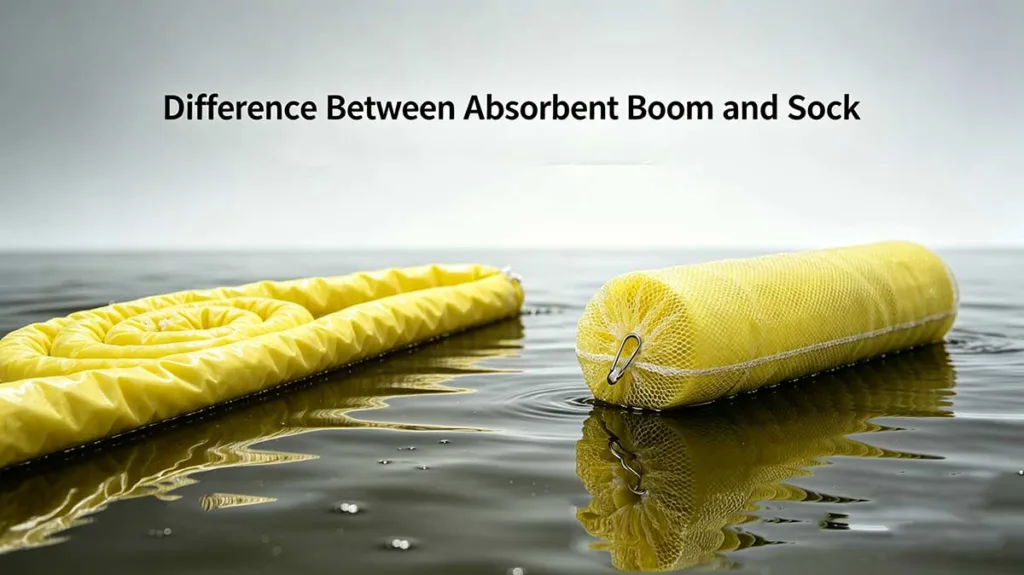
The difference between absorbent boom and sock is a critical detail for industrial and workshop owners looking to save money on spill cleanup—choosing the wrong tool leads to wasted resources, inefficient containment, and unnecessary costs. Both absorbent booms and socks are essential for managing oil, coolant, and chemical spills, but they’re designed for distinct uses, sizes, and environments. This guide breaks down their key differences, uses, and selection tips, helping you pick the right spill solution to cut costs, stay compliant, and keep your workspace safe—no technical jargon, just practical, actionable advice.
📌 Why Knowing the Difference Between Absorbent Boom and Sock Saves You Money
Industrial and workshop spills are inevitable—from minor oil drips under machinery to larger coolant leaks—but choosing the wrong absorbent tool costs you more than just the price of the product. Wasting money on a tool that’s too large, too small, or ill-suited for your spill type leads to overspending, rework, and even compliance fines. Here’s why understanding the difference between absorbent boom and sock is non-negotiable for cost-effective spill management:
- Avoid Overbuying: Using a large absorbent boom for a small workshop drip means you’re paying for more material than needed. Conversely, using a small sock for a large industrial spill requires multiple products, increasing costs.
- Reduce Rework: The wrong tool won’t contain or absorb spills efficiently—you’ll have to clean up the same spill twice, wasting time and labor (a hidden cost many businesses overlook).
- Stay Compliant: Using improper spill containment tools can lead to fines from environmental agencies (like the EPA or IMO). Knowing which tool to use ensures you meet regulations without extra expenses.
- Extend Tool Lifespan: Using absorbent booms and socks for their intended purposes prevents premature wear, so you don’t have to replace them as often—saving money long-term.
The good news is that once you understand the core differences between these two tools, choosing the right one becomes simple. Let’s start with the basics: what exactly are absorbent booms and socks, and how are they designed to work?
🔍 What Are Absorbent Booms and Socks? A Simple Breakdown
Before diving into the difference between absorbent boom and sock, it’s important to know what each tool is, how it’s made, and its primary purpose. Both are made from absorbent materials (typically polypropylene, a durable, oil-loving fabric) but are engineered for different spill scenarios—especially in industrial and workshop settings.
🧰 Absorbent Socks: Compact, Flexible Spill Containment for Small to Medium Spills
 Absorbent socks (also called absorbent snakes or sock booms) are cylindrical, flexible tubes filled with absorbent polypropylene fibers, wrapped in a non-woven polypropylene sleeve. They’re designed to be compact, portable, and easy to maneuver—perfect for tight spaces in workshops and small industrial areas.
- Key Design Features: Lightweight (easy to carry and place), flexible (bends around machinery, corners, and uneven surfaces), and available in various lengths (typically 1–10 feet) and diameters (2–4 inches). Many have hook-and-loop connectors to link multiple socks together for more extensive coverage.
- Primary Materials: Made from 100% polypropylene, both the outer sleeve and inner filling—this material is Lipophilic and hydrophobic (oil-loving, water-repellent), ensuring it soaks up oil, coolants, and chemicals without absorbing water, making it ideal for both dry and damp workspaces.
- How They Work: Socks are placed directly on spills or around leak points to contain and absorb liquids. Their flexible design allows them to form a barrier around machinery, under pipes, or along edges to prevent spills from spreading.
- Typical Workshop/Industrial Uses: Small oil drips under machines, leaks around valves or pipes, containment around storage tanks (small to medium), and cleanup in tight spaces (e.g., between workbenches or under equipment).
🚧 Absorbent Booms: Heavy-Duty, Floating Containment for Large Spills
 Absorbent booms are longer, thicker, and more rigid than socks—they’re designed for large-scale spills, especially those on water (though they work on land too). They’re often used in industrial facilities with large open areas, warehouses, or near waterways (e.g., docks or manufacturing plants near rivers).
- Key Design Features: Longer lengths (10–100 feet), larger diameters (4–8 inches), and a rigid or semi-rigid structure (some have internal floats to keep them buoyant on water). Like socks, they may have connectors to link multiple booms for extended coverage.
- Primary Materials: Also made from polypropylene (outer sleeve and inner absorbent material), but with additional reinforcement (e.g., mesh or thicker fabric) for durability. Floating booms include internal foam floats to keep them on the water’s surface, even when fully saturated.
- How They Work: Booms are deployed to form a barrier around large spills, containing the liquid so it can be absorbed or cleaned up. On water, they float to trap oil and other hydrocarbons, preventing them from spreading to nearby water sources.
- Typical Workshop/Industrial Uses: Large oil spills in warehouses, leaks in industrial storage areas, containment around large machinery (e.g., manufacturing lines), and water-based spills (e.g., near docks or storm drains).
📊 Key Difference Between Absorbent Boom and Sock: At a Glance
To make it easy to compare, here’s a detailed table highlighting the core differences between absorbent booms and socks—focused on the features that matter most for industrial and workshop use, including cost implications:
Feature | Absorbent Sock | Absorbent Boom | Cost-Saving Tip |
|---|---|---|---|
Size & Length | Short (1–10ft), small diameter (2–4in) | Long (10–100ft), large diameter (4–8in) | Use socks for small spills to avoid paying for extra boom length |
Flexibility | Highly flexible (bends around machinery, corners) | Semi-rigid to rigid (harder to maneuver in tight spaces) | Use socks for tight workshop areas; booms for open industrial spaces |
Absorption Capacity | Moderate (absorbs 10–30x its weight, depending on type) | High (absorbs 20–50x its weight, ideal for large spills) | Match capacity to spill size—don’t use a boom for a small drip |
Buoyancy | Not buoyant (sinks if placed in water) | Buoyant (has internal floats for water spills) | Only use booms for water-based spills—socks will be ineffective |
Durability | Light-duty to medium-duty (for occasional use) | Heavy-duty (reinforced for frequent, large spills) | Use socks for minor, infrequent spills; booms for heavy industrial use |
Cost Per Unit | Lower (affordable for small quantities) | Higher (but cost-effective for large spills) | Stock socks for daily small spills; keep booms on hand for emergencies |
Best For | Small to medium spills, tight spaces, workshop drips, land-only use | Large spills, open areas, water-based spills, industrial-scale containment | Mix both tools to cover all spill scenarios without overspending |
This table makes it clear: the difference between absorbent boom and sock isn’t just about size—it’s about matching the tool to your specific spill scenario. Using the right one ensures you don’t waste money on unnecessary products or rework.
❓ Common Questions About Absorbent Boom vs. Sock (Answered for Industrial/Workshop Use)
Industrial and workshop owners often have questions about which tool to use, especially when trying to save money. Below are the most frequent questions—answered simply, with a focus on cost-effectiveness:
🤔 Can I Use Absorbent Socks Instead of Booms to Save Money?
You can— but only for small to medium spills. If you have a large spill (e.g., a ruptured oil drum in a warehouse), using multiple socks to contain it will cost more than using one boom. Socks are cheaper per unit, but using dozens of them for a large spill adds up quickly. For small drips and tight spaces, socks are the more cost-effective choice; for large spills, booms are better.
Pro Tip: Keep a mix of both—socks for daily small spills and booms for emergencies. This way, you’re prepared without overspending on tools you don’t need every day.
🤔 Are Absorbent Booms Worth the Higher Cost for Workshops?
It depends on your workshop’s spill risk. If your workshop only deals with minor drips (e.g., from small tools or oil changes), booms may not be necessary. But if you work with large machinery, storage tanks, or liquids in bulk, booms are worth the investment. They contain large spills quickly, preventing costly damage to equipment, floors, and the environment—saving you money in the long run.
For example: A single boom can contain a 50-gallon oil spill in a warehouse, preventing it from seeping into concrete (which costs hundreds to repair) or causing environmental fines (which can be thousands). The cost of one boom is a fraction of those potential expenses.
🤔 Do Absorbent Socks and Booms Work for All Types of Spills?
No—both tools are designed for specific spill types, and using the wrong one for a chemical or coolant spill can be ineffective (and costly). Here’s a quick breakdown:
- Oil Spills: Both socks and booms work (oil-only polypropylene materials repel water and absorb oil effectively). Use socks for small oil drips, booms for large oil spills or water-based oil spills.
- Coolant/Fluid Spills: Use universal absorbent socks or booms (designed to absorb both oil and water-based fluids). Avoid oil-only tools—they won’t absorb coolants, leading to wasted money and incomplete cleanup.
- Chemical Spills: Use chemical-resistant socks or booms (made with specialized materials to handle corrosive or toxic chemicals). Regular polypropylene tools may break down, causing more harm and requiring rework.
✅ Step-by-Step Guide: Choose Between Absorbent Boom and Sock (Save Money Every Time)
To ensure you’re always picking the right tool (and saving money), follow this simple step-by-step process. It’s tailored to industrial and workshop settings, so you can apply it to every spill scenario:
🔍 Step 1: Assess the Spill Size
The first step is to determine how large the spill is—this is the biggest factor in choosing between a sock and a boom:
- Small Spills (Less Than 5 Gallons): Use absorbent socks. They’re compact, affordable, and easy to place directly on the spill. For example, a drip under a lathe or a small leak from a hydraulic line.
- Medium Spills (5–20 Gallons): Use multiple socks (linked together) or a short boom (10–20 feet). If the spill is in a tight space, socks are better; if it’s in an open area, a short boom is more efficient.
- Large Spills (More Than 20 Gallons): Use absorbent booms. They contain large spills quickly, reducing the risk of spread and cleanup time. For example, a ruptured storage tank or a major leak from industrial machinery.
📍 Step 2: Consider the Spill Location
Where the spill occurs matters—socks and booms are designed for different environments:
- Tight Spaces (Between Machinery, Under Workbenches): Use absorbent socks. Their flexibility allows them to fit in narrow areas where booms can’t reach.
- Open Areas (Warehouses, Large Workshops): Use absorbent booms. They cover more ground quickly and are easier to deploy in open spaces.
- Water (Storm Drains, Docks, Near Rivers): Use absorbent booms (they’re buoyant). Socks will sink and be ineffective in water, wasting money and failing to contain the spill.
🧪 Step 3: Identify the Spill Type
As mentioned earlier, using the right tool for the spill type prevents rework and wasted money:
- Oil-Only Spills: Use oil-only socks or booms (cheaper than universal tools). They absorb oil without absorbing water, making cleanup faster and more efficient.
- Water-Based Spills (Coolants, Cleaners): Use universal socks or booms. Oil-only tools won’t absorb these fluids, so you’ll have to buy additional tools to finish the job.
- Chemical Spills: Use chemical-resistant socks or booms. Regular tools may not hold up to corrosive chemicals, leading to spills spreading and additional cleanup costs.
💰 Step 4: Calculate Cost-Effectiveness
Finally, compare the cost of using socks vs. booms for your specific spill. Here’s a quick example to illustrate:
- Scenario 1: Small Oil Drip (1 Gallon): 1 absorbent sock ($5) vs. 1 short boom ($20). Socks are 75% cheaper—no reason to use a boom here.
- Scenario 2: Large Oil Spill (50 Gallons): 10 socks ($50) vs. 1 50-foot boom ($40). Booms are cheaper and more efficient—using socks would cost more and take longer to deploy.
The key is to avoid overusing expensive tools for small spills and underusing affordable tools for large ones. A little planning goes a long way in saving money.

⚠️ Common Mistakes to Avoid (Costly Errors Industrial/Workshop Owners Make)
Even with the best intentions, many businesses waste money by choosing the wrong absorbent tool. Here are the most common mistakes to avoid—all tied to misunderstanding the difference between absorbent boom and sock:
- Mistake 1: Using Booms for Small Spills: Buying a $20 boom for a $5 sock job wastes 75% of your money. Keep socks on hand for daily drips and only use booms for large spills.
- Mistake 2: Using Socks for Water Spills: Socks sink in water, so they won’t contain oil or other fluids—you’ll have to buy booms anyway, doubling your cost. Always use booms for water-based spills.
- Mistake 3: Buying the Wrong Absorbency Type: Using oil-only socks for coolant spills means the socks won’t absorb anything—you’ll have to clean up the spill again with universal tools. Always match the tool to the spill type.
- Mistake 4: Not Stocking Both Tools: Only having socks means you’re unprepared for large spills (leading to fines or damage), while only having booms means you’re overspending on small spills. Stock both for maximum cost savings.
- Mistake 5: Ignoring Durability: Using light-duty socks for heavy industrial spills means they’ll tear or break, requiring you to buy more. Invest in medium-duty socks for workshop use and heavy-duty booms for industrial emergencies.
Avoiding these mistakes will save you hundreds (if not thousands) of dollars per year in wasted tools, rework, and fines. Remember: the difference between absorbent boom and sock is all about matching the tool to the job.
🏭 Tips for Industrial & Workshop Owners: Maximize Savings with Absorbent Booms & Socks
Now that you understand the difference between absorbent boom and sock, here are additional tips to save even more money while keeping your workspace safe and compliant:
- Buy in Bulk: Both socks and booms are cheaper when bought in bulk. Stock up on socks (for daily use) and booms (for emergencies) to get a discount—most suppliers offer bulk pricing for industrial customers. Additionally, bulk purchasing reduces the frequency of orders, saving on shipping costs.
- Reuse When Possible: Some absorbent socks and booms can be wrung out and reused (if they’re not contaminated with chemicals). Wringing out excess oil from socks or booms allows for multiple uses, reducing the number of tools you need to buy. Just be sure to dispose of them properly when they’re fully saturated.
- Train Employees: Teach your team how to choose the right tool for each spill. If employees use socks for large spills or booms for small ones, you’ll waste money. A 10-minute training session can prevent costly mistakes.
- Store Properly: Store socks and booms in a dry, cool area to prevent degradation. Proper storage extends their lifespan, so you don’t have to replace them as often. Avoid storing them near heat sources or chemicals that could damage the material.
- Choose Quality Over Price: Cheap, low-quality socks or booms may tear or have low absorbency, leading to rework. Invest in mid-range, durable products—they’ll last longer and save you money in the long run. Look for products made from high-quality polypropylene with strong stitching and reliable absorption capabilities.
🌿 Eco-Friendly Options: Save Money While Protecting the Environment
Many industrial and workshop owners are now choosing eco-friendly absorbent booms and socks—not just to protect the environment, but also to save money. Eco-friendly options are often reusable, recyclable, or biodegradable, reducing waste and long-term costs. Here’s what to look for:
Eco-Friendly Type | Key Benefits (Cost & Environmental) | Best For |
|---|---|---|
Reusable Absorbent Socks/Booms | Can be cleaned and reused 5–10 times; reduces waste and tool costs. Made from durable polypropylene that withstands multiple uses and wringing. | Daily workshop spills, non-chemical spills (oil, coolants) |
Recyclable Absorbent Products | Made from recycled materials; can be recycled after use. Cheaper than non-recyclable options in bulk. Many recyclable products meet EPA and IMO standards for environmental safety. | Industrial facilities focused on sustainability |
Biodegradable Socks/Booms | Break down naturally in landfills; no toxic residue. Ideal for outdoor spills (e.g., near waterways) to avoid environmental harm. While slightly more expensive upfront, they eliminate disposal costs for hazardous materials. | Workshops near water sources, outdoor industrial areas |
Eco-friendly options aren’t just good for the planet—they’re good for your bottom line. Reusable tools reduce the number of products you need to buy, while recyclable options often come with bulk discounts.
📞 Final Thoughts: The Difference Between Absorbent Boom and Sock Saves You Money
At the end of the day, the difference between absorbent boom and sock is simple: socks are for small, tight-space spills, while booms are for large, open-area or water-based spills. By understanding this difference, you can choose the right tool for every spill scenario—avoiding waste, rework, and unnecessary costs.
For industrial and workshop owners, every dollar saved on spill cleanup goes back to your business. By stocking both socks and booms, matching the tool to the spill size and type, and following the tips in this guide, you can cut costs while keeping your workspace safe, compliant, and efficient. If you’re unsure which absorbent boom or sock is right for your specific industrial or workshop needs—whether you’re dealing with daily drips or preparing for emergency spills—reach out for expert guidance.
We can help you select the right products to save money, reduce waste, and ensure effective spill containment. Remember, the right absorbent tool isn’t just an expense—it’s an investment in your business’s efficiency and sustainability. The difference between absorbent boom and sock is key to making that investment count.