
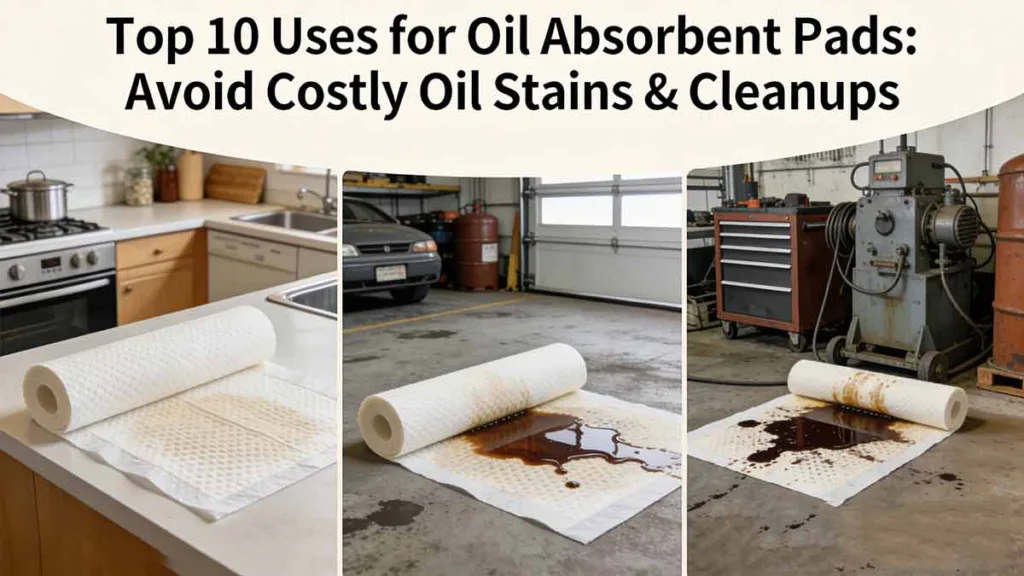
Oil absorbent pads are a simple yet powerful solution to avoid costly oil stains and tedious cleanups, whether you’re managing an industrial facility, maintaining a home garage, or handling outdoor spills. These versatile tools are designed to soak up oil quickly, protect surfaces, and reduce the time and money spent on fixing oil-related damage.
Unlike traditional rags or paper towels, they’re built to handle oil spills of all sizes without breaking down, making them a must-have for anyone dealing with oil or hydrocarbon-based liquids. This guide breaks down the top 10 most practical uses for oil absorbent pads, with actionable tips to help you maximize their value and keep your space clean and safe—no technical expertise required.
📋 What Are Oil Absorbent Pads & Why They Prevent Costly Mistakes
Before diving into their uses, it’s critical to understand why oil absorbent pads are a cost-saving investment. Made from polypropylene (PP) ultra-fine fibers, these pads have a unique hydrophobic design—they absorb oil and hydrocarbon-based liquids while repelling water. This means they work effectively in both dry and wet environments, something regular cleaning supplies can’t match. Many people wonder, “How do oil absorbent pads save money?” The answer is simple: they prevent permanent stains on floors, equipment, and surfaces, eliminate the need for expensive cleanup services, and reduce the risk of safety hazards that could lead to fines or accidents.
Key Features That Make Oil Absorbent Pads Essential (No Jargon!):
- Quick absorption: Soaks up 10–20 times their own weight in oil in minutes, stopping spills from spreading.
- Durable: Doesn’t break down when saturated, so no secondary leaks or messy residue.
- Versatile: Available in 3 main types to fit every need (see table below).
- Affordable: Cheaper than replacing stained surfaces or paying for professional cleanup.
Types of Oil Absorbent Pads & Their Best Uses (Quick Reference Table):
Pad Type | Key Feature | Best For |
|---|---|---|
Oil-Only (White) | Absorbs oil, repels water | Wet areas, water surfaces, rain-soaked spills |
Universal (Gray) | Absorbs oil, water, and non-corrosive liquids | Home garages, workshops, mixed spills |
Chemical-Resistant (Yellow) | Handles corrosive liquids and harsh chemicals | Laboratories, factories, chemical spills |
Choosing the right type of oil absorbent pad ensures you get the most value and avoid wasting money on the wrong product. For example, using an oil-only pad for a garage spill with water will still work, but a universal pad is more efficient for mixed liquids. Now, let’s dive into the top 10 uses that will help you avoid costly oil stains and cleanups.
🔧 Top 10 Uses for Oil Absorbent Pads to Avoid Costly Issues
⚙️ 1. Industrial Machinery Maintenance & Leak Prevention
Industrial facilities (manufacturing plants, warehouses, machine shops) lose thousands of dollars annually due to oil leaks and equipment damage. Oil absorbent pads for industrial use are a low-cost way to prevent these issues, as machinery like pumps, motors, and hydraulic systems often drip small amounts of oil over time.
How to Use Oil Absorbent Pads for Machinery (Cost-Saving Tips):
- Place pads under machinery to catch drips before they spread—this prevents oil buildup on floors and moving parts.
- Use thin, flexible pads (like 3M™ T-151) for tight spaces around gears or pipelines, where leaks are hard to reach.
- Replace pads regularly (every 1–2 weeks for low-drip areas, daily for high-drip areas) to avoid saturation and secondary leaks.
- For flammable oil areas, use anti-static oil absorbent pads to reduce fire risks—this avoids costly fire damage and fines.
Pro Tip: A single oil leak left unaddressed can damage machinery bearings or cause slip-and-fall accidents. Using oil absorbent pads here costs a few dollars but saves thousands in repairs and liability.
🏠 2. Home Garage & Workshop Cleanup
Homeowners often overlook how much money they waste on cleaning oil stains from garage floors or workshop surfaces. Oil absorbent pads for home use are perfect for small spills from cars, lawnmowers, or power tools—preventing permanent stains that require expensive cleaners or floor replacement.
Common Home Uses & Money-Saving Hacks:
- Place a pad under your car’s engine or oil pan when changing oil—catches spills before they stain concrete floors.
- Keep a stack of universal oil absorbent pads near your lawnmower or generator—clean up small drips immediately instead of letting them set.
- Use pads to wipe up oil from tools after use—prevents oil from transferring to other surfaces (like workbenches or clothing).
Question: “Can oil absorbent pads remove old oil stains?” While they work best on fresh spills, placing a dampened pad (with warm water) on old stains can help lift some residue, reducing the need for expensive stain removers.
🚗 3. Automotive Repair & Maintenance
Auto shops and DIY car enthusiasts know how messy oil changes, transmission work, or engine repairs can be. Oil absorbent pads make these tasks cleaner and cheaper, avoiding stains on shop floors, tools, and even the car itself.
Auto-Specific Uses (Avoid Costly Mistakes):
- Line the floor under the car during oil changes—catches every drop of oil, so you don’t have to scrub concrete or pay for floor repairs.
- Use small pads to clean oil off engine parts—better than rags, as they don’t leave lint or residue that can damage the engine.
- Keep pads in your car’s trunk for emergency spills (e.g., a leaking oil pan on the road)—prevents stains on pavement and avoids traffic fines.
Fun Fact: Auto shops that use oil absorbent pads regularly report 40% less time spent cleaning floors, freeing up staff to focus on paid work.
🚢 4. Marine & Waterfront Spill Cleanup
Marinas, docks, and boats are prone to oil spills from engines, fuel tanks, or bilge pumps. These spills can be costly—environmental fines, damage to marine life, and expensive cleanup. Oil-only oil absorbent pads are ideal here, as they float on water and absorb only oil, leaving water untouched.
Marine Use Tips (Stay Compliant & Save Money):
- Place oil-only pads around boat engines and fuel tanks to catch drips before they enter the water.
- Use pads to clean up small fuel spills on docks—prevents slips and avoids environmental fines (which can be $1,000+ for small spills).
- Store pads on boats for emergency spills—quick cleanup prevents oil from spreading and causing更大 damage.
Note: Always dispose of used marine oil absorbent pads properly (as hazardous waste) to avoid additional fines. Most marinas have designated disposal bins for these materials.
🏭 5. Factory & Warehouse Flooring Protection
Factories and warehouses have large, expensive floors that are easily stained by oil spills from forklifts, machinery, or storage tanks. Oil absorbent pads for industrial use are a cost-effective way to protect these floors, avoiding costly resurfacing or replacement.
Flooring Protection Best Practices:
- Lay down large oil absorbent pads in high-traffic areas (e.g., near forklift charging stations or oil storage areas).
- Use roll-style pads for long aisles—cut to size to cover entire areas prone to spills.
- Replace pads immediately after a spill—letting oil sit on concrete or epoxy floors can cause permanent discoloration.
Table: Cost Comparison (Oil Absorbent Pads vs. Floor Repairs)
Option | Cost per Month | Long-Term Value |
|---|---|---|
Oil Absorbent Pads | $20–$50 | Prevents stains, no floor repairs needed |
Floor Repairs (Epoxy/Concrete) | $500–$2,000+ | One-time fix, but requires ongoing maintenance |
🛢️ 6. Oil Storage Tank Leak Prevention
Oil storage tanks (residential or industrial) can develop small leaks over time, leading to costly environmental damage and cleanup. Oil absorbent pads are a simple way to detect and contain these leaks early, before they become a major problem.
Leak Prevention & Detection Tips:
- Place oil-only pads around the base of storage tanks—any leak will be absorbed immediately, making it easy to spot.
- Check pads weekly for discoloration (a sign of a leak)—catching leaks early can save thousands in environmental cleanup costs.
- Use thick, heavy-duty pads for outdoor tanks—they resist weather damage and last longer in harsh conditions.
Question: “How often should I replace pads around storage tanks?” For residential tanks, replace every 2–4 weeks; for industrial tanks, replace weekly to ensure maximum protection.
🧪 7. Laboratory & Chemical Facility Spill Control
Laboratories and chemical facilities handle oil-based chemicals that can cause costly damage if spilled. Chemical-resistant oil absorbent pads are designed to handle these harsh liquids, preventing stains, equipment damage, and safety hazards.
Lab-Specific Uses (Stay Safe & Save Money):
- Keep chemical-resistant pads near workstations—clean up small spills of oil-based chemicals (e.g., solvents, lubricants) immediately.
- Use pads to line shelves where oil-based chemicals are stored—prevents leaks from damaging shelves or other equipment.
- Dispose of used pads properly (per lab safety guidelines)—avoids fines for improper hazardous waste disposal.
Pro Tip: Chemical-resistant pads are more durable than standard pads, so they can be used for multiple small spills (as long as they’re not saturated), saving you money on replacements.
🌱 8. Agricultural & Farm Equipment Maintenance
Farms rely on tractors, harvesters, and other heavy equipment that use large amounts of oil. Oil spills on farmland can damage crops and soil, leading to costly losses. Oil absorbent pads are a simple way to keep farm equipment and land clean.
Farm Use Tips (Protect Crops & Save Money):
- Place pads under tractor engines and fuel tanks when parked—catches drips before they seep into the soil.
- Use pads to clean up oil spills from farm equipment before moving it to crop fields—prevents oil from damaging plants.
- Store pads in barns or equipment sheds for quick access—small spills cleaned up immediately avoid large-scale contamination.
Fun Fact: Farmers who use oil absorbent pads report a 30% reduction in soil contamination from oil spills, protecting their crop yields and avoiding costly soil remediation.
🔩 9. Tool & Equipment Cleaning
Tools and equipment (both home and industrial) often get covered in oil, which can cause rust and damage over time. Oil absorbent pads are a better alternative to rags for cleaning tools, as they absorb oil without leaving lint or residue.
Tool Cleaning Best Practices:
- Wipe tools with a dry oil absorbent pad after use—removes excess oil, preventing rust and extending tool life.
- Use small pads to clean hard-to-reach areas (e.g., tool crevices or gears)—gets rid of oil buildup that can cause jams.
- Keep a pad near your toolbench—avoids oil transfer to other tools or surfaces.
Question: “Can oil absorbent pads be reused?” Most standard pads are single-use, but heavy-duty pads can be wrung out (if only used for oil) and reused a few times—saving you money on replacements.
🚛 10. Transportation & Fleet Maintenance
Trucking companies and fleet operators deal with oil spills from engines, fuel tanks, and transmissions regularly. These spills can cause safety hazards, damage vehicles, and lead to fines. Oil absorbent pads are a cost-effective way to manage these spills and keep fleets running smoothly.
Fleet Maintenance Uses (Avoid Downtime & Fines):
- Place pads in truck beds or under engines during maintenance—catches spills before they damage the vehicle or trailer.
- Store pads in each truck for emergency spills—quick cleanup on the road prevents traffic fines and safety hazards.
- Use roll-style pads in maintenance bays—cover large areas to catch spills from multiple vehicles.
Pro Tip: Fleet operators who use oil absorbent pads regularly report 25% less downtime due to oil-related equipment issues, saving thousands in lost revenue.
💡 Expert Tips to Maximize Oil Absorbent Pad Value (Avoid Wasting Money)
To get the most out of your oil absorbent pads and avoid costly mistakes, follow these expert tips—based on real-world experience from industry professionals:
- Choose the right pad type: Don’t use a standard pad for chemical spills or a water-only pad for oil—this wastes money and doesn’t solve the problem.
- Replace pads before saturation: Over-saturated pads can leak, causing more damage than the original spill. Check pads regularly and replace as needed.
- Buy in bulk: Purchasing oil absorbent pads in bulk is cheaper per unit, saving you money over time—especially for industrial or frequent use.
- Store properly: Keep pads in a dry, cool place—moisture can reduce their absorption capacity, making them less effective.
❓ Common Questions About Oil Absorbent Pads (Answered Simply)
We’ve compiled the most common questions users have about oil absorbent pads, so you can make informed decisions and avoid costly mistakes:
- “How long do oil absorbent pads last?” Standard pads last until saturated—for small drips, this can be 1–2 weeks; for large spills, they may need to be replaced immediately.
- “Are oil absorbent pads environmentally friendly?” Most pads are made from recyclable polypropylene, and many are biodegradable—check the product label for details.
- “Can oil absorbent pads be used on concrete floors?” Yes—they’re safe for all hard surfaces and won’t cause damage, unlike some harsh cleaners.
- “What’s the difference between oil-only and universal pads?” Oil-only pads repel water, while universal pads absorb both oil and water—choose based on your spill type.
✅ Final Thoughts: Oil Absorbent Pads = Cost Savings & Peace of Mind
Oil absorbent pads are a simple, affordable solution to avoid costly oil stains, cleanup fees, and equipment damage. Whether you’re a homeowner, industrial manager, or fleet operator, these versatile tools save you time, money, and stress by handling spills quickly and effectively. By following the top 10 uses and expert tips in this guide, you can maximize the value of your oil absorbent pads and keep your space clean, safe, and free from costly oil-related issues. For personalized advice on choosing the right oil absorbent pads for your specific needs, feel free to reach out—we’re here to help you avoid costly mistakes and get the most out of your investment.