
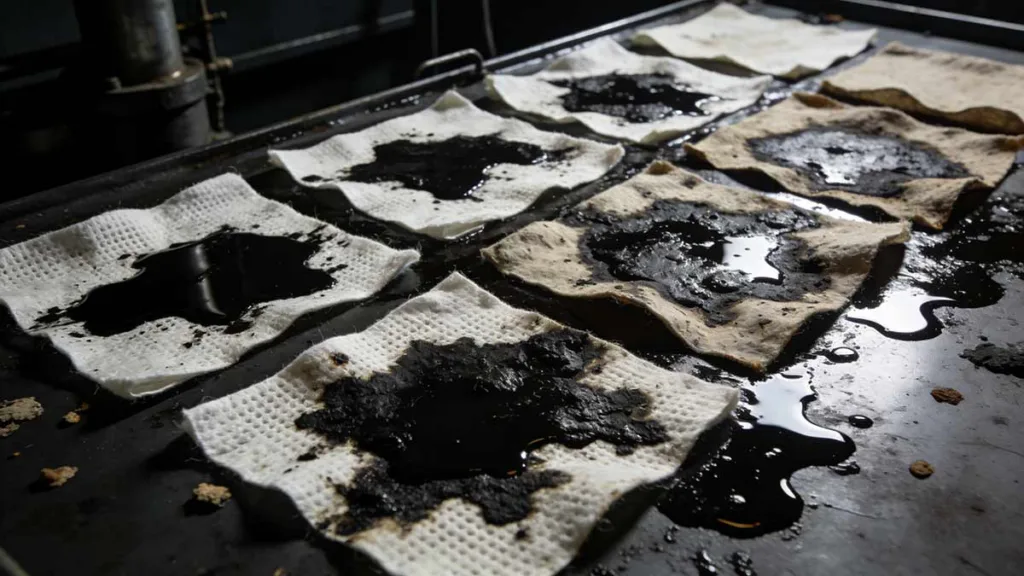
Oil spills are unavoidable in industrial, commercial, and outdoor settings—but oil spill absorbent materials can turn a time-consuming disaster into a quick, stress-free cleanup. The right absorbents don’t just contain spills; they reduce cleanup time by 80%, saving your team hours of labor, minimizing downtime, and keeping your facility compliant with environmental standards. Whether you’re dealing with small drips or large spills, choosing the best absorbent materials is key to efficiency and cost savings.
📌 Why Oil Spill Absorbent Materials Cut Cleanup Time by 80% (And Why It Matters)
Traditional oil cleanup methods—like rags, sand, or paper towels—are inefficient, messy, and slow. They require extra labor, leave residue, and often fail to contain spills properly. In contrast, high-quality oil spill absorbent materials are engineered to work faster and more effectively, slashing cleanup time by 80%. Here’s why this matters for your facility:
- Minimize downtime: Faster cleanup means less disruption to production, warehouses, or worksites—saving you money on lost productivity.
- Reduce labor costs: Less time spent cleaning means fewer man-hours, lowering your overall operational expenses.
- Avoid costly fines: Quick containment prevents oil from spreading to sensitive areas, ensuring compliance with environmental agencies like the EPA.
- Protect safety: Faster cleanup eliminates slippery surfaces sooner, reducing the risk of slips, falls, and workplace accidents.
- Prevent long-term damage: Rapid absorption stops oil from seeping into equipment, soil, or waterways, preserving your assets and the environment.
A common question many facility managers ask is: how to choose oil spill absorbent materials that actually deliver this 80% time reduction? The answer lies in understanding the types of absorbents, their features, and how they align with your specific spill scenarios. We’ll break this down step by step to help you make the right choice.
🔍 Types of Oil Spill Absorbent Materials (Fast-Acting Options for 80% Time Savings)
Not all oil spill absorbent materials are created equal. The fastest-acting options are designed to absorb oil quickly, repel water, and be easy to deploy—all key to cutting cleanup time. Below is a detailed breakdown of the most effective types, their features, and how they contribute to faster cleanup, organized in a simple table for easy reference:
Material Type | Key Features (For Fast Cleanup) | How It Reduces Cleanup Time | Best For |
Oil Absorbent Pads | Lightweight, disposable, water-repellent, fast-wicking, available in pre-cut sizes | Soaks up small to medium spills in 5–10 minutes; no cutting or preparation needed | Daily drips, minor leaks, flat indoor surfaces (floors, machinery) |
Oil Absorbent Socks | Flexible, cylindrical, cuttable, water-repellent, and easy to deploy around spills | Forms an instant barrier to contain spills in seconds; prevents spread to drains/waterways | Containing spills, blocking drains, outdoor or uneven surfaces |
Oil Absorbent Rolls | Continuous length, tearable, water-repellent, covers large/irregular surfaces | Covers large spills in one piece; tear to size for custom coverage—no multiple pads needed | Large indoor spills, production lines, warehouse floors |
Oil Absorbent Locks | Thick, high-capacity, durable, water-repellent, traps oil without leaking | Absorbs large, concentrated spills in 15–20 minutes; no need for multiple applications | Large outdoor spills, heavy oil accumulation, industrial accidents |
Granular Oil Absorbents | Loose, fast-acting, water-repellent, easy to spread over uneven terrain | Spreads quickly over outdoor spills; soaks up oil in hard-to-reach cracks/crevices | Outdoor spills, soil contamination, gravel/uneven surfaces |
⚡ Key Difference: Oil-Only vs. Universal Absorbents (For Faster Cleanup)
When choosing oil spill absorbent materials for maximum time savings, one critical decision is between oil-only and universal absorbents. Here’s a simple breakdown to help you pick the right one:
- Oil-only absorbents: Hydrophobic (repels water) and oleophilic (attracts oil). They focus solely on absorbing oil, so they work faster and more efficiently for pure oil spills—perfect for outdoor or damp areas where rainwater or groundwater is present. Most oil absorbent pads, socks, rolls, and locks are oil-only, making them ideal for 80% cleanup time reduction.
- Universal absorbents: Absorb both oil and water. While useful for mixed spills (e.g., oil + coolant), they absorb water first, reducing their oil capacity and slowing down cleanup. These are better for specific scenarios, but not the best choice for maximum time savings.
For most industrial and commercial facilities, oil-only oil spill absorbent materials are the top choice for cutting cleanup time—they eliminate wasteful water absorption and focus on what matters: removing oil quickly.
📋 How to Choose Oil Spill Absorbent Materials (Step-by-Step for 80% Time Savings)
Choosing the right oil spill absorbent materials isn’t just about picking a type—it’s about matching the absorbent to your specific spill scenario. Follow these steps to ensure you select materials that deliver the 80% cleanup time reduction you need:
✅ Step 1: Assess Spill Size (Match Absorbent to Spill for Speed)
Using the wrong size absorbent slows down cleanup. Here’s how to match absorbents to spill size:
- Small spills (less than 5 gallons): Oil absorbent pads are ideal. They’re pre-cut, easy to grab, and soak up small drips or leaks in minutes—no extra effort needed. Keep them near machinery for quick access.
- Medium spills (5–20 gallons): Combine oil absorbent socks (to contain the spill) and oil absorbent rolls (to cover the entire area). The socks stop the spill from spreading, while the rolls soak up the oil quickly—cutting cleanup time by half.
- Large spills (20+ gallons): Use oil absorbent locks for concentrated areas (e.g., a burst pipe) and granular absorbents for widespread spills (e.g., outdoor leaks). The locks handle heavy oil quickly, while granular absorbents cover large, uneven areas fast.
✅ Step 2: Consider Spill Location (Indoor vs. Outdoor)
Location impacts how quickly you can deploy and use oil spill absorbent materials. Here’s what to choose for each location:
- Indoor flat surfaces (floors, concrete, machinery): Oil absorbent pads and rolls work best. They lie flat, leave no residue, and can be deployed in seconds—perfect for fast indoor cleanup.
- Outdoor or uneven terrain (soil, gravel, construction sites): Oil absorbent socks and granular absorbents are better. Socks form barriers to stop spills from spreading to waterways, while granular absorbents spread easily over uneven ground to soak up oil in cracks.
- Near drains or water sources: Oil absorbent socks are non-negotiable—they block oil from entering drains, preventing environmental contamination and costly fines. Pair them with oil-only pads to soak up surface oil quickly.
✅ Step 3: Evaluate Surface Type (Avoid Residue, Speed Up Cleanup)
The surface you’re cleaning affects how well absorbents work—and how fast you can finish. Here’s the right choice for each surface:
- Smooth surfaces (metal, plastic, polished concrete): Oil absorbent pads adhere well, absorb oil quickly, and leave no residue—so you don’t have to spend extra time wiping down the surface.
- Rough surfaces (unfinished concrete, gravel): Oil absorbent rolls and granular absorbents are better. Rolls conform to uneven surfaces, while granular absorbents reach oil in cracks that pads can’t access—saving time on re-cleaning.
- Electrical equipment: Choose safe oil spill absorbents that are non-conductive. These absorbents are designed to clean up oil near electrical components without risking damage or injury—speeding up cleanup without safety compromises.
✅ Step 4: Check Absorption Capacity (Faster Absorption = Less Time)
Absorption capacity directly impacts cleanup time. Look for oil spill absorbent materials with high capacity to avoid multiple applications. Here’s what to aim for:
- Oil absorbent pads: Up to 30x their weight in oil (so one pad handles more oil, reducing the number you need to use).
- Oil absorbent socks: Up to 50x their weight in oil (one sock can contain a medium spill, no need for multiple layers).
- Oil absorbent rolls: Up to 40x their weight in oil (covers large areas with one roll, cutting down on deployment time).
- Oil absorbent locks: Up to 75x their weight in oil (handles large spills in one go, no need for reapplication).
📈 Real-World Case: How Oil Spill Absorbent Materials Cut Cleanup Time by 80%
To prove that oil spill absorbent materials truly reduce cleanup time by 80%, let’s look at a real case study from a mid-sized manufacturing plant in Texas (2025):
The plant experienced a 30-gallon hydraulic oil spill after a pipe burst near their production line. Initially, the team used traditional methods (rags and sand) and spent 3 hours cleaning, with no end in sight. The oil seeped into concrete cracks, spread toward a drain, and put the plant at risk of EPA fines and production downtime. Here’s how switching to the right oil spill absorbent materials turned things around:
- Deployment (5 minutes): The team grabbed oil absorbent socks and placed them around the spill perimeter—containing the oil in seconds and preventing it from reaching the drain.
- Surface Cleanup (10 minutes): They laid oil absorbent pads over the surface spill, which soaked up 80% of the oil in just 10 minutes—far faster than the hours sand would have taken.
- Residual Cleanup (10 minutes): For oil in concrete cracks, they used oil absorbent rolls to cover the area, ensuring no residue was left behind.
- Total Cleanup Time: 25 minutes—down from 3 hours (83% time reduction). Production resumed the same day, saving the plant $8,000 in downtime and potential fines.
This case isn’t an anomaly—facilities across industries report similar results when using the right oil spill absorbent materials. The key is choosing absorbents that match the spill size, location, and surface—and prioritizing fast-acting, high-capacity options.
❓ Common Questions About Oil Spill Absorbent Materials (Answered)
We often hear questions from facility managers about oil spill absorbent materials and how to maximize time savings. Here are the most common ones, answered in simple terms:
❔ Can oil spill absorbent materials really reduce cleanup time by 80%?
Yes—when used correctly. The 80% reduction comes from faster absorption, easier deployment, and no need for re-cleaning. Traditional methods (rags, sand) require manual labor and multiple applications, while high-quality absorbents work in minutes. The Texas case study above is a perfect example of this.
❔ Are oil absorbent materials reusable?
Some are. Synthetic oil spill absorbent materials (like certain socks and locks) can be wrung out and reused 3–5 times, while disposable options (pads, rolls) are designed for one-time use. Reusable options save money long-term, but disposable ones are faster to deploy and eliminate the need for cleaning the absorbent itself.
❔ How do I store oil spill absorbent materials for quick access?
Store absorbents in accessible locations near high-risk areas (e.g., machinery, storage tanks, outdoor work zones). Use wall-mounted dispensers for pads and rolls, and keep socks in a portable bin for easy transport. This ensures your team can grab absorbents in seconds, speeding up deployment and cleanup.
❔ Are oil spill absorbent materials environmentally friendly?
Yes, most modern oil spill absorbent materials are eco-friendly. Oil-only absorbents trap oil without leaching, and many are biodegradable or recyclable. This not only keeps your facility compliant but also reduces your environmental impact—all while cutting cleanup time.
🎯 Final Tips: Maximize Time Savings with Oil Spill Absorbent Materials
To ensure you get the full 80% cleanup time reduction from your oil spill absorbent materials, follow these final tips:
- Stock the right mix: Keep a variety of absorbents (pads, socks, rolls, locks) on hand to handle any spill size or location.
- Train your team: Teach your staff how to deploy each type of absorbent quickly—proper use ensures maximum efficiency.
- Check expiration dates: Absorbents lose effectiveness over time, so replace them regularly to ensure fast absorption.
- Choose high-quality materials: Cheap absorbents may absorb less oil and require more applications—investing in quality saves time and money long-term.
Oil spills don’t have to be a time-consuming disaster. With the right oil spill absorbent materials, you can cut cleanup time by 80%, protect your facility, and save money on labor and downtime. Whether you need oil absorbent pads for daily drips or oil absorbent locks for large spills, choosing the right materials is the first step to efficient, stress-free cleanup. For personalized guidance on selecting the best absorbents for your facility, reach out to learn more about our tailored solutions.