
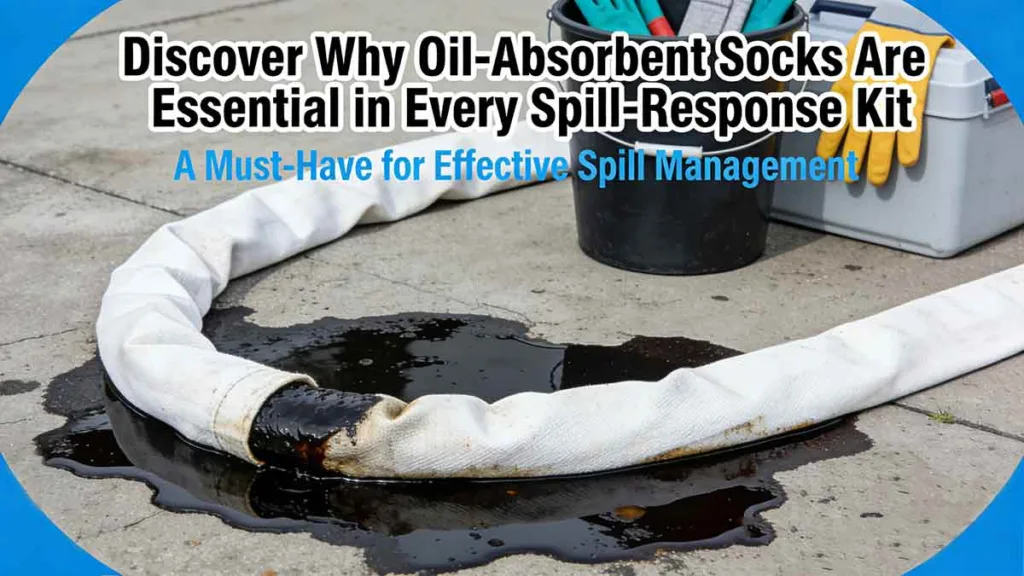
Discover why oil-absorbent socks are essential in every spill-response kit—this is a question every business and individual handling oils, greases, or hydrocarbons should ask. Oil spills happen unexpectedly, whether in industrial facilities, auto shops, marinas, or even homes, and having the right tools to contain and clean them quickly can prevent environmental damage, legal fines, and safety hazards.
Oil-absorbent socks are an often-overlooked but critical component of any spill-response kit, offering unique advantages that flat pads, rags, or other materials simply can’t match. This guide breaks down their essential role, benefits, usage tips, and why they belong in every spill-preparedness plan.
📌 Why Oil-Absorbent Socks Are Non-Negotiable in Spill-Response Kits
Spill-response kits are only as effective as their components, and oil-absorbent socks fill a crucial gap that other products miss. Unlike flat absorbent pads or loose absorbents, socks are designed to contain, channel, and absorb spills in hard-to-reach areas, preventing the spread of oil to sensitive areas like drains, waterways, or equipment. Here’s why they’re essential for any spill-response kit:
- Contain Spills Before They Spread: Oil-absorbent socks are cylindrical, flexible, and easy to shape around spills, creating a barrier that stops oil from spreading to nearby surfaces or water sources. This containment is critical—uncontrolled spills can seep into soil, contaminate groundwater, or harm aquatic life if they reach rivers, lakes, or oceans.
- Reach Hard-to-Access Areas: Spills often occur in tight spaces—under machinery, along pipe edges, around drains, or in bilge compartments of boats. Oil-absorbent socks’ flexible design lets them fit into these narrow gaps, absorbing oil where flat pads can’t reach. They can also be secured in place to avoid clogging bilge pumps or sensors, a key precaution for marine and industrial use.
- Absorb Oil Efficiently (Without Wasting Materials): Made from high-quality absorbent materials like polypropylene, oil-absorbent socks have impressive absorption capacity—absorbing up to 15 times their weight in oil, grease, and other hydrocarbons. They’re also “oil-only,” meaning they repel water and focus solely on absorbing oil, reducing waste, and ensuring efficient cleanup.
- Reduce Safety Risks: Uncontained oil spills create slippery surfaces, increasing the risk of slips, falls, and workplace accidents. Oil-absorbent socks quickly soak up spilled oil, restoring safe footing and preventing injuries. They also reduce the risk of fires, as oil-soaked materials are less likely to ignite when properly contained and removed.
- Ensure Compliance with Regulations: Most regions have strict regulations requiring businesses to have proper spill-response measures in place. Oil-absorbent socks are a cost-effective way to meet these requirements, as they demonstrate a commitment to safe and responsible spill handling—helping you avoid costly fines for non-compliance.
Without oil-absorbent socks, spill-response kits lack the ability to contain and clean spills comprehensively. Even the best absorbent pads can’t match the containment power and versatility of socks, making them an essential addition to any preparedness plan.
🔍 Are Oil-Absorbent Socks Really Necessary? Debunking Common Myths
Many people wonder if oil-absorbent socks are truly necessary, especially if they already have absorbent pads or rags in their spill-response kit. Let’s debunk the most common myths and clarify why socks are a non-negotiable component:
❌ Myth 1: “Absorbent Pads Are Enough for Any Spill.”
Absorbent pads are great for flat surfaces and small, contained spills, but they fail when it comes to containing spreading spills or reaching tight spaces. For example:
- If oil spills near a drain, a pad can’t block the drain to prevent oil from seeping into the water system—but an oil-absorbent sock can be wrapped around the drain to create a barrier.
- Under machinery, pads can’t fit into the narrow gaps where oil often leaks, but socks can be tucked into these spaces to absorb oil before it spreads to the floor.
Pads and socks work best together, but socks are essential for containment—something pads simply can’t do.
❌ Myth 2: “Rags or Towels Work Just as Well.”
Rags and towels are not designed for oil spill cleanup, and using them can do more harm than good:
- They absorb far less oil than oil-absorbent socks—rag absorption is limited, meaning you’ll need more materials to clean up the same spill, creating more waste.
- Rags don’t repel water, so they’ll soak up water along with oil, diluting the absorption power and making cleanup less efficient.
- Used oil-soaked rags are a fire hazard—they can spontaneously combust if not disposed of properly, whereas oil-absorbent socks are designed to be safely stored and disposed of after use.
❌ Myth 3: “Oil-Absorbent Socks Are Too Expensive.”
The cost of oil-absorbent socks pales in comparison to the cost of cleaning up an uncontrolled spill. A single oil spill can result in fines of $5,000 or more, plus the cost of environmental remediation, equipment damage, and lost productivity. Oil-absorbent socks are a low-cost investment that prevents these costly consequences. Additionally, many socks are reusable (when cleaned properly) or recyclable, further reducing long-term costs.
✅ Fact: Oil-Absorbent Socks Save Time, Money, and the Environment
By containing spills quickly, absorbing oil efficiently, and reducing waste, oil-absorbent socks save you time on cleanup, money on fines and remediation, and help protect the environment from harmful oil contamination. They’re not just a “nice-to-have”—they’re a necessary tool for any spill-response kit.
📋 Oil-Absorbent Socks vs. Other Spill-Response Products: A Comparison
To understand why oil-absorbent socks are essential, it’s helpful to compare them to other common spill-response products. The table below breaks down their key differences, so you can see why socks stand out:
Product Type | Key Advantages | Limitations | Best For |
Oil-Absorbent Socks | Contain spills, reach tight spaces, oil-only absorption, flexible, reusable/recyclable | Not ideal for large, flat-surface spills alone | Containing spills, tight spaces, drains, bilges, edges |
Absorbent Pads | Easy to use, good for flat surfaces, fast absorption | Can’t contain spills, can’t reach tight spaces | Small, flat-surface spills, wiping up drips |
Loose Absorbents (Kitty Litter, Clay) | Low cost, good for large spills | Messy, hard to clean up, don’t contain spills | Large, open-area spills (as a backup) |
Rags/Towels | Readily available, low cost | Low absorption, soak up water, fire hazard | Emergency, small drips (not recommended for spills) |
As you can see, oil-absorbent socks fill a unique niche in spill response—they’re the only product designed to contain spills while absorbing oil, making them essential for a comprehensive kit. When combined with absorbent pads and loose absorbents (for large spills), they create a fully functional spill-response system.
✅ How to Choose the Right Oil-Absorbent Socks for Your Spill-Response Kit
Not all oil-absorbent socks are created equal—choosing the right type depends on your specific needs, including the type of spill, the environment, and your industry. Here’s a step-by-step guide to selecting the best oil-absorbent socks for your kit:
🔍 Step 1: Determine the Type of Spill You’re Preparing For
Oil-absorbent socks are available in different formulations to handle different types of spills. The most common types are:
- Oil-Only Socks: The most common type—designed to absorb oil, grease, and hydrocarbons while repelling water. Ideal for marine environments, outdoor spills, or any area where water is present. They’re made from polypropylene, a material that naturally repels water and absorbs oil efficiently.
- Universal Socks: Absorb oil, water, and chemicals. Best for industrial settings where spills may include a mix of oil and water, or small amounts of chemicals. Note: They’re less efficient at absorbing oil than oil-only socks.
- Chemical-Resistant Socks: Designed to handle hazardous chemicals, solvents, and fuels. Essential for labs, chemical plants, or any area where toxic spills may occur. These are made from specialized materials that resist chemical degradation.
📏 Step 2: Choose the Right Size and Length
Oil-absorbent socks come in various lengths and diameters to fit different spaces and spill sizes. Consider these factors when choosing size:
- Length: Common lengths are 2 feet, 4 feet, and 10 feet. Longer socks are ideal for containing large spills or lining drains, while shorter socks work well for small spills or tight spaces. Many socks have套圈 (loops) or clips, allowing you to connect multiple socks together for larger areas.
- Diameter: Most socks have a diameter of 3–4 inches. Thicker socks (4 inches) absorb more oil and are more durable, while thinner socks (3 inches) are more flexible and better for tight gaps.
🌿 Step 3: Consider Eco-Friendly Options
For businesses focused on sustainability, eco-friendly oil-absorbent socks are a great choice. Look for socks made from recycled materials (like recycled polypropylene) or biodegradable materials (like cotton or kenaf). These socks perform just as well as traditional options but have a lower environmental impact when disposed of. Some eco-friendly socks can even be incinerated without producing toxic fumes, with residual ash as low as 0.02%.
🏢 Step 4: Match to Your Industry
Different industries have different spill-response needs. Here are recommendations for common industries:
- Auto Shops/Garages: Oil-only socks (4-foot length, 4-inch diameter) to contain motor oil spills near drains and under vehicles.
- Marinas/Boating: Oil-only socks (2–4 foot length) to fit in bilge compartments and around boat docks, preventing oil from entering waterways. Ensure they’re secured to avoid clogging bilge pumps.
- Manufacturing Plants: Universal or chemical-resistant socks (10-foot length) to handle large spills and chemical leaks.
- Homes: Small oil-only socks (2-foot length) for kitchen spills (cooking oil) or garage drips.
🔧 How to Use Oil-Absorbent Socks in Your Spill-Response Kit (Step-by-Step)
Even the best oil-absorbent socks won’t be effective if used incorrectly. Follow these simple steps to use them properly during a spill, ensuring maximum containment and absorption:
🚨 Step 1: Assess the Spill
Before using oil-absorbent socks, assess the spill to determine: The type of oil/chemical (to ensure you’re using the right sock type).The size of the spill (to determine how many socks you need).Any nearby hazards (e.g., drains, waterways, electrical equipment) that need protection.
🛡️ Step 2: Contain the Spill
The first priority is to contain the spill to prevent it from spreading. Place oil-absorbent socks around the perimeter of the spill, creating a barrier. For spills near drains, wrap a sock around the drain opening to block oil from entering. For bilge compartments or tight spaces, tuck socks into gaps to contain oil at the source. If the spill is large, connect multiple socks together using their loops or clips to create a larger barrier.
🧽 Step 3: Absorb the Spill
Once the spill is contained, place additional socks directly on the spill to absorb the oil. For large spills, layer socks if needed—replace saturated socks with new ones until the spill is fully absorbed. Check the socks periodically to monitor saturation; when fully soaked, they will feel heavy and may stop absorbing oil.
🗑️ Step 4: Dispose of Used Socks Properly
Used oil-absorbent socks are considered hazardous waste if they’re soaked in oil or chemicals—never throw them in regular trash. Follow these disposal guidelines: Place saturated socks in a leak-proof plastic bag or container, and label it “Used Oil-Absorbent Socks”.For oil-only socks, many recycling facilities accept them for processing—check with your local waste management department for options. Some can be incinerated for energy recovery, while others are processed to remove oil for recycling. For chemical-contaminated socks, take them to a licensed hazardous waste facility. Never burn them yourself, as this can release toxic fumes. Unused socks can be disposed of in regular trash, as long as they’re not contaminated.
🔄 Step 5: Refill Your Spill-Response Kit
After a spill, replace any used socks in your kit immediately. Check your kit regularly (every 6–12 months) to ensure socks are not expired or damaged—old, dried-out socks won’t absorb oil effectively. Store socks in a cool, dry area away from heat sources and chemicals to maintain their performance.
⚠️ Common Mistakes to Avoid When Using Oil-Absorbent Socks
Even with the right socks, common mistakes can reduce their effectiveness and put the environment at risk. Here are the most frequent errors to steer clear of:
- Mistake 1: Using the Wrong Sock Type: Using universal socks for oil-only spills reduces absorption efficiency, while using oil-only socks for chemical spills can lead to chemical degradation and ineffective cleanup. Always match the sock type to the spill.
- Mistake 2: Not Containing the Spill First: Placing socks directly on the spill without creating a barrier allows oil to spread around the socks, reducing their effectiveness. Always contain the spill first before absorbing.
- Mistake 3: Reusing Saturated Socks: Saturated socks can’t absorb more oil and may leak if reused. Replace them immediately when they’re fully soaked to avoid secondary contamination.
- Mistake 4: Improper Disposal: Throwing used socks in the regular trash can lead to oil leakage, soil/water contamination, and legal fines. Always follow hazardous waste disposal guidelines, especially for oil or chemical-soaked socks.
- Mistake 5: Storing Socks Incorrectly: Storing socks in damp or hot areas can cause them to degrade, reducing their absorption capacity. Keep them in a cool, dry, and well-ventilated storage area.
🏢 Tips for Businesses: Building a Comprehensive Spill-Response Kit with Oil-Absorbent Socks
For businesses, a well-stocked spill-response kit is not just a legal requirement—it’s a critical part of workplace safety and environmental responsibility. Here’s how to build a kit that includes oil-absorbent socks effectively:
- Stock the Right Quantity: The number of socks you need depends on your business size and spill risk. A small auto shop may need 10–15 socks, while a large manufacturing plant may need 50+ socks. Consider the size of potential spills when stocking.
- Combine with Other Products: Pair oil-absorbent socks with absorbent pads (for flat surfaces), loose absorbents (for large spills), gloves, goggles, and a leak-proof container for used materials. This creates a complete spill-response system.
- Train Employees: Ensure all employees know how to use oil-absorbent socks and other spill-response tools. Hold regular training sessions to review proper procedures, including containment, absorption, and disposal.
- Place Kits in Strategic Locations: Store spill-response kits near high-risk areas (e.g., oil storage areas, machinery, docks) so employees can access them quickly in an emergency. Label kits clearly for easy identification.
- Choose High-Quality Socks: Invest in high-quality oil-absorbent socks made from durable materials like polypropylene. Cheap, low-quality socks may tear easily or absorb less oil, leading to ineffective cleanup. Look for socks certified by environmental organizations for added reliability.
By following these tips, businesses can ensure their spill-response kits are effective, compliant, and ready to handle any unexpected spill—protecting employees, the environment, and the bottom line.
🌱 Eco-Friendly Oil-Absorbent Socks: A Sustainable Choice for Spill Response
As sustainability becomes a priority for businesses and individuals, eco-friendly oil-absorbent socks are growing in popularity. These socks offer the same performance as traditional socks but with a lower environmental impact. Here’s what you need to know about them:
Eco-Friendly Sock Type | Key Features | Environmental Benefits | Best For |
Recycled Polypropylene Socks | Made from recycled plastic (e.g., bottles), oil-only absorption, and durable | Reduces plastic waste, conserves raw materials | Industrial, commercial, and marine use |
Biodegradable Socks | Made from plant-based materials (cotton, kenaf), breaks down naturally | No toxic residue, decomposes in soil/landfills | Household, small spills, sensitive ecosystems |
Reusable Socks | Washable, durable, can be reused 5–10 times | Reduces waste, lowers long-term costs | Businesses with frequent small spills |
Eco-friendly oil-absorbent socks are a win-win—they provide effective spill response while reducing your environmental footprint. When choosing eco-friendly options, look for products that are certified by organizations like the EPA or Green Seal to ensure they meet sustainability standards.
📞 Final Thoughts: Discover Why Oil-Absorbent Socks Are Essential in Every Spill-Response Kit
Oil-absorbent socks are more than just a tool—they’re a critical component of any effective spill-response kit, offering unique containment and absorption capabilities that no other product can match. From preventing spills from spreading to protecting the environment, reducing safety risks, and ensuring compliance, they play a vital role in keeping workplaces and communities safe.
Whether you’re a business owner, facility manager, or homeowner, investing in high-quality oil-absorbent socks is a smart choice. They save time, money, and the environment, and they ensure you’re prepared for unexpected spills—no matter how big or small. By choosing the right socks, using them properly, and following disposal guidelines, you can make spill response safer, easier, and more sustainable.
Discover why oil-absorbent socks are essential in every spill-response kit—they’re the missing piece in your spill-preparedness plan. If you need help choosing the right oil-absorbent socks for your specific needs, or guidance on building a comprehensive spill-response kit, don’t hesitate to reach out for expert support. We’re here to help you stay prepared, compliant, and environmentally responsible.