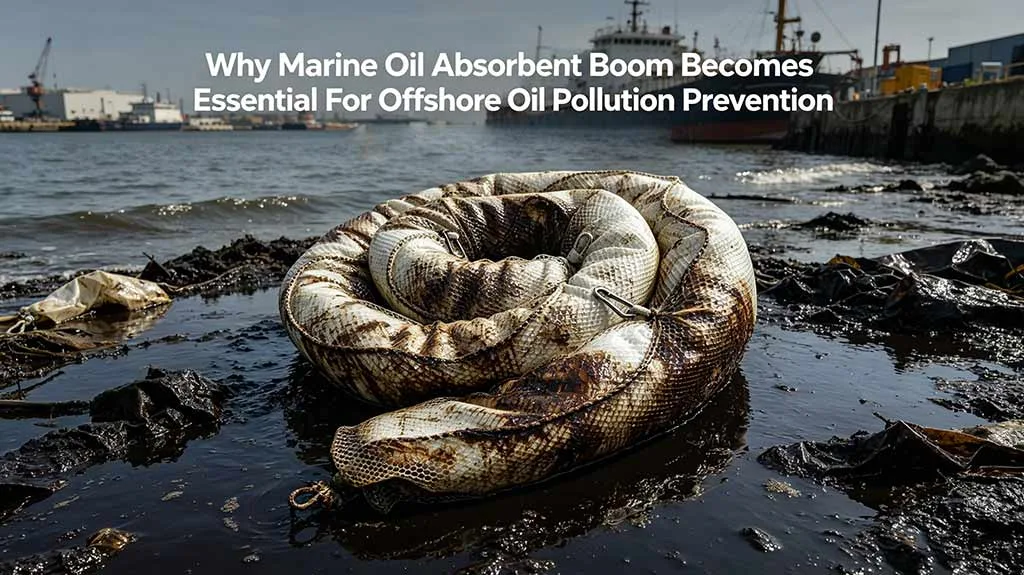
Professional and standardized deployment of oil absorbent booms is the most effective on-site solution for river oil pollution prevention, blocking floating industrial oil, diesel, and hydrocarbon pollutants from spreading downstream and causing large-scale freshwater ecological damage. With 7 years of on-site spill response and industrial environmental protection experience, I have witnessed countless river oil spill failures caused by incorrect boom placement, improper anchoring, and mismatched deployment strategies.
Unlike static factory pools or calm marine harbors, river water flow, current direction, and floating debris bring unique challenges to oil containment. This full practical guide combines real river emergency cases, industry standard specifications, and polypropylene boom material characteristics to elaborate every deployment step, helping safety managers and environmental teams achieve zero-diffusion river oil spill control.
🌊 Why Oil Absorbent Booms Are Essential for River Oil Pollution Prevention
River oil pollution features fast diffusion, wide coverage, and difficult post-cleaning remediation. Once industrial leakage, transportation oil spills, or mechanical oil leakage enters river water, floating oil layers can spread several kilometers downstream within hours, endangering aquatic organisms, domestic water sources, and regional ecological environments. Traditional manual cleaning and chemical degradation methods lag far behind the speed of oil diffusion, making pre-blocking and interception the only efficient prevention method.
Many users wonder what makes oil absorbent booms the top choice for river spill control compared with other containment equipment. The core advantages stem from material properties and scenario adaptability, especially for polypropylene-based oil absorbent booms widely used in industrial adsorption fields.
- Hydrophobic and oil-only adsorption feature: Qualified polypropylene oil absorbent booms repel water completely and only adsorb floating oil pollutants. They will not absorb river water to sink or lose efficacy, maintaining stable floating and interception performance in long-term flowing water environments.
- Flexible adaptation to dynamic water flow: Different from rigid fixed baffles, modular oil absorbent booms can swing and adjust with river currents, avoiding structural damage or gap leakage caused by water impact.
- Quick emergency response capability: No complex installation or professional equipment is required. Teams can complete rapid deployment within minutes to intercept sudden oil spills, maximizing pollution loss reduction.
- Reusable and cost-effective: High-quality booms can be cleaned and reused after oil adsorption saturation, with low post-disposal costs, suitable for long-term river water quality protection and daily risk prevention.
📋 Pre-Deployment Site Assessment & Preparation for River Oil Absorbent Boom Setup
Successful river oil spill containment relies on sufficient pre-deployment preparation. Blind placement without site assessment is the main cause of boom failure, oil leakage, and secondary waste. Combined with on-site operation experience, pre-deployment work is divided into site environment evaluation and equipment inspection, covering all river scenario adaptation details.
Key River Environment Assessment Indicators
- Water flow speed and direction: Slow-flow rivers (≤0.5m/s) adopt horizontal interception deployment; medium and fast-flow rivers require oblique or staged barrier settings to prevent booms from being washed down or overturned by water flow.
- Spill area and oil type: Small-scale mechanical oil seepage only needs local interception; large-scale industrial crude oil or diesel spills require full river cross-section closed containment. Different oil viscosity also affects boom spacing and anchoring firmness.
- River channel terrain: Narrow river sections, bend positions, and downstream shoals are priority deployment points, which can maximize interception efficiency with minimal boom quantity.
- Ambient wind and wave conditions: Strong wind will drive floating oil to drift sideways, requiring reserved boom coverage range and auxiliary fixing measures to avoid oil escaping from the windward side.
Oil Absorbent Boom & Auxiliary Equipment Inspection
Before formal deployment, full equipment inspection is required to eliminate hidden dangers. Many on-site failures are caused by neglected equipment aging and accessory damage.
- Boom body inspection: Check polypropylene boom surface for cracks, damage, and fiber shedding; confirm the floating layer and counterweight skirt are intact to ensure balanced floating and oil blocking performance.
- Connector and splicing accessories: Verify quick-release buckles and connecting rings are flexible and undamaged to ensure tight splicing between boom sections without gaps.
- Anchoring and fixing tools: Prepare stainless steel anchor ropes, fixed stakes, and counterweight weights to adapt to riverbed silt and rocky terrain fixing needs.
- Auxiliary protective supplies: Equip with safety gloves, floating warning signs, and waste collection bags to ensure safe and standardized operation.
Applicable Scenario Matching Table for Oil Absorbent Booms
River Scenario Type | Recommended Boom Specification | Deployment Mode | Core Fixing Method |
|---|---|---|---|
Slow-flow inland small river | Lightweight polypropylene absorbent boom | Horizontal full-section interception | Dual-end bank fixed anchoring |
Medium-flow urban river channel | Reinforced thickened absorbent boom | Oblique 30° angle deployment | Anchor rope + riverbed counterweight |
Fast-flow suburban main river | High-tensile industrial-grade boom | Staged double-layer barrier deployment | Multi-point fixed + auxiliary floating anchor |
⚙️ Step-by-Step Process to Correctly Deploy Oil Absorbent Booms in Rivers
Standardized operation steps determine the final effect of deploying oil absorbent booms. Based on ASTM F726 industrial testing standards and long-term on-site emergency experience, the complete river deployment process is sorted into five core steps, avoiding irregular operations such as random placement and loose splicing.
Step 1: On-Site Zone Division & Deployment Point Confirmation
First, divide the river surface into a pollution source area, an interception protection area, and a downstream monitoring area. Confirm the optimal deployment position 50-100 meters downstream of the oil spill source. This position can effectively intercept diffused floating oil while avoiding the impact of upstream turbulent water flow on boom stability. For continuous leakage risks, set up secondary interception barriers at the downstream bend to form double-layer protection.
Step 2: Onshore Splicing & Pre-Assembly of Boom Sections
Never splice booms after entering the water, which will cause uneven stress and gap leakage. Complete all splicing work on the flat river bank in advance:
- Spread single oil absorbent boom sections flat in sequence, avoiding distortion and twisting.
- Align the connecting rings at the ends of adjacent booms, fasten double safety buckles, and ensure overlapping sealing at joints to prevent oil leakage from gaps.
- Reserve 5%-10% redundant length according to the river width to adapt to water level fluctuation and water flow impact.
Step 3: Gradual Launch & Floating Position Correction
After splicing is completed, launch the boom slowly from one side of the river bank to the water surface, avoiding rapid throwing that causes boom winding and structural deformation. Let the boom float naturally, adjust the angle according to water flow speed:
- Slow static water: Keep horizontal vertical interception to maximize coverage area.
- Flowing water: Adjust to oblique deployment along the water flow direction to reduce water flow impact pressure.
After floating stably, check the boom submerged depth and floating height to ensure it meets river oil interception standards, with no excessive floating or sinking deviation.
Step 4: Multi-Point Anchoring & Firm Fixing
Unfixed booms are easily washed away by river water, which is a key mistake in many emergency deployments. Adopt scientific multi-point fixing methods:
- Fix both ends of the boom firmly on river bank stakes or fixed buildings with high-strength anchor ropes.
- Add counterweight anchors every 3-5 meters for long-distance interception booms to enhance overall stability.
- Fine-tune the tightness of anchor ropes to ensure the boom can adapt to water level changes without excessive tension or loose floating.
Step 5: Post-Deployment Inspection & Real-Time Monitoring
After deployment is completed, conduct a full inspection of joints, fixing points, and floating status. In the subsequent spill disposal process, arrange special personnel for real-time monitoring, regularly remove floating debris entangled on the boom surface, check for oil leakage at the bottom and sides, and adjust the boom position and fixing tightness in time according to water flow and wind changes.
⚠️ Common River Boom Deployment Mistakes & Practical Correction Solutions
In daily river oil pollution prevention work, many enterprises have low interception efficiency due to non-standard deployment. Summarizing years of on-site rectification experience, the most frequent mistakes and targeted solutions are sorted out to help users avoid detours and improve spill control efficiency.
- Mistake 1: Excessively tight horizontal deployment in flowing water. Consequence: Water flow impact causes boom tilting, bottom gap leakage, or overall washing displacement. Correction: Adopt oblique deployment matching water flow direction and reserve flexible floating margin to buffer water flow pressure.
- Mistake 2: Insufficient joint sealing and single buckle fixing. Consequence: Floating oil escapes from splicing gaps, resulting in incomplete interception. Correction: Use double-buckle overlapping connection for all joints and check gap tightness one by one after deployment.
- Mistake 3: Ignoring post-deployment dynamic monitoring. Consequence: Debris accumulation and oil saturation cause boom failure without timely replacement. Correction: Inspect every 20-40 minutes during spill disposal, replace saturated booms in time, and clean surface debris.
- Mistake 4: Blindly pursuing full river coverage. Consequence: Waste of equipment resources and increased deployment difficulty with limited improvement in prevention effect. Correction: Select narrow river sections and bend positions for targeted interception to achieve maximum effect with minimal equipment.
♻️ Post-Spill Boom Recovery, Disposal & Daily Maintenance Tips
Complete river oil pollution prevention work includes standardized post-use recovery and daily maintenance, which directly affects secondary reuse efficiency and environmental compliance. Many users only focus on deployment effects but ignore post-processing, leading to shortened boom service life and non-compliant waste disposal.
Standard Recovery Steps After Spill Control
- Remove riverbank fixing stakes and underwater anchors first to avoid dragging riverbed sediment and causing secondary water pollution.
- Recover booms section by section from one end; avoid brute force pulling to prevent fiber damage and oil residue splashing.
- Classify and collect saturated oil-absorbing booms and clean reusable booms separately to avoid mixed pollution.
Reuse & Waste Disposal Specifications
- Reusable booms: Clean surface oil stains with professional cleaning agents, dry naturally in a cool and ventilated place, and store in dry emergency warehouses for standby use.
- Saturated waste booms: Dispose of in strict accordance with industrial environmental protection standards. Qualified polypropylene booms produce less than 0.2% ash after incineration, meeting low-carbon environmental protection disposal requirements.
Daily Maintenance for Long-Term River Protection
For enterprises that need long-term river water quality protection, regular maintenance of standby oil absorbent booms can effectively extend service life and ensure zero failure in sudden emergencies. Avoid long-term sun exposure and damp stacking, regularly check fiber integrity and floating performance, and replace aging and damaged booms in a timely manner.
📚 Authoritative Industry Standards & Reference Resources
To ensure your river oil absorbent boom deployment, spill prevention, and post-disposal management fully comply with international industrial standards and environmental protection specifications, you can refer to the following three authoritative professional platforms for standardized operation guidelines and performance verification basis, improving the professionalism and compliance of overall spill control work:
ASTM F726 Official Standard: This updated 2024 international standard uniformly defines the performance test methods, adsorption capacity evaluation criteria, and applicable scenario limits for oil absorbent booms and spill containment equipment, serving as the core certification basis for judging whether boom deployment and use meet industrial emergency standards.
U.S. Environmental Protection Agency (EPA): The official government website releases standardized river and freshwater oil spill prevention plans, emergency deployment specifications, and waste disposal guidelines, helping enterprises formulate compliant river environmental protection and spill management systems.
3M Petroleum Sorbents Technical Bulletin: This industry benchmark document clarifies the deployment skills, scenario adaptation rules, and maintenance precautions of polypropylene oil absorption equipment, providing practical operational guidance for daily river oil pollution prevention and emergency disposal.
✅ Conclusion
Scientific and standardized deployment of oil absorbent booms is the core guarantee of efficient river oil pollution prevention, determining whether sudden river oil spills can be quickly contained and avoid large-scale ecological pollution. Different from static water deployment, river boom operation needs to fully combine water flow speed, terrain characteristics, and spill scale to complete site assessment, precise splicing, scientific anchoring, real-time monitoring, and standardized post-processing.
Mastering the complete step-by-step deployment process and avoiding common operational mistakes can maximize the performance of polypropylene oil absorbent booms, build a reliable river oil spill defense line, and help enterprises realize long-term water environmental protection and safety compliance. If you need scenario-matched oil absorbent boom configuration solutions, professional deployment technical guidance, or complete river spill emergency kit matching, our professional team can provide targeted, customized consulting services.